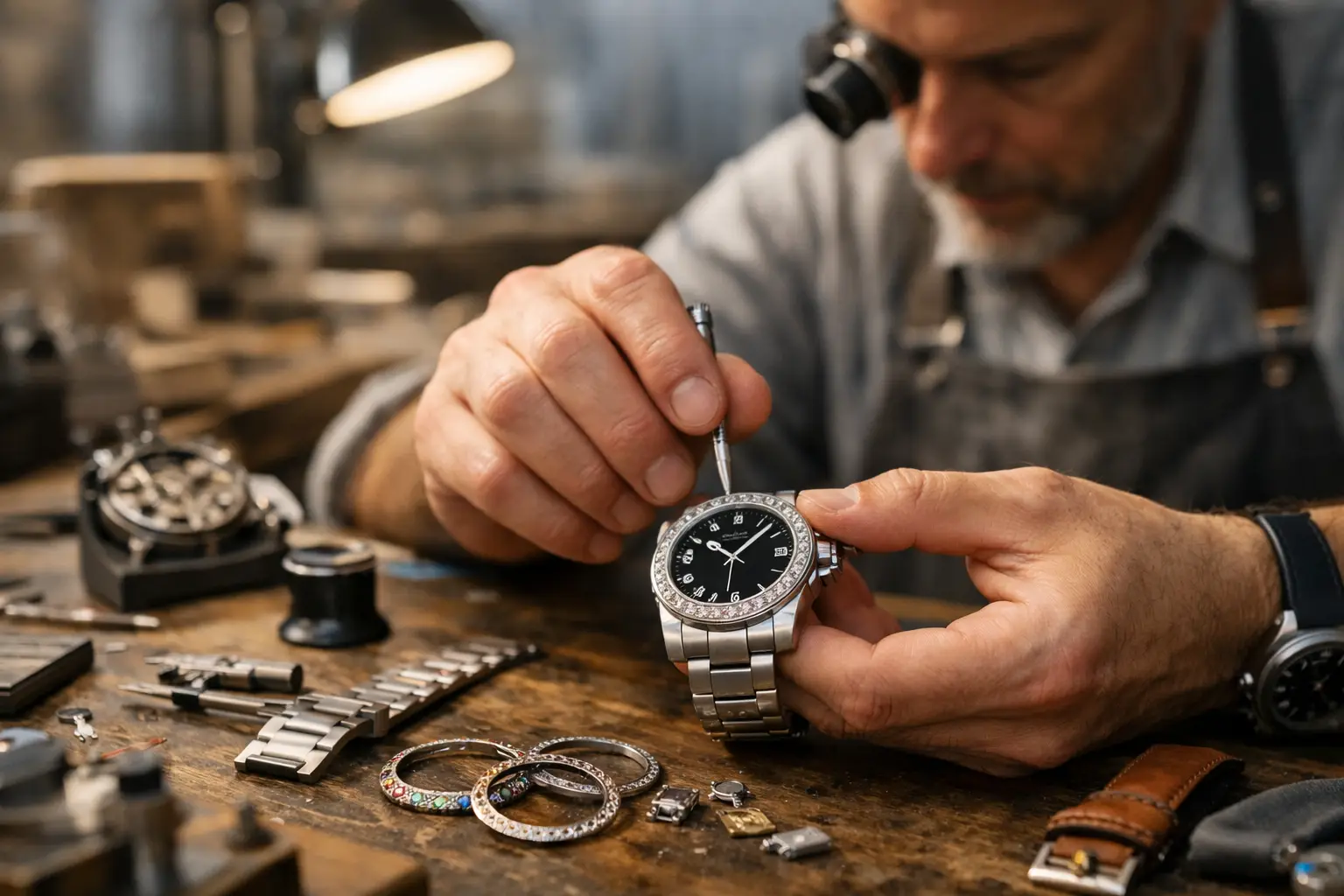
Watch Customization Project History That Builds Trust
A watch customization project history usually breaks down in the same place: right after the deposit is paid and before the visible transformation feels real. The client is excited, the workbench is full, parts are being sourced, movement options are under review, and your team is busy. Then the messages start. Any update? Did the dial arrive? Are we still on schedule? Without a clear record of progress, even a well-run job can feel quiet and uncertain from the client side.
That gap is a communication problem, not a craftsmanship problem. For watch modders, restoration specialists, and bespoke watch builders, the work itself often takes place in small, meaningful stages. A case check here, a movement test there, a handset change, a lume decision, a strap revision. Each step matters. But if those steps live across phone photos, chat threads, voice notes, and scattered emails, the client never sees one clean story of the project.
CustomWorks.app
Keep clients updated without messy chats
Give each project a private feed for client updates — and keep a clear history of photos, videos, notes, stages, decisions, and delivery moments for your team.
This is why watch customization project history matters more than many teams expect. It does not just document what happened. It gives clients a structured view of the work, shows that progress is real, captures decisions before they get lost, and reduces the constant need to manually explain where things stand.
Why a watch customization project history matters
Custom watch projects are personal. Clients are not buying an off-the-shelf product with a fixed delivery flow. They are paying for choices, labor, sourcing, testing, and detail. That means silence creates risk quickly.
If a customer has chosen a custom bezel, a rare dial, or a specific finishing approach, they want proof that the project is moving. When they do not get that visibility, they often assume the worst. Not because they distrust you from the start, but because custom work has long gaps where nothing is obvious unless someone shows it.
A clear project history changes that dynamic. Instead of replying to every message from scratch, you can point to a timeline that shows what has already been completed, what decision is pending, what parts are still in transit, and what stage comes next. This reduces anxiety, but just as importantly, it makes your business look organized and deliberate.
For higher-value projects, this is even more important. A basic mod and a full custom build do not need the same level of communication. But once timelines extend across weeks, or sourcing becomes part of the job, the client benefits from a visible history. So does your team.
What should be included in a watch customization project history
A useful project history is not a pile of random updates. It should reflect the actual shape of the work.
In watch customization, that usually starts with intake and scope confirmation. What watch is being modified? What parts are staying? What is changing? What finish, dial, crystal, movement work, bracelet, or strap has been agreed? If there are reference images, special requests, or constraints, those should sit near the start of the record.
After that, the most useful updates are visual and specific. Photos of the incoming watch condition. Notes on disassembly. A quick image or video of sourced parts arriving. Confirmation of fit checks. A short stage update when assembly begins. Timing results if regulation is part of the work. Final quality control before handoff. Delivery or collection confirmation at the end.
The key is not volume. It is clarity. Five useful updates beat twenty vague ones.
Clients do not need a technical lecture every time something happens. They need proof of movement and a record of key decisions. If a chapter ring was changed because the first option did not align properly, that should be captured. If the original crown was kept after testing because it preserved water resistance better than the replacement, that matters too. These details protect both the client experience and your team later if questions come up.
The best updates are short and visual
A photo with one sentence often does more work than a long email. For example, “Dial and hands test-fitted today. Alignment looks good, but we are waiting on the final gasket before case closure” tells the client exactly what happened and why the project is not yet finished.
That kind of update keeps expectations realistic. It also shows competence without overselling. In custom work, clients generally respond well to visible precision.
Decisions should live in the same timeline
One common problem in custom projects is that decisions get made in chat, then forgotten, challenged, or misremembered. That is especially common when clients choose between multiple aesthetic options during the build.
If the client approved the brushed case finish over polished, or changed from one strap style to another, that decision should sit inside the project history with a date and supporting image if relevant. Later, nobody has to search across apps to confirm what was agreed.
The business problem behind scattered updates
Many watch businesses start with whatever is convenient. A few progress shots in WhatsApp. A longer explanation by email. Maybe a folder of photos on a phone. That works until project volume grows.
Once your team is managing several custom builds at once, scattered communication creates three problems. First, updates become inconsistent because each client gets a different experience. Second, time gets wasted repeating information that already exists somewhere else. Third, there is no clean visual history to reference when a client asks what has happened over the last three weeks.
This is where a client-facing update structure helps. Instead of treating communication as an interruption, you make it part of the delivery process. The project timeline becomes a working asset. It supports trust, reduces ad hoc status requests, and gives the client one place to follow progress.
For businesses delivering long-running custom work, that is the real operational gain. You are not just being more communicative. You are making communication manageable.
How to structure watch customization project history without adding admin
The mistake is trying to document everything. That turns updates into overhead and teams stop doing them.
A better approach is to build around milestones. In watch customization, those milestones might include intake, confirmation of scope, sourcing progress, parts arrival, assembly start, testing, final review, and delivery. Between those stages, add updates only when something changed, a decision was made, or a useful visual moment exists.
This keeps the record meaningful without becoming a second job.
It also helps to standardize the update format internally. One photo or short video, one plain-language note, and a stage label is enough for most entries. If something affects timing or cost, include that clearly. If not, keep it simple.
The benefit of this approach is consistency. Different team members can contribute updates without writing long client emails. The history stays readable, and the client always sees the latest position in context.
Where this fits in a client update platform
For teams handling custom projects over weeks or months, a dedicated client timeline is often a better fit than email threads or general-purpose project management software. Internal task tools are useful for your team, but clients usually do not need boards, dependencies, or internal comments. They need a clean, professional view of progress.
That is the value of a platform like CustomWorks. Instead of spreading photos, videos, notes, work stages, changes, and delivery updates across different channels, you keep the project history in one private client-facing feed. For a watch customization business, that means the client can see the story of the project in order, without asking your team to reassemble it every time.
This distinction matters. A client update feed is not about managing your workshop. It is about showing the client what is happening in a way that feels organized and credible.
Watch customization project history helps after delivery too
The value does not end when the watch goes out the door.
A completed project history becomes a reference point for future service, warranty discussions, repeat orders, and team handovers. If a client returns six months later asking which insert, crystal, or strap option was used, the answer is easier to verify. If there was a late-stage change in specification, it is already recorded.
It can also improve sales conversations. Clients considering another build often feel more confident when they remember how clearly the previous one was documented. Trust does not come only from the final product. It comes from how visible and orderly the process felt.
For businesses that rely on referrals, this matters a lot. People share premium custom work, but they also remember whether the process felt smooth or uncertain.
A good watch customization project history does something simple but valuable: it replaces silence with visible progress. That makes the project easier to follow for the client and easier to manage for your team. When every meaningful step has a place, you spend less time explaining where things stand and more time doing the work well.