Granite Fabrication Progress Updates That Work
A granite job can go quiet for days at a time, even when real work is happening. The slab has been selected, measurements are done, shop drawings are under review, and the fabrication queue is moving – but from the client’s side, it can feel like nothing is happening at all. That gap is exactly why granite fabrication progress updates matter.
For stone fabricators, countertop shops, kitchen remodelers, and installers, the issue is rarely lack of effort. It is usually lack of visible progress. Clients pay a deposit, choose a material they may have spent weeks deciding on, and then wait. If they do not see what stage the job is in, they start sending messages, calling the office, or asking the salesperson for reassurance.
CustomWorks.app
Keep clients updated without messy chats
Give each project a private feed for client updates — and keep a clear history of photos, videos, notes, stages, decisions, and delivery moments for your team.
That creates a predictable problem. Your team answers the same question in five places, project details get repeated slightly differently each time, and confidence starts to depend on who replied last rather than on a clear project record.
Why granite fabrication progress updates matter so much
Granite projects are not simple delivery jobs. They involve material selection, digital templating or field measurement, cut planning, edge profiling, sink and cooktop cutouts, polishing, quality checks, scheduling, and installation coordination. Some jobs move quickly. Others pause because a cabinet install shifted, an appliance spec changed, or a customer has not approved an overhang detail.
From the shop floor, those delays and dependencies are normal. From the client’s point of view, silence feels risky.
That is why granite fabrication progress updates are not just a courtesy. They are a practical way to control expectations. A short update with a photo of the slab layout, a note about sink cutout approval, or confirmation that polishing is complete can prevent a chain of avoidable calls.
Good updates also protect your team internally. When communication is stored in scattered texts, email threads, and phone notes, it becomes hard to prove what was shared and when. A clear project timeline reduces confusion, especially when multiple people touch the same job.
What clients actually want to know
Most clients are not asking for a detailed production report. They want reassurance that the job is moving, that key decisions are under control, and that no one has forgotten them.
In granite fabrication, that usually means they care about a few specific moments. They want to know the slab is confirmed. They want to know measurements are complete. They want to know when fabrication starts, whether any issues were found, and when installation is scheduled.
This matters because many companies over-explain the technical side and under-communicate the visible milestones. A client usually does not need every machine step. They do need a clean record of progress that answers, in plain language, what has happened, what is next, and whether any action is needed from them.
The stages worth updating clients on
Not every movement in the shop needs to become a client-facing message. The goal is not volume. The goal is clarity.
A practical update structure for granite work often starts with material confirmation. Once the slab is reserved or approved, that is worth showing. A quick photo and note can immediately reduce anxiety because the client sees their project has a real material attached to it.
The next useful stage is templating or site measurement. This is one of the most important handoff points in the job because it signals that the project is moving from planning into production. If anything could affect timing – missing cabinets, unfinished walls, appliance changes – this is also the stage where you should say so clearly.
After that, fabrication start is a strong milestone. Clients do not need a long explanation of every cutting process, but they do appreciate knowing the slab has entered production. If you include a marked-up slab layout, edge detail, or shop photo, the update becomes much more credible.
Quality checks and pre-install readiness are also valuable. A message confirming that cutouts, edges, and polish are completed gives the client confidence that the work is nearly ready. Installation scheduling should then be framed as a confirmed next step, not a vague estimate whenever possible.
Finally, installation completion deserves its own record. Photos of the finished stone, notes on care instructions, and any final punch items help close the job professionally.
What makes an update feel professional
The strongest updates are brief, visual, and specific. They do not sound like internal chatter copied to a client. They sound intentional.
For example, “Your countertops are in progress” is weak because it says very little. “Template completed Tuesday. Fabrication is scheduled for Thursday. We are waiting on final sink model confirmation before cutout” is much stronger because it gives status, timing, and one decision point in a single note.
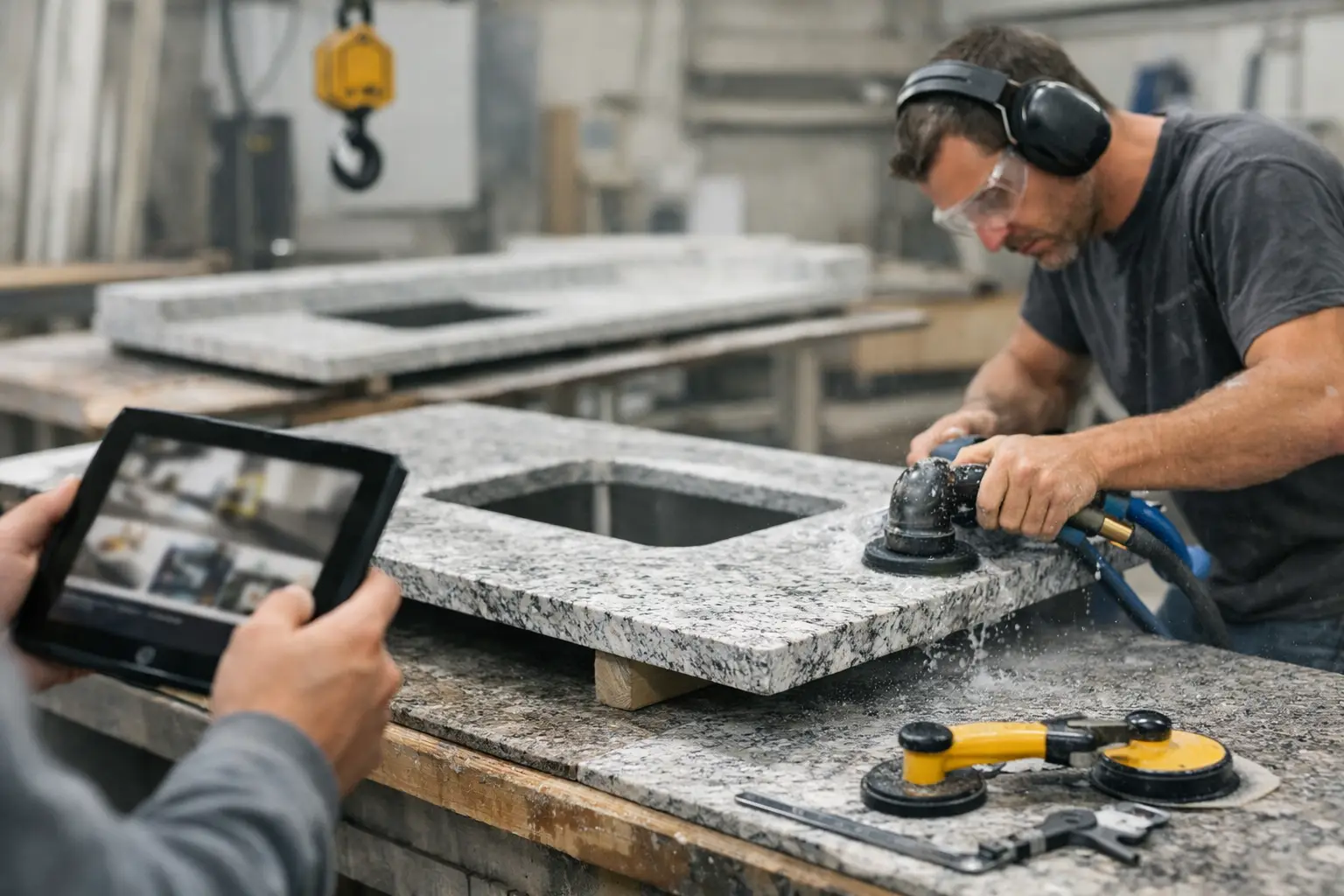
Photos do a lot of work here. In granite and stone fabrication, clients respond well to visual proof. A slab photo with vein direction marked, an image of edge profiling, or a finished vanity top ready for delivery says more than a long paragraph. Video can help too, but only when it adds clarity rather than noise.
Consistency matters just as much as detail. If one client gets three updates in a week and another hears nothing for ten days, the communication feels improvised. A repeatable update rhythm makes your company look organized, even when project timelines vary.
Common mistakes that create more questions
Some updates create extra back-and-forth because they raise issues without context. If you tell a client there is a delay but do not explain whether it affects installation, they will immediately ask for more detail. If you share a fabrication photo without noting what stage it represents, some clients may misread it as finished work.
Another common mistake is sending updates only when there is a problem. That trains clients to associate communication with bad news. In long-running custom work, silence followed by an unexpected issue almost always lands badly.
There is also a trade-off to manage. Too few updates make clients uneasy. Too many small updates can make the process look disorganized or invite unnecessary micromanagement. For most granite jobs, milestone-based communication works better than constant commentary.
A better system for granite fabrication progress updates
The most reliable approach is to treat updates as part of delivery, not as an extra admin task that happens when someone remembers. When each project has a single client-facing record, your team can post photos, notes, changes, and next steps in one place instead of rebuilding the project story across texts and inboxes.
That is where a tool like CustomWorks fits naturally for shops handling custom stone work and other long-running client projects. Instead of relying on messy chats or long email chains, teams can keep a private update feed that shows the visible history of the job from material approval to installation.
This matters in fabrication because the project often passes through several hands. Sales confirms the order. A templater visits site. The shop team cuts and finishes the stone. Scheduling coordinates install. Without one clean timeline, clients end up piecing together status from different people, and your team wastes time repeating the same explanations.
A structured update flow also helps when plans change. If a customer swaps sink models after templating or a builder pushes back readiness on site, that update can sit directly in the project history with the date, note, and supporting photo if needed. That keeps expectations grounded in what actually happened.
How to start without adding bureaucracy
This does not need to become a heavy process. In most granite businesses, a simple rule works well: update at each major stage, include one photo when useful, note the next step, and clearly flag anything the client must approve or prepare.
That means your template can stay straightforward. Confirm material. Confirm measurements. Confirm fabrication start. Confirm readiness for installation. Confirm completion. If a delay happens, explain the reason and the effect on timing in the same update.
The key is that updates should be easy enough for the team to maintain consistently. If the process is too elaborate, it will collapse during busy weeks. If it is simple and repeatable, clients get a better experience and your office receives fewer “just checking in” messages.
For granite fabrication, that is the real win. Better updates do not just make communication look cleaner. They reduce interruptions, protect trust after the deposit is paid, and give clients visible proof that their project is moving through real stages. When people can see progress clearly, they tend to ask fewer questions and make better decisions at the moments that matter.