Client Communication Software for Fit-Out Teams
A fit-out project can look busy on site and still feel silent to the client. Walls go up, approvals move, deliveries shift, and subcontractors rotate through, but from the client’s side, the gap between deposit paid and handover can feel uncomfortably long. That is why client communication software for fit-out companies matters more than most teams realize. It is not just about sending updates. It is about reducing uncertainty while keeping communication organized, visible, and professional.
Fit-out work has a communication problem that standard project tools do not really solve. The issue is not that teams cannot manage tasks internally. Most already have some mix of spreadsheets, messaging apps, site meetings, and project management tools. The real problem is what the client sees. Too often, they see fragments: a photo in WhatsApp, an approval request buried in email, a quick call about a delay, then nothing for several days. Even when the project is moving well, the experience can feel messy.
CustomWorks.app
Keep clients updated without messy chats
Give each project a private feed for client updates — and keep a clear history of photos, videos, notes, stages, decisions, and delivery moments for your team.
Why fit-out companies need different client communication software
Fit-out projects are rarely linear. Site conditions change, joinery gets revised, lead times move, and client decisions affect sequencing. That makes communication harder because updates are not all the same type. Some are visual, some are administrative, and some are there simply to reassure the client that work is progressing.
General-purpose project platforms tend to focus on internal coordination. That is useful for the team, but it often creates the wrong experience for the client. Clients do not want to log into a contractor’s internal workspace, sort through tasks, or interpret technical notes. They want a clear view of what has happened, what matters now, and what is next.
This is where the right software earns its place. It creates a client-facing layer that is simple enough for clients to follow and structured enough for the company to maintain. For fit-out companies, that usually means one place where clients can see progress photos, short notes, stage updates, decisions, changes, and delivery milestones in a format that makes sense without explanation.
What good client communication software for fit-out companies should do
The best systems are not the ones with the longest feature list. They are the ones that reduce confusion without creating more admin work.
First, the software should give each project its own clear communication space. A fit-out company may be running multiple projects at once, and clients should never feel their update trail is mixed into generic email chains or shared group chats. A private project feed or timeline works well because it creates a single source of truth for that client.
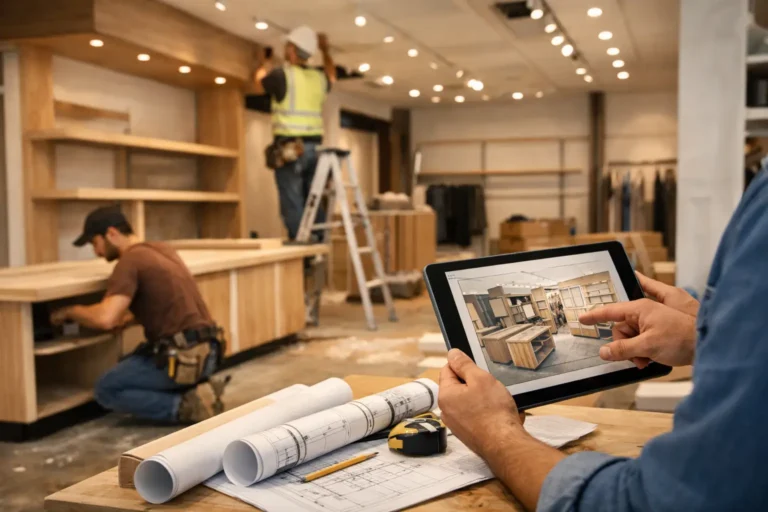
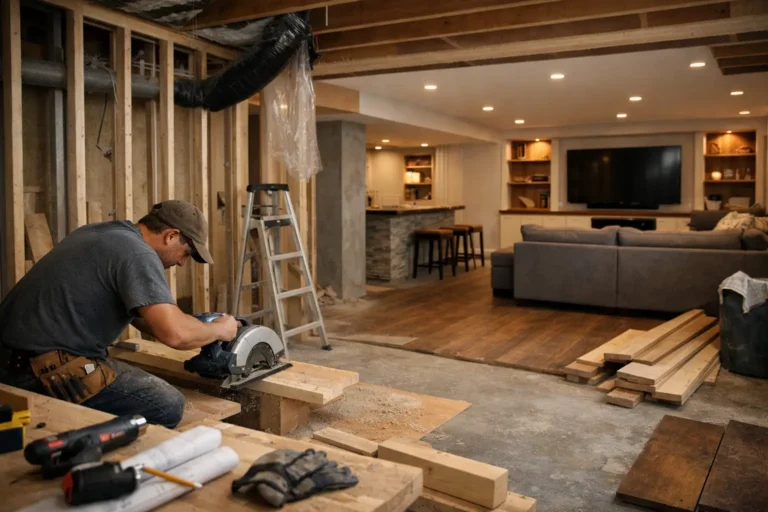
Second, it should support visual updates properly. Fit-out work is highly visible by nature. Clients want to see demolition complete, framing installed, MEP progress, finishes arriving, millwork fitted, and final detailing before handover. Photos and short videos do more than text ever can. They reduce friction, answer unasked questions, and give clients confidence that work is moving.
Third, the software should make decisions and changes easier to track. In fit-out projects, small choices can have a chain reaction. If a finish changes, if a fixture lead time slips, or if site conditions force a revision, the client needs that information recorded in context. Not buried in a message thread from three weeks ago.
Fourth, the system should help teams communicate consistently. This is where many companies struggle. The issue is not that they never update clients. It is that updates happen unevenly, often only when a client asks. Good software makes it easier to post short, regular updates without turning communication into a separate full-time task.
The cost of using email and chat alone
Many fit-out companies still rely on email, WhatsApp, or a combination of both. That feels simple at first because everyone already uses them. The trade-off shows up later.
Email threads become long and hard to follow. A photo gets sent without context. A key approval is mixed into a general conversation. Someone on the client side forwards only part of the exchange internally, and now different stakeholders are working from different information.
Chat apps are even faster, but they are rarely structured. They are good for quick messages, not for maintaining a reliable project history. Site photos get pushed upward by everyday conversation. Decisions disappear into scrollback. New participants join late and miss context. The more active the project, the worse this gets.
None of this means email or chat should disappear completely. They still have a place for urgent coordination or formal documents. But they are weak as the main system for client-facing project visibility. For long-running fit-out work, that visibility needs a home of its own.
What changes when clients can actually see progress
When clients have one place to follow the job, the tone of communication changes. The steady stream of “Any updates?” messages usually drops because clients no longer have to ask just to confirm the project is alive.
That has a practical impact on the team. Project managers spend less time repeating the same status explanation. Site leads are interrupted less often for ad hoc photo requests. Office staff spend less energy reconstructing what was already communicated somewhere else.
It also changes trust. Fit-out projects often involve meaningful upfront payments, long lead times, and periods where the finished result is still hard to picture. Silence creates doubt fast. A clear project history does the opposite. It shows movement, documents decisions, and gives the client a stronger sense of control even when timelines need to shift.
There is also a professionalism benefit that should not be overlooked. Organized communication affects how clients judge the whole company. A business that presents updates clearly tends to be seen as more reliable overall. That perception matters when a project runs into normal complications, because clients are more patient when they feel informed.
How to choose software without overcomplicating your process
The biggest mistake is choosing a system built mainly for internal operations and trying to force clients into it. If the platform is too technical, clients will not use it. If posting updates takes too long, your team will stop doing it consistently.
For most fit-out companies, the better choice is software that sits between informal messaging and full project management. It should be simple enough that a project manager or coordinator can post updates in minutes, and clear enough that a client can understand the project status without training.
Look closely at adoption from both sides. Internally, ask whether site teams can share photos and short notes without extra bureaucracy. Externally, ask whether clients can follow progress without digging through dashboards, tasks, or reports designed for contractors.
It is also worth thinking about the type of work you deliver. A commercial office fit-out, a hospitality refit, and a residential interior build all involve different client expectations. Some clients want frequent visual proof. Others care more about approvals, timeline changes, and milestone visibility. The right software should handle both without becoming cluttered.
A practical setup for fit-out companies
The most effective approach is usually simple. Create one private client-facing space per project. Post short updates throughout the job using photos, videos, brief notes, work stages, changes, and handover moments. Keep each update tied to the timeline of the project so the client can see the story of the work in order.
That structure works because it mirrors how clients think. They do not think in task dependencies or internal workflows. They think in progress. What has been done, what is happening now, what needs my input, and what happens next.
A platform like CustomWorks is designed around that exact need. Instead of turning client updates into full project management, it gives fit-out companies a straightforward way to maintain a private project feed with visual history and clear progress visibility.
This kind of setup is especially useful when multiple stakeholders are involved. In many fit-out projects, the person approving decisions is not the only person expecting updates. There may be an operations manager, a business owner, a designer, or a facilities contact. A shared, structured project feed reduces the risk of mixed messages and repeated explanations.
Where this works best and where it depends
Not every project needs the same communication intensity. A short, low-complexity fit-out with one decision-maker may be manageable with lighter-touch updates. But once the timeline stretches, budgets rise, or approvals become layered, informal communication starts breaking down.
It also depends on the company’s internal discipline. Software does not fix communication if nobody uses it. The strongest results usually come when the team agrees on a simple rhythm, such as posting key progress updates at defined stages and adding extra notes when there is a decision, change, or delivery milestone worth documenting.
The goal is not to update constantly. It is to update clearly enough that the client never feels left in the dark.
Fit-out companies do their best work when clients trust the process while the work is still underway. Clear communication supports that trust. If your updates are still scattered across inboxes and chat threads, the problem is not just inconvenience. It is the experience your client is having while they wait for the finished space to take shape.