Using Outdoor Living Progress Photos Well
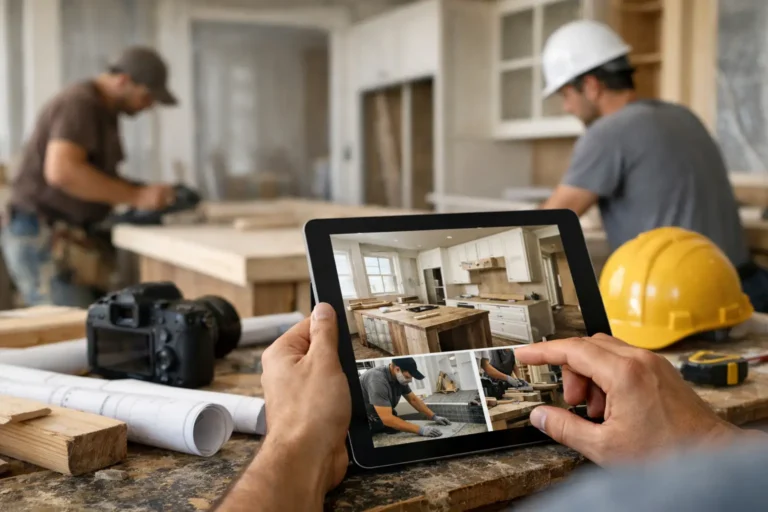
A patio base covered before lunch, framing in place by Thursday, lighting tested the following week – outdoor living work changes fast, and clients rarely see most of it happen. That is exactly why outdoor living progress photos matter. They do more than document a nice transformation at the end. They give clients visible proof that the project is moving, decisions are being carried out, and the job is under control.
For companies building decks, pergolas, kitchens, covered patios, poolside features, landscape structures, and other exterior spaces, silence creates risk. A client who has paid a deposit and sees no updates starts asking questions. Those questions usually arrive across text messages, emails, and calls, and the answers often depend on whoever happened to take a photo that day. That is not a communication system. It is improvisation.
CustomWorks.app
Keep clients updated without messy chats
Give each project a private feed for client updates — and keep a clear history of photos, videos, notes, stages, decisions, and delivery moments for your team.
The practical fix is simple: treat progress photos as part of client communication, not as leftover marketing content.
Why outdoor living progress photos matter during the project
Most clients are not worried because they expect daily perfection. They are worried because they cannot see what is happening. Outdoor projects make that worse. Work can pause due to weather, materials can arrive in phases, inspections can affect timing, and key progress may be structural rather than visually dramatic.
A few well-timed updates solve much of that uncertainty. When clients can see site prep, drainage work, framing, utility rough-ins, surface installation, and finishing details, they understand that progress is real even when the final look is still weeks away. That reduces the classic “Any updates?” cycle.
There is also a second benefit that matters just as much for the business. Outdoor living progress photos create a clean visual history. If a client later asks when a footing was poured, whether conduit was installed before pavers, or how a built-in grill area was prepared, the answer is not buried in someone’s phone. It is documented.
That visual record becomes even more valuable on custom jobs where the scope evolves during construction. A photo attached to a short note can confirm what changed, what was approved, and what stage the work had reached at that moment.
What clients actually want to see
Many teams overthink progress photos and end up posting too little because they believe every image needs to look polished. In practice, clients are not asking for lifestyle photography during construction. They want clarity.
That usually means photos that answer simple questions. What was done today? What stage is complete? What is happening next? Is the work on track?
For outdoor living projects, the most useful images are often the least glamorous. Excavation, foundations, drainage runs, framing layouts, electrical prep, leveling work, waterproofing, and delivery of major components all help the client understand the build. These images may not belong in a portfolio, but they are exactly what builds trust during delivery.
The trade-off is that not every photo should be sent. Too many low-value images can create noise rather than confidence. A pile of materials on a driveway is not automatically meaningful. A photo of those materials with a note explaining that cabinetry, stone, or composite boards have arrived and installation starts tomorrow is much more useful.
Good progress photos need context
The photo alone is only half the update. Without context, clients can misread what they are seeing, especially on technical or messy stages.
A short caption is usually enough. Something as simple as “Drainage trench completed and inspected today. Base prep starts tomorrow” turns a rough-looking site into evidence of forward movement. That kind of explanation matters because construction often looks worse before it looks better.
This is where many companies lose control of communication. Photos are scattered in personal camera rolls, sent through chat apps, and stripped of timing and explanation. Clients then piece together their own interpretation, which is how unnecessary concern starts.
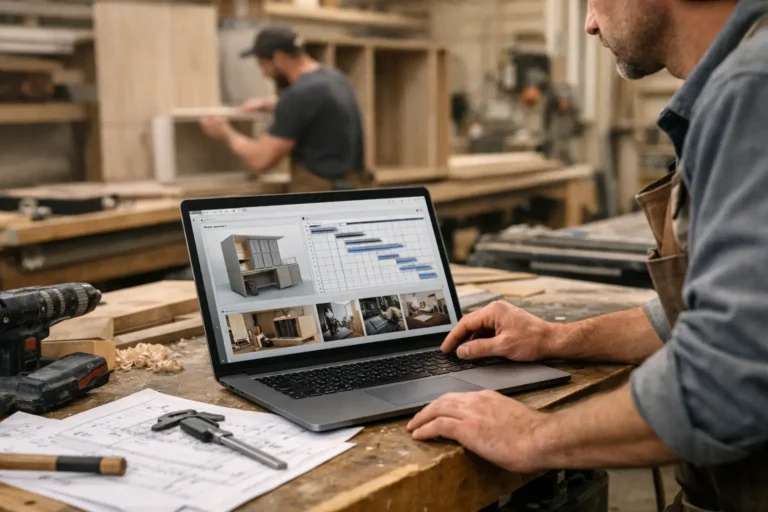
A structured update feed avoids that problem. Instead of sending isolated images, teams can post progress in sequence so the client sees the project timeline clearly. That is the core value of a platform like CustomWorks, where photos, notes, stage updates, and decisions sit in one private client-facing history rather than across mixed channels.
The best times to capture outdoor living progress photos
You do not need dozens of images every day. You need consistent coverage of meaningful moments.
The most useful pattern is to capture photos at stage changes. Start with before photos, then site prep, foundations or base work, structural framing, utilities, major installations, surface finishes, and final handover details. If weather delays the job or a client-approved change affects the sequence, that should be shown too.
This approach works because it mirrors how clients think. They want to know that the project is advancing from one clear step to the next. Stage-based updates are easier to understand than random daily snapshots.
There are exceptions. On a fast-moving job, a few updates each week may be enough. On a high-value custom installation with long fabrication lead times, less frequent but more detailed updates may be better. It depends on project complexity, client expectations, and how visible the work is from the client’s perspective.
What matters is consistency. A client will usually tolerate slower progress better than poor communication.
How to make photos useful for the business, not just the client
Progress photos should reduce admin, not create more of it. If your team has to stop and build a perfect report every time, the process will collapse during busy periods.
The easiest way to keep it workable is to standardize what gets captured. Decide which project stages always need photos. Decide who takes them. Decide when they are uploaded. Decide what basic note format is used. Once that routine is in place, updates become part of delivery rather than an extra task people forget.
This also protects the business internally. If the project manager is away, another team member can still understand what has happened. If a client raises a question months later, the visual record is there. If sales or operations wants examples of how projects typically progress, they are easier to retrieve.
For companies running multiple outdoor projects at once, this organization matters a lot. The issue is rarely that teams take no photos. It is that the photos live everywhere except where they are useful.
Common mistakes with outdoor living progress photos
One common mistake is only sharing dramatic milestones. That leaves long gaps where the client sees nothing, even though important work may be happening. Another is sending updates only when the client asks. By then, the communication is reactive and usually feels defensive.
A third mistake is using personal messaging threads as the main update channel. It feels quick in the moment, but over a multi-week build it creates scattered history, missing context, and repeated explanations. The more custom the project, the more this becomes a problem.
There is also the issue of presentation. Photos do not need to be glossy, but they should be clear enough to understand. Bad angles, dark images, and no captions make updates less useful. Taking thirty extra seconds to capture a clean shot and write one sentence usually pays off.
Finally, teams sometimes forget that progress photos can support change communication. If the client upgrades materials, adjusts layout, or approves an added feature, the visual record should reflect that moment. Otherwise, memory and message threads are left to carry too much weight.
A simple operating standard for project updates
If you want outdoor living progress photos to improve client communication, the system does not need to be complicated. It just needs to be predictable.
Capture the job at each meaningful stage. Add a short note explaining what the client is seeing. Keep updates in one place tied to the project. Share them before the client has to ask. When there is a delay, show what caused it and what happens next.
That simple discipline changes how the project feels from the client side. Instead of wondering whether anything is happening, they can see steady movement. Instead of searching old messages, they have a clear project history. Instead of contacting your team for routine reassurance, they already have visibility.
For outdoor living companies, that is not just better communication. It is a more professional way to deliver custom work.
The best progress photos are not the ones that look the most impressive. They are the ones that make the client feel informed at the right moment.