Driveway Construction Progress Updates That Work
A driveway job can look deceptively simple from the client side. They see demolition, some heavy equipment, a few days of visible activity, and then long stretches where not much seems to be happening. That gap is where confusion starts. Good driveway construction progress updates keep clients informed about what has happened, what is happening now, and what comes next, without forcing your team into constant phone calls and repeated explanations.
For contractors, paving companies, and custom exterior teams, this is not just a communication issue. It affects trust, scheduling, approvals, and how professional your business feels during the project. When a client has paid a deposit and their front access is partly torn up, silence creates pressure fast. A clear update process solves that before it turns into a stream of “Any news?” messages.
CustomWorks.app
Keep clients updated without messy chats
Give each project a private feed for client updates — and keep a clear history of photos, videos, notes, stages, decisions, and delivery moments for your team.
Why driveway projects create so many status questions
Driveway work often moves in bursts. One day the old surface is removed. Another day the base is being graded. Then there may be a delay because of weather, cure times, material delivery, utility checks, or a crew being scheduled for the next phase. To your team, that sequence is normal. To the client, it can feel unpredictable.
The problem gets worse because driveway projects are highly visible. Clients see the site every day. If they notice forms in place but no concrete pour, or base material down but no pavers yet, they naturally start asking whether something is wrong. They are not always questioning your competence. More often, they are reacting to uncertainty.
That is why driveway construction progress updates need to do more than report activity. They need to explain context. A short note saying, “Base prep complete. Final compaction passed. Pour moved to Thursday due to forecasted rain” prevents far more anxiety than a vague “Work is progressing” message.
What clients actually want from driveway construction progress updates
Most clients do not want a technical site report. They want proof that the job is moving, clarity on delays, and confidence that nobody has forgotten about them.
That means the best updates usually combine three things. First, visual evidence such as photos or short videos. Second, a plain-language note about the current stage. Third, the next expected milestone. When those three elements appear consistently, clients stop chasing your team for reassurance.
There is a trade-off here. Too little detail feels evasive, but too much detail can overwhelm clients or create confusion if they are not familiar with construction terms. The right balance depends on the project and client type. A homeowner may need simpler explanations than a property developer or facilities manager. Either way, clarity beats quantity.
The simplest format for effective updates
If your team struggles to keep communication consistent, the fix is usually not more writing. It is a repeatable structure.
A practical driveway update can be as short as four lines. What was completed. What is happening now. What is affecting timing. What comes next. Add two or three photos, and most of the communication problem is already handled.
For example, after excavation, an update might explain that the old surface was removed, subgrade conditions were checked, and additional base work is needed in one section due to soft ground. That kind of note does two useful things at once. It shows progress and explains why the next step may shift.
This matters because clients tend to judge delays differently when they can see the reason behind them. Unexpected soil issues, weather interruptions, or supplier changes are easier to accept when documented clearly and early.
What to include at each driveway stage
The strongest update process follows the actual rhythm of the job. You do not need daily messages if nothing meaningful has changed, but you do need updates at key moments.
Before work starts
The first update should set expectations. Confirm the planned start window, likely phases, access limitations, and anything the client needs to prepare. This reduces avoidable friction before equipment arrives on site.
Demolition and site prep
This is one of the most important visual stages. Clients can immediately see change, but they also see disruption. Share photos of removal, grading, edge prep, drainage work, or sub-base exposure. If any hidden issue appears, document it early.
Base installation and compaction
This phase often looks less dramatic than demolition, but it is where long-term quality is built. Clients may not understand why this stage matters or why it takes time. A short explanation helps them see that progress is not only about visible finishes.
Forms, pavers, or surfacing prep
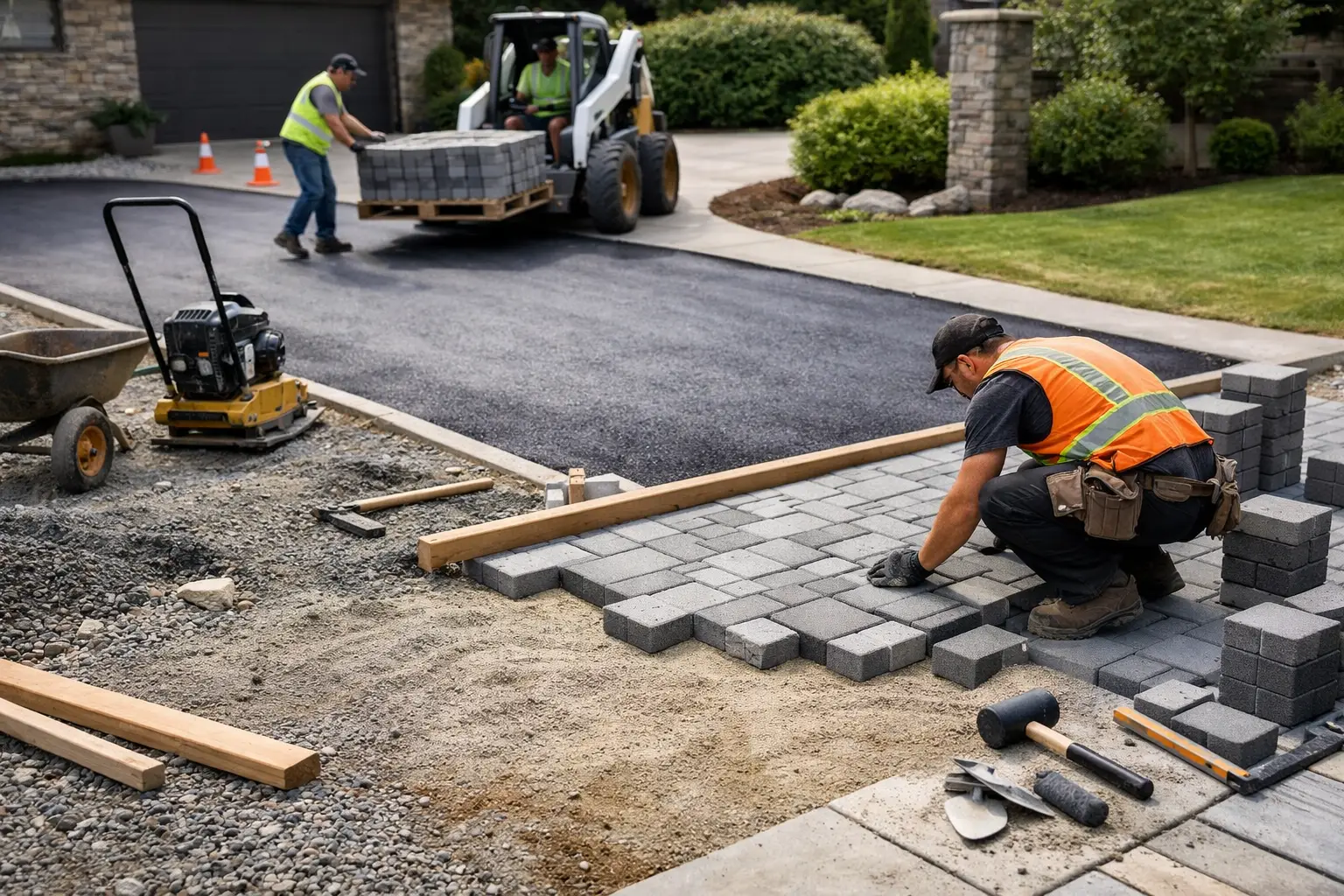
At this point, clients usually want timing confirmation. They are mentally calculating when they can use the driveway again. Be specific where possible, but avoid overpromising. If weather or curing time may affect access, say so now rather than later.
Pour, lay, or install day
This is a milestone worth documenting well. Photos and a brief note on what was completed, plus the expected cure or settling period, are especially useful. Clients often mistake installation completion for immediate usability.
Finishing and handover
The final update should not be just “done.” It should confirm completion, note any care instructions, and create a clean record of what was delivered. That final impression shapes whether the project feels organized from start to finish.
Why scattered communication breaks trust
Many driveway contractors already send updates. The issue is where those updates live. One photo goes into a text message, another into WhatsApp, timing changes happen over email, and site notes stay with the foreman. By the time the client asks a question, nobody has one clear history of the project.
That scattered approach creates three problems. It wastes time because the team repeats itself. It weakens professionalism because the communication feels improvised. And it increases risk because important decisions or change explanations get buried in personal chats.
A single client-facing timeline works better because it turns updates into a visible project record, not just a stream of disconnected messages. That is especially useful on jobs where the client is not always on site or where multiple stakeholders want visibility without joining internal project systems.
For companies handling long-running custom work, a platform like CustomWorks makes that process easier by keeping photos, videos, notes, stage updates, and delivery moments in one private project feed clients can follow without friction.
How often should you send updates?
There is no perfect universal schedule. For a short residential driveway job, three to six meaningful updates may be enough. For a more complex project with drainage changes, multiple approvals, or phased access, the right cadence may be every major stage plus any change that affects timing or scope.
The key rule is simple. Update when the client would otherwise start wondering. That usually means before a delay becomes noticeable, after a major visible change, or when a decision affects the next step.
Some teams worry that frequent updates create more work. In practice, the opposite is often true. A quick update with photos usually takes less time than answering five separate client messages asking for the same information in slightly different ways.
Common mistakes in driveway construction progress updates
One common mistake is being too vague. “Work is ongoing” does not answer the question the client is really asking. Another is waiting too long to mention a delay because the team hopes to recover the schedule. That usually backfires. Clients are more forgiving of honest early notice than last-minute surprises.
A different mistake is sharing only polished milestones and skipping the in-between stages. That can make a project feel inactive even when real work is happening. Base prep, drainage corrections, curing time, and inspections may not look exciting, but they matter. When explained properly, they support trust.
There is also a tone issue. Updates should sound calm and factual, not defensive. If conditions changed, say what changed, what you did in response, and what happens next. A steady, professional tone reassures clients far more than overexplaining.
A better standard for client communication
Driveway work is physical, visible, and disruptive for the client. That makes silence expensive. Not always in direct cost, but in lost time, repeated calls, and avoidable friction during a job that should feel controlled.
Better driveway construction progress updates do not require long reports or complicated software. They require consistency, visual proof, and a clear record of decisions and milestones. When clients can see the job progressing in a structured way, they ask fewer questions because they already have the answer.
If you want the project experience to feel as professional as the finished driveway looks, the update process deserves as much attention as the site work itself. A few clear updates at the right moments can change how the entire job is perceived.