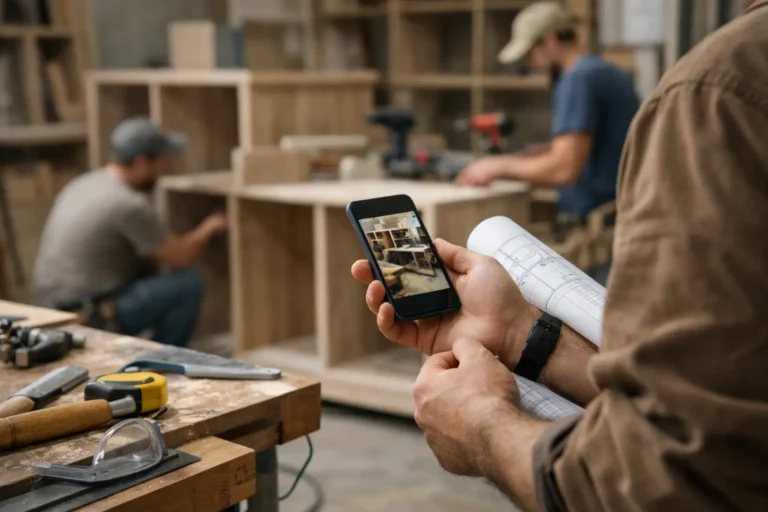
Restaurant Fit-Out Client Updates That Work
A restaurant owner has signed off the design, paid the deposit, and handed over the keys. Then the waiting starts. If your team goes quiet for a week, even when work is moving, that silence creates pressure fast. Restaurant fit-out client updates are not a minor admin task. They are one of the main ways you keep trust steady while timelines, trades, and site conditions keep shifting.
Restaurant projects are especially sensitive to communication gaps because every delay has a cost attached to it. The client is not just waiting for a finished space. They are waiting to hire staff, confirm suppliers, book inspections, plan marketing, and open the doors. When updates are inconsistent, they start chasing answers through calls, texts, and long email threads. That drains your team and makes the project feel less controlled than it really is.
CustomWorks.app
Keep clients updated without messy chats
Give each project a private feed for client updates — and keep a clear history of photos, videos, notes, stages, decisions, and delivery moments for your team.
The fix is not more messages. It is better structure.
Why restaurant fit-out client updates matter more than most trades
A restaurant fit-out has more moving parts than many other commercial projects. There is front-of-house design, back-of-house practicality, kitchen coordination, extraction, MEP work, signage, joinery, finishes, compliance, and often landlord or building management involvement. On top of that, clients tend to be emotionally and financially invested because the space reflects their brand and their launch plan.
That combination creates a simple problem. The client wants visibility, but your team does not have time to explain the full site story from scratch every few days.
Without a clear update process, communication usually becomes fragmented. A progress photo is sent in WhatsApp. A variation is discussed by phone. A delivery delay sits in someone’s inbox. A finish approval gets buried in email. Later, when the client asks what happened and when, your team has to reconstruct the timeline from scattered conversations.
That is where communication starts looking messy, even if the build itself is well managed.
What clients actually want from updates
Most restaurant owners are not asking for a project management dashboard. They are asking for reassurance, clarity, and evidence that the job is moving.
They want to know what was completed this week, what is happening next, whether any decisions are needed from them, and whether anything affects the opening date or budget. Photos matter because they reduce ambiguity. Short notes matter because they explain what the client is seeing. Timing matters because regularity is often more valuable than detail.
This is why the best update systems are simple. If your process is too heavy, your team will stop using it. If it is too vague, the client will still ask for more.
A practical structure for fit-out updates
For most fit-out companies, the strongest approach is a running client-facing timeline. Instead of sending isolated messages, you create one clear record of progress from strip-out to handover. Each update should answer a few basic questions: what happened, what changed, what is next, and whether the client needs to act.
That structure works because it mirrors how the client thinks. They do not need every internal detail. They need a clean, visible narrative of the project.
Photos should do a lot of the work. A quick image of first-fix electrical, kitchen equipment positioning, ceiling progress, tiling, joinery installation, or final snagging removes a huge amount of uncertainty. Add a short note and the update becomes immediately useful.
Video can help when something needs explanation, especially on technical issues or layout adjustments. But it should support the update, not replace it. Clients should be able to scan the timeline quickly and understand where things stand.
Where fit-out teams usually get stuck
The common failure point is not that teams do not care about communication. It is that updates depend on individual habits. One project manager is excellent and proactive. Another is good on site but forgets to send anything until the client asks. One foreman takes photos constantly. Another keeps everything on his phone and never shares it properly.
That inconsistency creates a brand problem. From the client’s perspective, your company does not have a communication standard. It has different levels of visibility depending on who is assigned.
The second issue is channel overload. Many teams start with whatever is easiest in the moment: email, text, WhatsApp, calls, maybe a shared album. That feels efficient early on, but over a multi-week restaurant fit-out it becomes hard to track. Decisions get lost. The client asks the same question twice. Your team spends time searching rather than updating.
The third issue is overexplaining minor movement while undercommunicating major changes. Clients do not need a message for every delivery and every trade arrival. They do need a clear note when the flooring schedule shifts, when joinery lead times affect installation, or when a site condition changes scope.
How to make restaurant fit-out client updates feel professional
Professional communication is usually less about polish and more about consistency. If the client knows where updates appear, what they include, and how often they can expect them, they stop chasing as much.
A strong rhythm for restaurant fit-outs is usually one main progress update per week, with extra posts when there is a decision, change, issue, or milestone worth flagging. That rhythm gives enough visibility without creating noise. It also helps your team build a repeatable habit.
The format should stay stable across projects. For example, each update can include current stage, completed work, upcoming work, blockers or changes, and photos. Once that becomes standard, your communication looks controlled across every job, not improvised site by site.
It also helps to separate updates from internal project management. Clients do not need to see every task list or subcontractor detail. They need a clean view of progress and decisions. That distinction matters because many internal systems are too complicated for client communication. A simple client update feed is often the better fit.
This is exactly the kind of problem CustomWorks is built to solve. Instead of relying on messy chats and email threads, teams can keep each fit-out in one private client-facing timeline with photos, videos, short notes, milestones, changes, and handover updates in one place.
What good updates reduce behind the scenes
When updates are clear, the obvious benefit is fewer “Any news?” messages. But the bigger gain is operational.
Your team spends less time repeating the same answers to different stakeholders. Site photos are easier to find later. Change discussions stay tied to the timeline of the job. Handover feels cleaner because the project history already exists.
There is also a sales effect. Clients remember whether a fit-out felt organized. Even if the project had delays, they are more likely to describe the experience positively when they always knew what was happening and why. On the other hand, a technically good build can still leave a poor impression if the communication felt patchy.
That is the trade-off many companies underestimate. Communication is not separate from delivery. For the client, it is part of delivery.
What to include in each update
The right level of detail depends on the phase of the project. Early demolition and first-fix stages may need more context because the site can look chaotic even when progress is strong. Later stages often benefit from visual updates because the changes are easier to understand.
Still, most updates should include a few essentials in plain language. State what has been completed since the last update. Mention what is scheduled next. Call out any client decisions needed. If there is a delay or scope change, say it directly and explain the effect.
Avoid hiding bad news behind vague wording. Clients usually react better to direct, early communication than to soft language that postpones the conversation. That does not mean overdramatizing every issue. It means naming the issue, explaining the response, and showing control.
A missed delivery might not be a problem if the sequence can be adjusted. A hidden missed delivery becomes a trust problem when the client finds out late.
Building a system your team will actually use
The best communication process is the one your team can maintain during a busy week. That means low friction. Site staff should be able to capture progress quickly. Project leads should be able to post updates without rewriting a full report every time. Clients should be able to view the story of the job without learning new software logic.
If you are setting up the process for the first time, start small. Define update ownership, set the weekly rhythm, agree on the basic format, and decide where all client-facing updates will live. Then use the same method on every restaurant project unless there is a clear reason to change it.
This consistency matters more than perfection. Clients rarely expect cinematic reporting. They expect visibility, responsiveness, and a sense that nothing important is slipping through the cracks.
Restaurant fit-outs are busy, high-pressure projects with a lot of moving pieces and very little room for silence. When your update process is clear, the job feels more controlled for the client and more manageable for your team. That calm, more than anything, is what makes the whole project experience feel professional.