HVAC Installation Progress Updates That Work
An HVAC job can be technically on track and still feel messy to the client. Ductwork is going in, equipment is ordered, inspections are lined up, but from the customer’s side there is mostly silence, a few text messages, and maybe a photo buried in someone’s phone. That is why HVAC installation progress updates matter more than many teams realize. They do not just answer questions. They shape trust during a project that often disrupts a home, a business, or a larger build schedule.
For HVAC contractors and installation teams, the problem is rarely the work itself. The problem is how that work gets communicated. A system replacement, commercial fit-out, multi-zone install, or phased renovation can stretch over days or weeks. During that time, clients want to know what has happened, what is next, whether anything has changed, and if the project is still under control. If they do not get that visibility, they start asking for it one message at a time.
CustomWorks.app
Keep clients updated without messy chats
Give each project a private feed for client updates — and keep a clear history of photos, videos, notes, stages, decisions, and delivery moments for your team.
Why HVAC installation progress updates affect client trust
Clients do not judge an installation only by the final startup and handover. They judge it by the experience between deposit and completion. That middle period is where confidence either builds or starts to erode.
In HVAC work, progress is not always visually obvious to a customer. Rough-in can look incomplete. Equipment delays may happen before anything arrives on site. Inspection timing may affect scheduling. A crew might spend a full day on technical work that produces very little visible change. Without context, clients often read normal project movement as delay, confusion, or lack of attention.
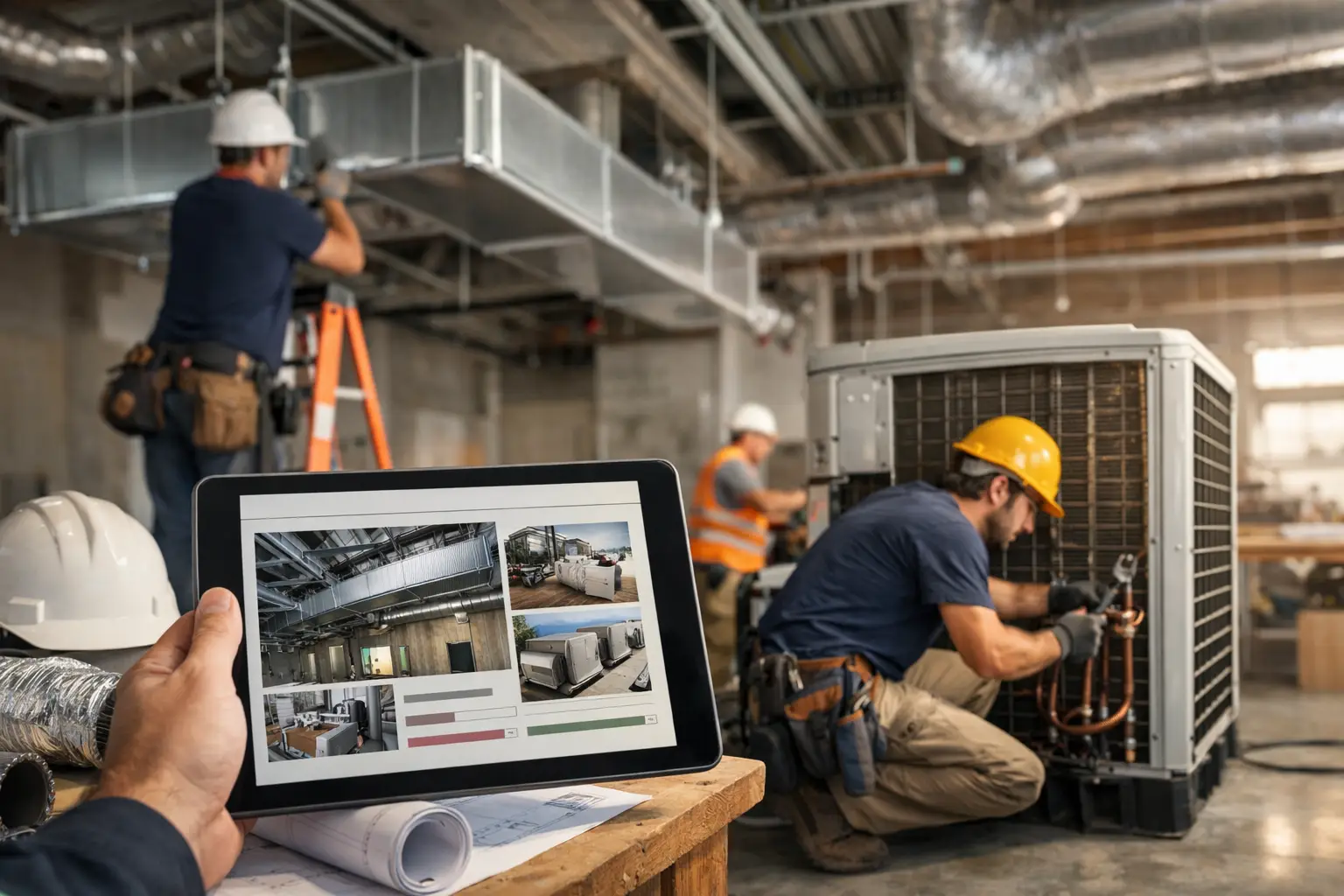
That is why short, structured updates make such a difference. A photo of the air handler platform, a note that refrigerant lines are installed, a stage update showing rough-in complete, or a message confirming that equipment delivery is scheduled for Thursday gives the client something solid. It replaces uncertainty with a clear record.
This matters even more when the project is tied to other trades. On a renovation or fit-out, the HVAC installer may be one part of a larger schedule involving framing, electrical, drywall, finishes, and inspections. If the customer or general contractor cannot easily see HVAC progress, they are more likely to chase your team for status. That creates extra admin work and raises the risk of mixed messages.
What good HVAC installation progress updates should include
The best updates are not long. They are timely, specific, and easy to follow.
A useful update usually answers four things: what was done, what stage the project is in, what happens next, and whether anything changed. That is enough for most clients. They do not need internal task-level detail. They need confidence that the work is moving and that someone is paying attention.
Photos are especially valuable in HVAC because so much of the work is physical and site-based. A quick image of installed duct runs, condenser placement, thermostat wiring, vent locations, or completed equipment connections can say more than a paragraph. Video can help too when you need to show a walk-through, explain access limitations, or document a completed area before it is closed up.
Short notes matter just as much. If a crane booking moved, if a ceiling void required a routing change, or if the project is waiting on an inspection, say so plainly. Silence creates more tension than a straightforward explanation.
For longer jobs, stage-based updates work well. Instead of sending scattered messages, organize progress around milestones such as site prep, removal, rough-in, equipment delivery, equipment installation, controls setup, testing, and handover. That gives clients a simple mental model of the job.
Where HVAC teams usually lose control of updates
Most update problems start with good intentions and bad systems. A project manager texts one client. A foreman sends photos through WhatsApp to the office. Someone emails a change note. A delivery update comes from a supplier and never reaches the customer. By the second week, nobody is sure what the client has seen.
This is common in growing HVAC businesses because communication evolves informally. What worked for small, fast-turn installs starts to break when projects become more complex or when multiple jobs are active at once. The issue is not effort. The issue is fragmentation.
Scattered communication creates three practical problems. First, clients ask the same questions repeatedly because information is not collected in one place. Second, teams waste time hunting for photos, approvals, and past messages. Third, if there is a dispute later, the project history is incomplete.
That last point matters. HVAC jobs often involve changes in access, design constraints, sequencing, and equipment timing. A clear progress record helps everyone remember what happened and when.
A better way to handle HVAC installation progress updates
For most HVAC contractors, the answer is not more communication. It is more structured communication.
Instead of treating updates as one-off messages, treat them as part of project delivery. Every significant site visit, completed stage, change, or delivery event should create a simple client-facing record. Over time, that becomes a clean timeline rather than a pile of disconnected messages.
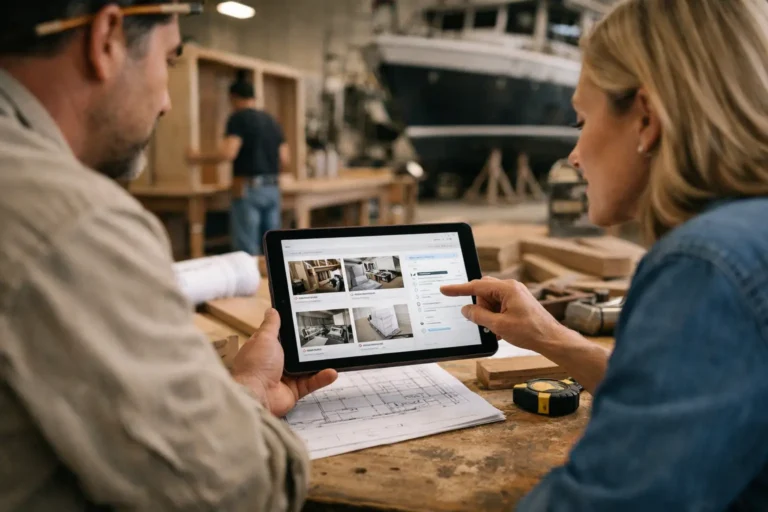
This is where a tool built for client project visibility helps. CustomWorks gives each project a private update feed where teams can post photos, videos, notes, stage progress, decisions, changes, and delivery updates in one place. For HVAC businesses handling installs that run over days or weeks, that makes communication easier to manage and easier for clients to trust.
The benefit is not complexity. It is clarity. Clients can see the story of the job as it develops, and your team does not have to reconstruct that story across text threads and email chains.
How to make updates useful without creating admin overhead
A common concern is that formalizing updates will slow the team down. That can happen if the process is too heavy. It usually does not happen if the process is designed around the way field teams already work.
The simplest approach is to decide what triggers an update. On most HVAC projects, that could be the end of a site day, completion of a work stage, a material delivery, a client decision, or any schedule-affecting change. With clear triggers, updates become routine rather than optional.
It also helps to keep update content consistent. A technician or project manager should not have to invent the format every time. A short pattern works well: today’s work, photo or video, next step, and any change to timing or scope. That is usually enough.
There is a trade-off here. Too little detail makes updates vague. Too much detail turns them into internal reporting, which clients do not want. The right level depends on the project. A residential replacement may only need a few key updates. A commercial installation with phased areas, coordination issues, and approvals will need more frequent visibility.
What clients actually want to see during an HVAC install
Many teams assume clients want constant communication. Usually, they want predictable communication.
Most customers are not asking for engineering detail. They want reassurance that the project is active, organized, and moving toward completion. They want to know if a crew was on site, whether the expected stage is finished, whether equipment has arrived, and whether anything has changed that affects cost or timing.
That means the most valuable updates are often simple ones. Show the old units removed. Show ductwork installed before ceilings close. Show the condensers set in place. Confirm startup is scheduled. Record punch-list items and handover. These moments create confidence because they are easy to understand.
When a problem appears, the same principle applies. If access constraints changed the install method or a supplier delay shifted the next visit, say it early and clearly. Clients tend to accept normal project complications when they can see they are being managed.
HVAC installation progress updates are part of the service
A strong installation process is not only technical. It is operational and client-facing too.
That is especially true for companies working on high-value projects, renovation schedules, occupied spaces, or custom installations where the client has already made a significant commitment. In those cases, communication is part of the service people believe they are buying. They expect professionalism not just in load calculations, commissioning, and workmanship, but in how the project is presented while it is happening.
When updates are clear, organized, and visual, the entire job feels more controlled. Clients ask fewer status questions. Teams spend less time repeating themselves. Managers get a cleaner history of the work. And when the project ends, there is a documented record of progress instead of a half-remembered chain of messages.
If your HVAC projects regularly involve more than one visit, more than one stage, or more than one person communicating with the client, updates should not be improvised. They should be part of the process from the start. A client can tolerate noise on site, shifting schedules, and the normal realities of installation work. What they struggle with is silence.