Woodworking Client Updates That Reduce Chasing
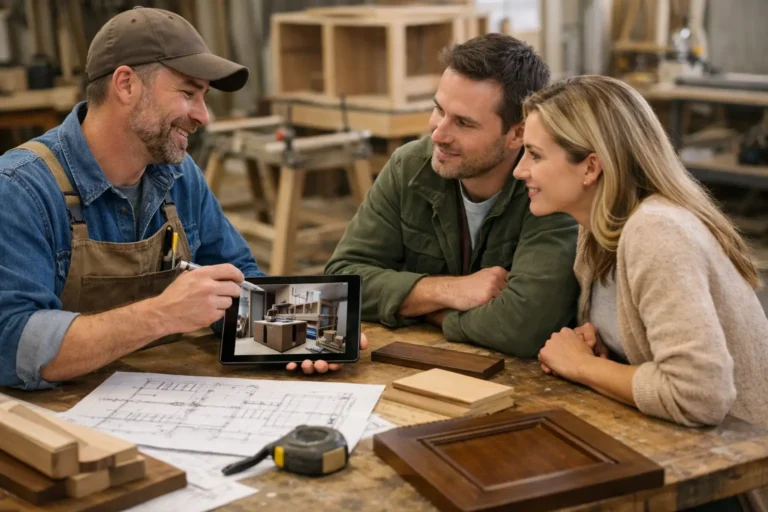
A client pays a deposit for a custom table, cabinet wall, or full interior fit-out, then hears very little for two weeks. From your side, work is moving. Timber is selected, joinery is underway, finishes are being tested, and hardware delays are being managed. From the client’s side, it feels like silence. That gap is where woodworking client updates matter most.
For most woodworking businesses, the issue is not whether updates happen. It is where they happen, how often they happen, and whether anyone can find them later. A progress photo gets sent by text. A finish approval sits in email. A delivery change is buried in a chat thread. Then the client asks for a status update, and someone on your team has to reconstruct the whole story.
CustomWorks.app
Keep clients updated without messy chats
Give each project a private feed for client updates — and keep a clear history of photos, videos, notes, stages, decisions, and delivery moments for your team.
That creates extra admin work, but the bigger problem is trust. Custom woodworking projects take time, and clients usually pay before they can see the result. If communication feels inconsistent, even good work can feel uncertain. Clear updates reduce that uncertainty.
Why woodworking client updates affect more than communication
In a workshop or studio, progress is rarely linear. Material sourcing can shift the schedule. One detail in a shop drawing can affect fabrication. A finish sample may need approval before the next stage starts. Clients do not need every internal detail, but they do need visible signs that the project is moving and that decisions are being handled properly.
Good woodworking client updates do three jobs at once. They reassure the client, reduce incoming status questions, and create a clean project record for your business. That last part matters more than many teams expect. When a project runs for six, eight, or twelve weeks, memory becomes unreliable. A structured update history gives your team a shared reference point.
It also changes how your business looks. A workshop that communicates through scattered messages can still produce excellent work, but it often appears less organized than it really is. A business that shows progress in a clear, consistent format appears more controlled and professional.
What clients actually want to see
Many teams overthink updates because they assume every message needs to be polished or detailed. In practice, most clients want something simpler. They want proof of movement, context around delays or decisions, and confidence that they have not been forgotten.
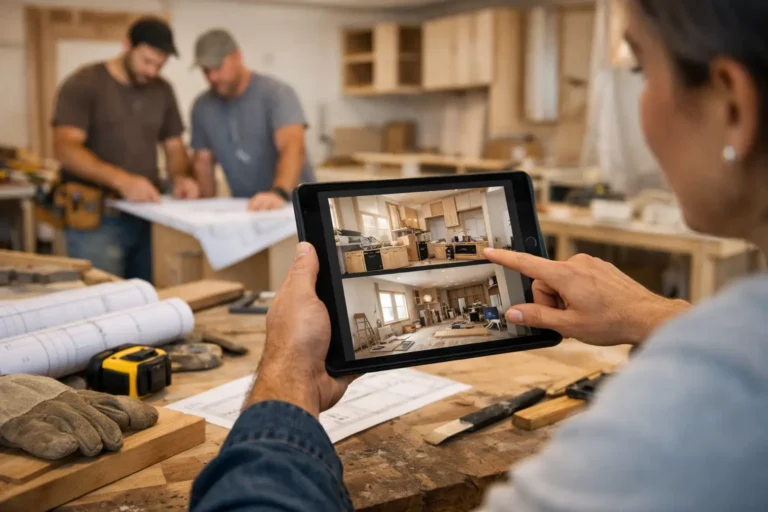
For woodworking projects, that usually means visual progress first. Photos of timber selection, frame assembly, dry fitting, finishing tests, installation prep, and completed sections give clients a much clearer sense of progress than abstract percentages ever will. A short caption often does more work than a long message.
Video can help when a detail needs explanation, especially for larger or more custom pieces. A quick walkthrough of a built-in unit before finishing, or a short clip showing hardware function, can prevent back-and-forth that would otherwise take several messages.
Clients also need key decisions captured clearly. Finish approvals, handle selection, edge profile changes, measurement confirmations, and delivery timing should not live only in personal chats. If they do, you end up with fragmented communication and avoidable misunderstandings.
The problem with ad hoc updates
A lot of woodworking businesses rely on whatever is fastest in the moment. That usually means WhatsApp, text, email, or a mix of all three. It works at first because it feels easy. Over time, though, the same pattern creates friction.
One person sends a workshop photo by phone. Another follows up by email with revised dimensions. The client replies in a different thread asking about lead time. A week later, someone on your team needs to confirm what was approved and when. Now the business is spending time searching instead of building.
There is also a presentation problem. Informal messaging can be useful for quick coordination, but it is a weak format for long-running client projects. Woodworking often involves a series of stages that clients care about: concept confirmation, material prep, fabrication, assembly, finishing, delivery, and installation. If those stages are communicated inconsistently, the whole project can feel less controlled than it is.
This is why many companies move toward a more structured client-facing update process. The goal is not to introduce bureaucracy. It is to make progress visible and keep the project history in one place.
A practical structure for better woodworking client updates
The most effective update process is usually the simplest one your team will actually maintain. For most woodworking businesses, that means tying updates to real project milestones rather than trying to post every day.
Start with stage-based communication. When material is received, when fabrication begins, when a sample is approved, when finishing starts, and when delivery is scheduled, those are natural update points. Between those points, share visual proof of progress if the project is long enough that silence would create uncertainty.
Each update should answer three things: what happened, what the client is looking at, and what comes next. That structure keeps messages short without making them vague. A workshop photo with one sentence of context and one sentence about the next step is often enough.
It also helps to keep change-related updates distinct from general progress. If a client approves a stain, changes dimensions, or accepts a revised delivery date, that should be easy to find later. The more expensive or custom the project, the more valuable that record becomes.
What a good update rhythm looks like
There is no perfect frequency for every shop. A small custom furniture order may only need updates at key production stages. A large residential joinery package or commercial fit-out may need more regular communication because there are more dependencies and more client attention.
A useful rule is this: do not let the client wonder whether anything is happening. That does not mean constant messaging. It means setting a rhythm that matches the project length and complexity.
If work is progressing steadily, weekly updates are often enough for multi-week projects. If a project hits a milestone, send an update then, even if it falls between your usual rhythm. If there is a delay, communicate it early and explain the impact clearly. Clients are usually more frustrated by silence than by bad news delivered promptly.
The operational benefit inside your business
Structured updates are often treated as a client service task, but they also improve internal control. When your team records progress consistently, photos and notes stop disappearing into individual phones and inboxes. Project decisions become easier to verify. Handovers between sales, workshop, installation, and project management become cleaner.
This is especially useful for businesses running several custom jobs at once. Without a visible update history, every client question becomes an interruption. With a central timeline, many answers already exist before the question is asked.
That is one reason platforms built specifically for client project communication are gaining traction. A tool like CustomWorks gives each project a private update feed where teams can share photos, videos, notes, work stages, changes, and delivery updates in one clear timeline. For woodworking businesses, that means less time rebuilding context from scattered messages and a more professional experience for the client.
Where woodworking teams usually get this wrong
The first mistake is waiting until a client asks for an update. Once communication becomes reactive, the client already feels uncertain. The second is sending updates that are too vague. “Work is progressing” does not mean much unless the client can see what changed.
The third mistake is mixing approvals with casual conversation. A quick message may feel efficient in the moment, but if a finish choice or scope change is hard to find later, the cost shows up elsewhere.
Another common issue is assigning updates to no one in particular. If everyone assumes someone else will send the client a progress note, updates become inconsistent. The solution does not have to be complicated. One person should own the client-facing record, even if several team members contribute photos and information.
A better standard for client communication in woodworking
Woodworking is visual, staged, and highly specific to the client. That makes it a strong fit for a clear progress timeline rather than scattered conversation. When updates are organized, clients see movement, decisions are easier to confirm, and your business spends less time handling repeated status requests.
That matters whether you build custom kitchens, fitted furniture, architectural millwork, retail interiors, bespoke cabinetry, restorations, or one-off furniture pieces. The project may differ, but the communication problem is usually the same: clients dislike silence, and teams lose time when updates are spread across too many places.
A better update process does not need to be elaborate. It just needs to be visible, consistent, and easy to maintain. When clients can follow progress without chasing your team, the whole project feels more controlled from the first deposit to final delivery.
The strongest client relationships in woodworking are not built only on craftsmanship. They are also built on showing the work clearly while it is still in progress.