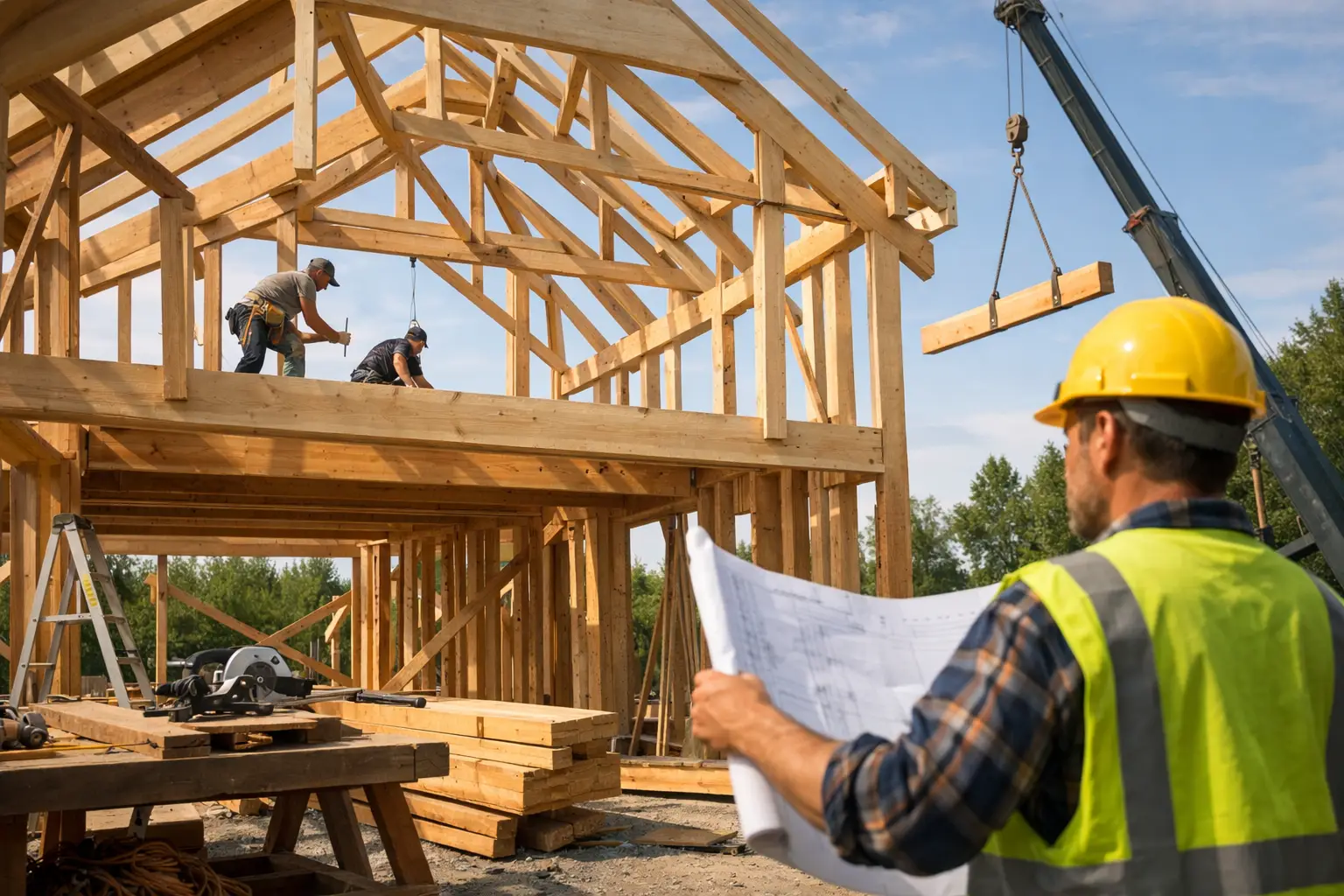
Timber Frame Construction Progress Updates
When a timber frame project goes quiet, clients notice fast. They have already committed budget, approved drawings, and usually paid a deposit. If they do not see what is happening on site, they start filling in the gaps themselves. That is why timber frame construction progress updates matter so much. They do more than report activity. They protect trust during a build that can move quickly in some phases and feel slow in others.
For contractors, custom home builders, and specialist timber frame teams, the challenge is rarely the work itself. The challenge is communication that stays clear over weeks or months. One photo in a group chat, a few texts from site, an email with an attachment, then a missed call from a client asking whether insulation is in yet. The information exists, but it is scattered. That is where the pressure builds.
CustomWorks.app
Keep clients updated without messy chats
Give each project a private feed for client updates — and keep a clear history of photos, videos, notes, stages, decisions, and delivery moments for your team.
Why timber frame construction progress updates matter more than teams expect
Timber frame builds have a particular rhythm. The frame can go up quickly and create a strong sense of momentum. After that, progress becomes less obvious to a client. Membranes, services, insulation, detailing, weatherproofing, and internal work may all be moving forward, but from the outside it can look like not much has changed.
That gap between actual activity and visible progress creates unnecessary questions. Clients ask for reassurance because they cannot see the story of the project. Teams then spend time repeating answers, finding photos in old messages, or explaining the same stage several times to different stakeholders.
Regular updates solve a business problem, not just a communication problem. They reduce reactive admin, support smoother approvals, and make the company look more organized. When the update process is consistent, clients stop chasing for proof that things are moving.
What clients actually want to see during a timber frame build
Most clients do not want a technical site diary. They want clear signs that the project is under control. In practice, that usually means visual evidence, simple stage-based explanations, and clear notes when something changes.
For a timber frame project, useful updates often follow the logic of the build itself. Early stages might show groundworks, delivery of frame components, erection of the structure, and roof installation. Later updates might cover weatherproofing, windows and doors, first fix, insulation, cladding, internal linings, second fix, and finishing work.
The important part is not posting everything. It is posting the right things in the right order. A short note with three current site photos is often more valuable than a long technical message. Clients want to know what was done, what stage the project is now in, and what comes next.
The best format for construction progress updates
For long-running custom projects, updates work best when they form a simple visual timeline. That matters even more on timber frame jobs because so much progress is easier to understand through photos and short videos than through detailed written explanations.
A useful update usually includes four elements: what happened, visual proof, any decision or change that affects the client, and the next expected step. That keeps communication grounded and practical.
There is also a balance to strike. Too few updates create silence. Too many low-value updates create noise. Weekly updates are often enough for steady phases, while milestone updates work well for visible stage changes such as frame erection, watertight status, or first fix completion. If a delay, design change, or supply issue affects timing, that deserves a separate update rather than waiting for the next routine one.
Common mistakes with timber frame construction progress updates
The first mistake is treating updates as an afterthought. If they only happen when a client asks, the company is already on the back foot. The client has felt the silence long enough to follow up.
The second mistake is relying on personal messaging apps and inboxes. They feel convenient at first, but they quickly create fragmented records. One person sends photos on WhatsApp, another emails revised details, and someone else mentions a site issue in a call. Later, nobody has a clean project history.
The third mistake is sharing site activity without context. A client may see battens, membranes, or service runs and not understand whether that means the project is on schedule. Updates need plain language, not trade shorthand.
The fourth mistake is skipping the awkward parts. Timber frame projects, like any custom build, can involve delays, sequencing changes, or material lead time issues. Silence around those moments causes more damage than the issue itself. A calm update that explains what changed and what happens next usually protects confidence better than waiting for the client to notice.
How to make updates easier for the team
The right update system should not add bureaucracy. It should reduce it. That means the format has to be simple enough for site teams, project managers, or office staff to use without turning every update into a reporting exercise.
A practical workflow is to decide in advance which milestones will always be documented. On a timber frame project, that might include site start, slab or base ready, frame delivered, frame erected, roof structure complete, building made watertight, first fix complete, insulation stage, internal linings, second fix, and handover preparation.
Once those checkpoints are defined, teams only need to capture a few photos or a short video, add a plain-language note, and log any client decisions or changes at the same time. That turns updates into part of the project rhythm rather than an extra task somebody remembers late on Friday.
For businesses handling multiple live projects, consistency matters as much as speed. Clients should not get excellent updates on one job and patchy communication on another. A standard structure helps managers maintain quality across the whole portfolio.
Timber frame construction progress updates and client confidence
Timber frame projects often involve clients who are emotionally and financially invested. They may be building a home, an extension, a holiday property, or a commercial space that directly affects their plans. Even when they trust the contractor, long gaps in communication create friction.
Good updates reduce that friction because they answer the questions clients are already asking themselves. Is the work moving? Are we still on the expected path? Has anything changed? Do I need to approve something? When those answers are visible in one place, confidence rises and unnecessary follow-up drops.
This is also where professionalism becomes visible. A company that presents progress clearly looks more controlled than one that relies on scattered messages and verbal updates. That perception matters, especially in custom work where the client is buying both the finished result and the experience of getting there.
For teams that want a cleaner way to present photos, videos, stage notes, changes, and delivery milestones in one client-facing timeline, CustomWorks fits this kind of project well.
What a strong update looks like in practice
Imagine a timber frame extension moving from structure to weatherproof shell. A weak update says, “Good progress this week.” That sounds positive, but it does not answer anything.
A strong update says the external wall panels were installed, roof cassettes are now in place, and the team completed membrane work on the north and west elevations. It includes current site photos, notes that window installation is scheduled next, and flags that cladding samples need client approval by Friday to avoid delay. The difference is clarity. The client can see progress, understand sequence, and act if needed.
That same principle applies at every stage. Show what changed. Explain why it matters. Say what comes next. If there is a delay, say what is being done about it. This is not polished marketing content. It is operational communication presented properly.
A better standard for project communication
Many building companies have accepted poor update habits because they are common in the industry. But common does not mean efficient. If clients still need to ask for status, chase photos, or search old emails for decisions, the communication system is not doing its job.
Timber frame construction progress updates should make the project easier to follow for the client and easier to manage for the team. When they are handled well, they cut noise, support trust, and leave behind a clear visual history of the build.
That matters during the project, but it also matters at handover. A documented timeline gives clients confidence that the work was organized from the start. And for the company delivering the build, it sets a better standard than “Any updates?” ever will.