Window Manufacturing Client Updates That Work
A window order rarely feels slow from inside the factory. It feels slow from the client side.
The frames are in production, glass is scheduled, hardware is on order, powder coating is underway, and installation is booked for next month. Internally, that can look like a normal project. To the client, especially after a deposit has been paid, it can look like silence. That gap is exactly where window manufacturing client updates matter most.
CustomWorks.app
Keep clients updated without messy chats
Give each project a private feed for client updates — and keep a clear history of photos, videos, notes, stages, decisions, and delivery moments for your team.
For companies making custom windows, storefront systems, curtain walls, or specialty glazed units, the work often stretches across weeks or months. There are drawings to approve, measurements to confirm, components to source, fabrication stages to complete, and delivery dates to coordinate. If updates are inconsistent, clients start chasing answers. The team then loses time replying to the same questions across email, text, and chat.
Why window manufacturing client updates become a problem
Most window manufacturers do not struggle because they lack progress. They struggle because progress is not visible in a simple, client-friendly way.
A production team may know exactly where a job stands. Sales may have the latest expectation from procurement. Installation may be waiting for site readiness. But clients do not see that internal picture. They see long lead times, changing dates, and a large financial commitment. When communication is fragmented, trust starts to weaken before anything has actually gone wrong.
This gets worse on custom work. Standard off-the-shelf products are easier to explain because the process is shorter and more predictable. Custom aluminum systems, oversized units, unusual finishes, acoustic glazing, or complex commercial packages involve more dependencies. That means more moments where a client needs context, not just a date.
Silence creates its own story. Clients assume something is delayed, forgotten, or disorganized. Even when production is on track, the absence of updates can make a professional operation look reactive.
What clients actually want to know
Most clients are not asking for a full factory report. They want a clear sense of movement.
They want to know that measurements were confirmed, shop drawings were approved, materials were released, fabrication has started, glazing is scheduled, transport is planned, and installation is still aligned with the expected timeline. If something changes, they want to know early and in plain language.
That is the real job of good window manufacturing client updates. Not to overwhelm clients with internal details, but to show progress at the right level.
There is also a practical side to this. Many update requests are not really requests for information. They are requests for reassurance. A client who can see recent photos, short notes, and milestone updates is much less likely to send another “Any news?” message on Friday afternoon.
The cost of scattered communication
A lot of window businesses still manage client updates through a mix of email threads, phone calls, WhatsApp messages, text messages, and ad hoc photo sharing. That works for a while, until the project gets bigger or the number of active jobs increases.
Then the same issues appear. A photo sent in a chat cannot be found later. A finish change gets agreed by email but never sits next to the production history. A delivery estimate is mentioned on a call, then remembered differently by two people. The client asks for a status update, and the team has to reconstruct the story from five places.
This is not just inefficient. It also creates risk. On longer projects, communication history matters. If a client questions a lead time, asks when a design approval happened, or wants evidence of progress before delivery, scattered communication makes the answer harder than it should be.
A cleaner structure changes the experience on both sides. Clients see one timeline. Teams know where updates belong. Photos, notes, milestones, changes, and delivery messages stay attached to the project instead of disappearing into personal inboxes.
What effective window manufacturing client updates look like
The best update process is simple enough that teams will actually use it.
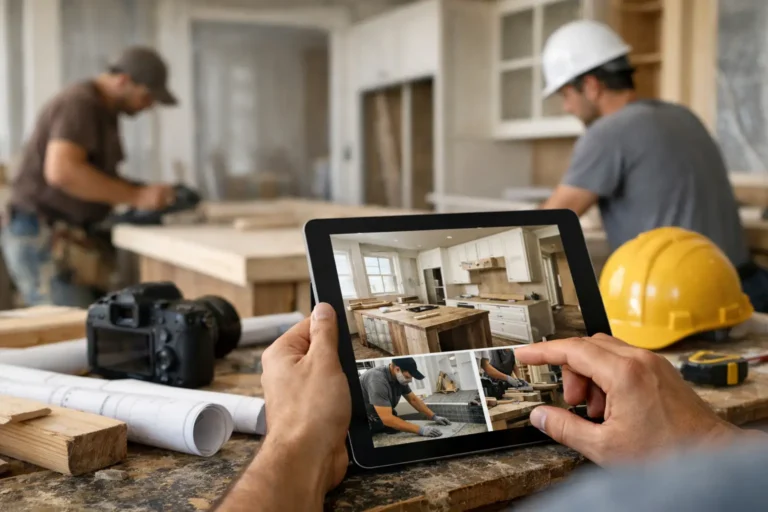
That usually means sharing progress in short, visual entries across key milestones rather than writing long status emails. A few photos of frames in fabrication, a note confirming glazing is booked, an update on hardware arrival, or a message that transport is now scheduled often does more than a detailed paragraph full of internal terminology.
The format matters because manufacturing projects move in stages. Clients understand stages better than they understand internal departments. If you show that a job has moved from approval to production, from production to finishing, and from finishing to dispatch planning, they can follow the process without needing a lesson in operations.
Good updates also acknowledge uncertainty when needed. If a supplier lead time may affect delivery, say that clearly. If installation timing depends on site readiness, explain that dependency. Clients do not expect perfection. They expect visibility.
A practical structure for client updates in window manufacturing
If your team wants a repeatable system, keep it centered on milestone-based communication.
Start with the order confirmation phase. Clients should see that measurements, specifications, and approvals are locked in. This is where many future disputes can be reduced because the project record starts clearly.
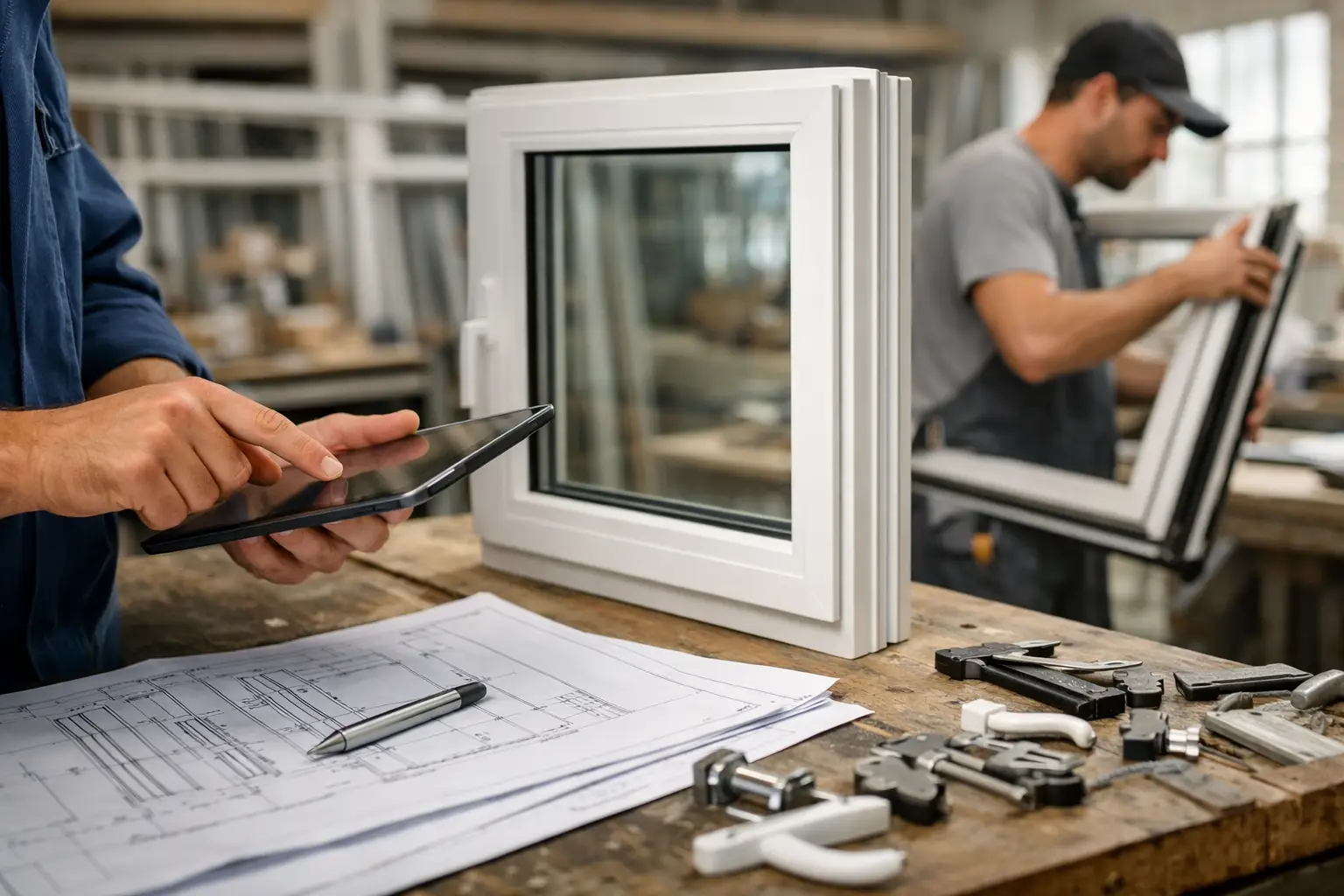
Move next to technical and production preparation. If drawings are approved or materials are released, that is worth showing. For custom window projects, this stage often feels invisible to clients even though it is critical.
During fabrication, visual proof matters. Photos and short captions work well because they make progress tangible. The same is true during finishing, glazing, quality checks, packing, and dispatch preparation.
Finally, delivery and installation updates should be easy to track. Clients want confidence about what happens next, who is coming, and whether the project is moving toward handover.
This does not need daily posting. In fact, too many low-value updates can create noise. For most custom window projects, a steady rhythm tied to real progress is better than frequent filler.
Where teams usually get it wrong
One common mistake is treating updates as a last-minute admin task. When that happens, communication slips during busy periods, which is exactly when clients feel most uncertain.
Another mistake is sharing updates only when something goes wrong. That trains clients to associate communication with problems. Regular progress updates create a different expectation. They show that visibility is part of the service, not damage control.
Some teams also over-explain internal complexity. Clients usually do not need every operational detail. They need a clear view of what has happened, what is happening now, and what comes next.
Then there is the issue of ownership. If nobody owns client updates, everybody assumes someone else will handle them. The best systems make updates easy for sales, project coordination, production, or installation teams to contribute without turning it into a major process burden.
Why a dedicated update feed works better than email threads
Email is familiar, but it is not ideal for long-running manufacturing projects. Threads break, attachments get buried, replies split across multiple people, and the project story becomes hard to follow.
A dedicated client update feed gives structure without giving clients a full project management tool they do not want to learn. That distinction matters. Most clients do not want dashboards, tasks, permissions, and workflow settings. They want one clear place to see progress.
This is where a platform like CustomWorks fits naturally for manufacturers handling custom, long-running jobs. Instead of building client communication around scattered messages, teams can keep photos, videos, notes, stages, changes, and delivery updates in one private project timeline. The result is less back-and-forth, better visibility, and a more professional client experience.
Window manufacturing client updates as a trust tool
For many clients, custom windows are not a small purchase. They may be tied to a renovation schedule, a commercial opening date, a contractor handoff, or a weather-sensitive installation window. Delays have consequences beyond the product itself.
That is why updates are not just about convenience. They are part of trust management.
A client who can see progress is generally more patient when lead times shift for valid reasons. A client who sees nothing is much more likely to assume the worst. The manufacturing reality may be the same in both cases, but the communication experience is completely different.
Better updates also help after handover. If the client needs to refer back to production photos, specification changes, or delivery timing, a visible project history becomes useful long after the installation is complete.
Getting started without adding bureaucracy
The goal is not to create another heavy internal system. The goal is to make client communication easier to maintain.
Start with a simple rule: every project should have one place where the client can view progress, and every major stage should leave a visible record. Use short notes, real photos, and practical wording. Keep the process light enough that the team can maintain it during busy weeks.
If you already have strong internal systems, this can sit alongside them. Internal task management and client-facing updates do not need to be the same thing. In many businesses, they should not be.
When window manufacturing client updates are clear, consistent, and easy to follow, clients stop chasing basic status questions and start feeling informed. That shift is small on paper, but in day-to-day operations it changes the tone of the whole project.