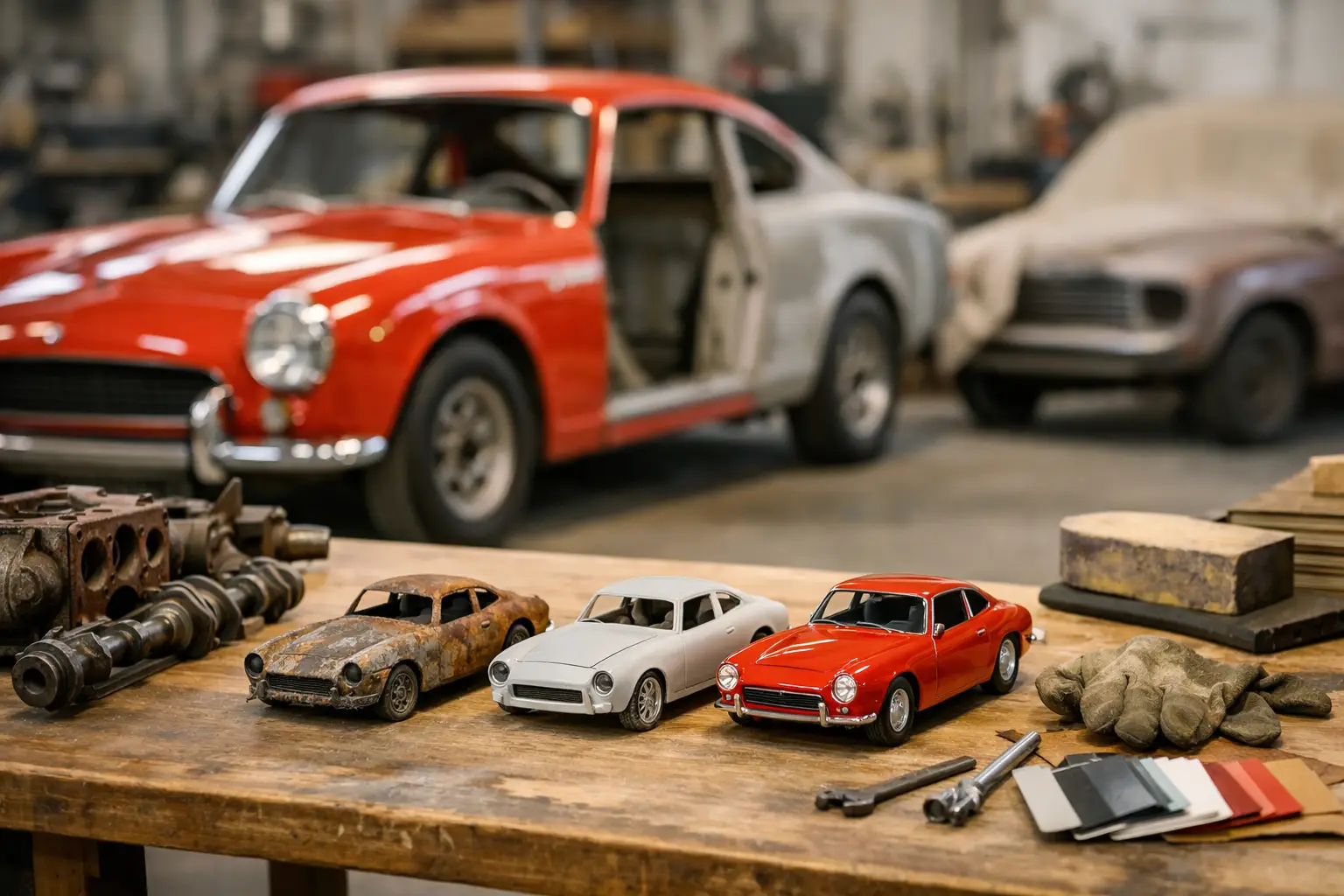
Classic Car Restoration Timeline Explained
Ask three restoration shops how long a full build takes and you will probably hear three different answers. That is the reality behind any classic car restoration timeline. Even when the goal is clear, the work unfolds in layers – hidden rust, missing trim, engine surprises, parts delays, and owner decisions all shape the schedule.
For restoration businesses, that uncertainty creates a second problem. Clients do not just want the car done well. They want to know what is happening while they wait. When months pass between visible milestones, silence turns into anxiety, repeated status requests, and long message threads that waste time on both sides.
CustomWorks.app
Keep clients updated without messy chats
Give each project a private feed for client updates — and keep a clear history of photos, videos, notes, stages, decisions, and delivery moments for your team.
Why a classic car restoration timeline is hard to predict
A restoration is not one job. It is a chain of specialist jobs that depend on each other. You cannot paint before bodywork is stable. You cannot assemble before parts are sourced. You cannot finalize trim until fitment issues are solved. That means one delay early in the process can shift everything that follows.
The starting condition matters more than the model year or badge. A car that looks complete can still hide structural corrosion, poor old repairs, wiring damage, or missing numbers-matching components. By contrast, a rough-looking project may move faster if the structure is sound and replacement parts are common.
The scope also changes the timeline dramatically. A mechanical recommission is very different from a factory-correct restoration. A sympathetic driver-quality build can be completed far sooner than a concours-level project where finishes, fasteners, and trim details are checked against original specs.
Typical phases in a classic car restoration timeline
Most projects follow a recognizable path, even if the exact duration varies from shop to shop.
Assessment and planning
This is where the shop inspects the vehicle, documents condition, confirms goals, and builds an initial estimate of cost and time. For straightforward projects, this stage may take days. For rare vehicles or incomplete cars, it can take longer because the team needs to confirm parts availability, originality, and likely fabrication work.
This stage is often underestimated. Good planning prevents unrealistic promises. It also gives the client a clearer view of what kind of restoration they are actually buying.
Disassembly and documentation
Once work starts, the vehicle is stripped down and every component is photographed, tagged, and cataloged. This can reveal the real condition of the car. Rust hidden under filler, damaged mounting points, or past accident repairs often appear here.
For the client, this is usually the first major shift in perception. A car that arrived looking complete now appears dismantled and worse than before. Without clear updates, this can feel like the project is going backward when it is actually moving into the most informative stage.
Metalwork and body repair
This is where timelines often stretch. Structural repairs, panel alignment, fabrication, rust treatment, and test fitting all take time. If replacement panels are unavailable, custom metal shaping can add weeks or months.
Bodywork also tends to uncover dependencies. Glass fitment, trim mounting, and door gaps may need to be checked before the shell is ready for primer. Rushing this phase usually creates more rework later.
Paint and finishing
Paint sounds like a single step, but it includes prep, priming, blocking, sealing, color, curing, and finishing. High-end work takes time because every flaw in the underlying bodywork becomes visible under paint.
This phase can move quickly in calendar terms if prep is excellent, or stall if the shop is still correcting panel lines and surface consistency. Color changes, custom requests, or weather-sensitive workflows can also affect timing.
Mechanical and electrical restoration
While body and paint are underway, the engine, transmission, suspension, brakes, fuel system, and wiring may be rebuilt or replaced. Some shops run these streams in parallel. Smaller teams may sequence them.
This is another major variable in a classic car restoration timeline. An engine that only needs seals and tuning is one thing. A seized, non-original drivetrain that needs machining, sourcing, and test fitting is another.
Interior, trim, and final assembly
Final assembly looks exciting because the car starts to look complete again. It is also where many small issues appear. Trim clips may not fit. Reproduction parts may need adjustment. Upholstery can reveal bracket or alignment problems. Electrical systems need testing under real conditions.
This is not usually the longest phase, but it is one of the most detail-heavy. The closer the car gets to completion, the more the work shifts from major repairs to precision, fit, and finish.
Testing, correction, and handover
Before delivery, the car should be tested, adjusted, and checked for leaks, noises, charging issues, heat problems, and drivability concerns. A freshly restored car often needs post-assembly tweaks. That is normal.
Clients sometimes assume the car is finished when it is fully assembled. Shops know that final sorting can take meaningful time, especially on older vehicles where restored systems interact in unpredictable ways.
Realistic time ranges
A light restoration or recommission may take a few months. A substantial cosmetic and mechanical restoration can easily run six to twelve months. A full bare-shell, factory-correct, or highly custom restoration may take a year or more.
That range is wide because the inputs are wide. Parts support, labor availability, outside vendors, fabrication needs, and owner approvals all affect the result. The biggest mistake is treating every project as if it fits the same calendar.
If you run a restoration business, it is better to present a timeline as staged progress with review points rather than a single finish date. That creates room for discoveries without making the client feel misled.
What causes delays most often
Parts are one of the obvious causes, but they are not the only one. Waiting on chrome, upholstery, machine work, glass, or specialist subcontractors can slow a project even when the in-house team is ready.
Client decisions are another common factor. Color changes, wheel choices, trim direction, interior materials, and originality debates can stall momentum. The longer the pause between question and approval, the more the schedule drifts.
The less obvious issue is communication. When updates live across calls, texts, email chains, and photos on personal phones, the client may not see steady progress even when it is happening. Then the team spends more time answering scattered questions than moving the project forward.
How to keep clients confident during a long restoration
Classic car clients are usually paying for craftsmanship and patience. What they struggle with is silence. If they cannot see progress, they start to wonder whether the car is waiting untouched.
This is where a simple, client-facing update process matters. Instead of sending random photos or replying to repeated messages one by one, restoration shops can present work as a clear visual history: teardown photos, rust discoveries, repaired panels, paint prep, rebuilt components, interior fitting, and road-test updates.
For businesses that manage long-running custom work, this is the practical value of CustomWorks. A private project feed gives the client one organized place to see photos, videos, short notes, stage updates, changes, and delivery progress without chasing the team across multiple channels. That reduces the usual “Any updates?” cycle and makes a long restoration feel managed rather than vague.
Setting expectations without overpromising
The strongest restoration businesses are careful with certainty. They explain what is known, what is still unknown, and when the next reliable checkpoint will be. That approach may sound less dramatic in the sales conversation, but it builds more trust over the life of the project.
It helps to frame time in phases. Tell the client when disassembly findings will be available. Tell them when bodywork decisions need approval. Tell them when outsourced work may affect sequencing. A staged conversation is easier to believe than a single date given too early.
There is also a commercial advantage here. Clear timelines and visible progress protect margin. When the team is not constantly pulled into ad hoc update calls and message replies, more of the day goes into actual restoration work.
The timeline is part of the service
A classic car restoration is not only measured by the finished vehicle. It is also measured by how professionally the process is handled while the car is apart, delayed, being repaired, and slowly coming back together.
Clients can usually accept that old cars bring surprises. What they do not accept well is confusion. If the timeline changes, show why. If progress is steady but not dramatic, show that too. The shops that communicate clearly tend to keep trust longer, even when the work takes exactly as long as a serious restoration often does.