Stair Manufacturing Project Updates That Work
A custom stair project usually goes quiet at the worst possible moment – right after the client has approved drawings, paid a deposit, and started wondering what happens next. For shops handling bespoke residential or commercial work, stair manufacturing project updates are not a nice extra. They are part of how you keep confidence high while the job moves through design, fabrication, finishing, and delivery.
The problem is familiar. The work is moving, but the client cannot see it. Internally, your team has photos on phones, notes in email, approvals in chat, and delivery timing in someone else’s inbox. From the client’s side, that looks like silence. Silence leads to follow-up messages, phone calls, and avoidable tension.
CustomWorks.app
Keep clients updated without messy chats
Give each project a private feed for client updates — and keep a clear history of photos, videos, notes, stages, decisions, and delivery moments for your team.
For stair manufacturers, that communication gap matters more than it does in simpler jobs. A staircase is structural, visual, and usually tied to other trades. If there is a delay in site readiness, a late finish choice, or a measurement revision, the update needs context. A short message with no visual proof often creates more questions than it answers.
Why stair manufacturing project updates matter so much
Stair projects are long enough to create uncertainty and detailed enough to create risk. A client is not only buying a product. They are buying a process that may involve surveys, engineering checks, shop drawings, material selection, fabrication stages, finishing, transport, and installation coordination.
That makes expectation management part of the deliverable. If a homeowner, builder, architect, or site manager does not know where the project stands, they start filling in the blanks themselves. Usually, they assume the worst. Even when production is on track, poor visibility can make a well-run job feel disorganized.
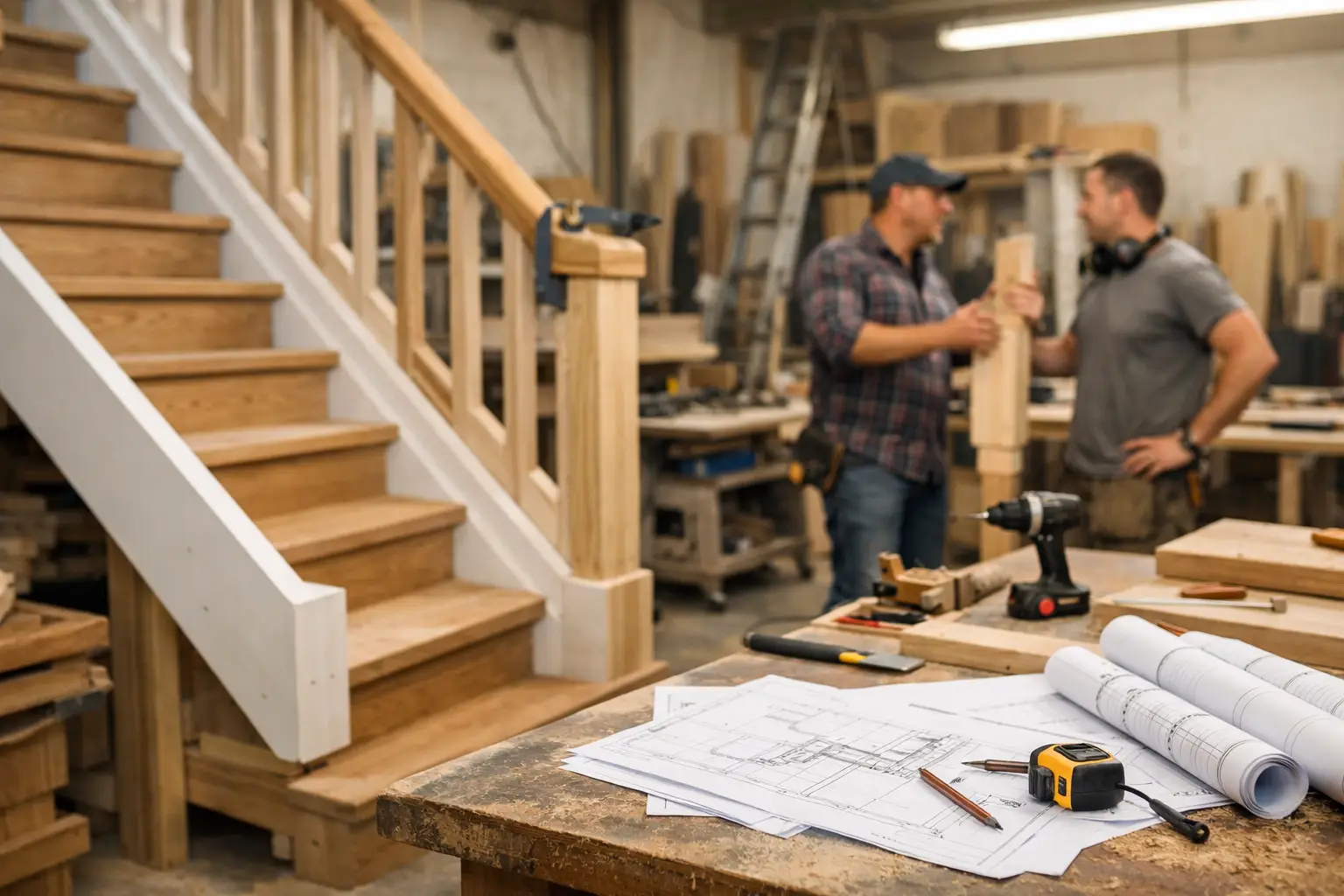
Good stair manufacturing project updates solve that by making progress visible. Instead of saying, “We’re working on it,” you show the CNC prep, the stringer fabrication, the tread mock-up, the powder coat stage, or the finished balustrade ready for dispatch. The update does not need to be long. It needs to be clear, timely, and tied to a real stage of work.
There is also a commercial reason to treat updates seriously. Staircases are high-value custom items. Clients often commit significant funds before they see the final result. The more custom the project, the more reassurance they need between payment and installation. Regular updates protect trust during that gap.
What clients actually want to see
Most clients do not need a full production log. They want enough visibility to feel confident that the project is active, organized, and under control. That usually means a mix of visual evidence, plain-language status notes, and clear markers of what has been completed versus what is waiting on a decision or dependency.
In stair manufacturing, the most useful updates are often tied to milestones. Design approval is one. Final site measurement is another. Material arrival, fabrication start, welding complete, finishing complete, test assembly, packing, dispatch, and installation scheduling are all meaningful points because the client can understand them.
Photos and short videos matter more than many teams expect. A quick image of cut components on the bench or a finished timber tread sample often answers three client questions at once. It proves progress, shows quality, and gives a sense of what comes next.
Just as important is showing changes without drama. If the wall build-up changed, if the finish lead time shifted, or if installation moved because another trade is late, the update should say that plainly. Clients can usually handle delays better than uncertainty. Problems become bigger when they are discovered late or explained badly.
The structure of useful stair manufacturing project updates
The best updates are consistent. Not polished for the sake of it, just structured enough that every client can follow the same logic from start to finish.
A practical update usually covers four things: what stage is complete, what is happening now, what decision or dependency matters next, and whether timing has changed. That format works because it respects how clients think. They want to know where they are in the process, whether the project is moving, and whether they need to do anything.
For example, after a site measure, a useful note might explain that final dimensions have been confirmed, drawings are now being locked for production, and fabrication is scheduled to begin next week pending finish approval. That is much stronger than a vague message saying the project is progressing.
Tone matters too. Overexplaining every technical detail can overwhelm clients, but oversimplifying can sound evasive. The middle ground is usually best. Use plain language, but be specific. Say “steel stringers welded and checked” instead of “framework progressing.” Say “oak treads moved to finishing” instead of “materials in process.”
Where communication usually breaks down
Most update problems are not caused by lack of effort. They come from scattered systems. The survey photo is in one phone. The revised dimension is in a PDF attachment. The architect comment is buried in email. The delivery date changed in a text message. Nobody is hiding information, but nobody has one clean client-facing record either.
That is where friction starts internally as well. Team members waste time asking each other what has already been sent, which version the client saw, or whether someone explained the recent change. The cost is not just admin time. It is inconsistency in front of the client.
For stair manufacturers running multiple jobs at once, this gets worse quickly. Every project feels manageable when it is alone. Add ten active staircases at different stages, and ad hoc communication turns into a system problem.
A better approach is to treat updates as part of delivery, not as an afterthought. When a stage is complete, capture the visual proof, write the short note, and place it in one clear project timeline. If the client or your team needs to check what happened two weeks ago, it should be easy to find.
For companies that want a simple client-facing structure without turning updates into full project management, CustomWorks gives each project a private feed where teams can share photos, videos, notes, stages, changes, and delivery progress in one place. That is often enough to replace the scattered mix of chat messages, email threads, and missing attachments that make custom projects harder to manage than they need to be.
How often should you send updates?
It depends on project length and complexity, but the rule is simple: update on change, update on progress, and never leave long silent gaps without context.
A fast-turn standard stair job may only need a few milestone updates. A fully bespoke architectural staircase with engineering review, custom finishes, and phased installation may need weekly visibility, even if some weeks only confirm that a dependency is being managed.
The wrong approach is sending updates only when a client asks. That trains the client to chase you. The better approach is setting a rhythm early. If they know they will see progress at defined stages, the number of reactive status requests usually drops.
That said, more updates are not always better. Daily messages with no substance can make communication feel noisy. Quality matters more than volume. If there is nothing visual to show, a brief note that confirms the current stage and next expected movement is often enough.
What better updates change for the business
Clear updates do more than reassure clients. They also improve how your business looks and operates.
First, they reduce repetitive communication. When clients can see progress clearly, they ask fewer status questions. That saves office time and interrupts production less often.
Second, they create a cleaner project history. When decisions, revisions, images, and milestones are organized in one place, it is easier to resolve confusion, check what was approved, and review how a project unfolded.
Third, they strengthen your positioning. Custom stair work is rarely bought on price alone. Clients are paying for design, precision, coordination, and trust. A structured update process signals that the business is organized from the first drawing to final install.
That matters with homeowners, but it matters just as much with builders, designers, and commercial clients. Professional communication makes future referrals easier because it reduces the feeling of risk.
A staircase is one of the most visible custom elements in a project. The way you communicate its progress should reflect the quality of the work itself. If clients can see what is happening, understand what comes next, and trust that changes will be explained clearly, the whole project feels more controlled – even when the job has the usual revisions, delays, and site realities that custom work often brings.
The shops that handle this well are not necessarily writing longer updates. They are making progress easier to follow, which is often the difference between a client who waits confidently and a client who keeps asking for reassurance.