Bathroom Renovation Progress Photos That Help
A bathroom can look worse for three weeks than it did before the job started. Tile is off the walls, plumbing is exposed, waterproofing is drying, and the client sees a room that feels unfinished in every possible way. That is exactly why bathroom renovation progress photos matter. They give clients a visible record of work that is real, necessary, and often hidden once the room is complete.
For renovation companies, these photos are not just marketing material or before-and-after content. They are part of client communication. Used properly, they reduce uncertainty, cut down on repeated status requests, and help the client understand what has happened, what is happening now, and what comes next.
CustomWorks.app
Keep clients updated without messy chats
Give each project a private feed for client updates — and keep a clear history of photos, videos, notes, stages, decisions, and delivery moments for your team.
Why bathroom renovation progress photos matter so much
Bathroom work creates a specific communication problem. It is disruptive, highly staged, and full of technical steps that clients usually do not understand. A homeowner may notice that the vanity is missing and the shower is unusable, but they may not see the value of rerouted pipework, substrate preparation, or waterproofing checks.
That gap creates anxiety. The team knows the project is moving. The client sees a mess.
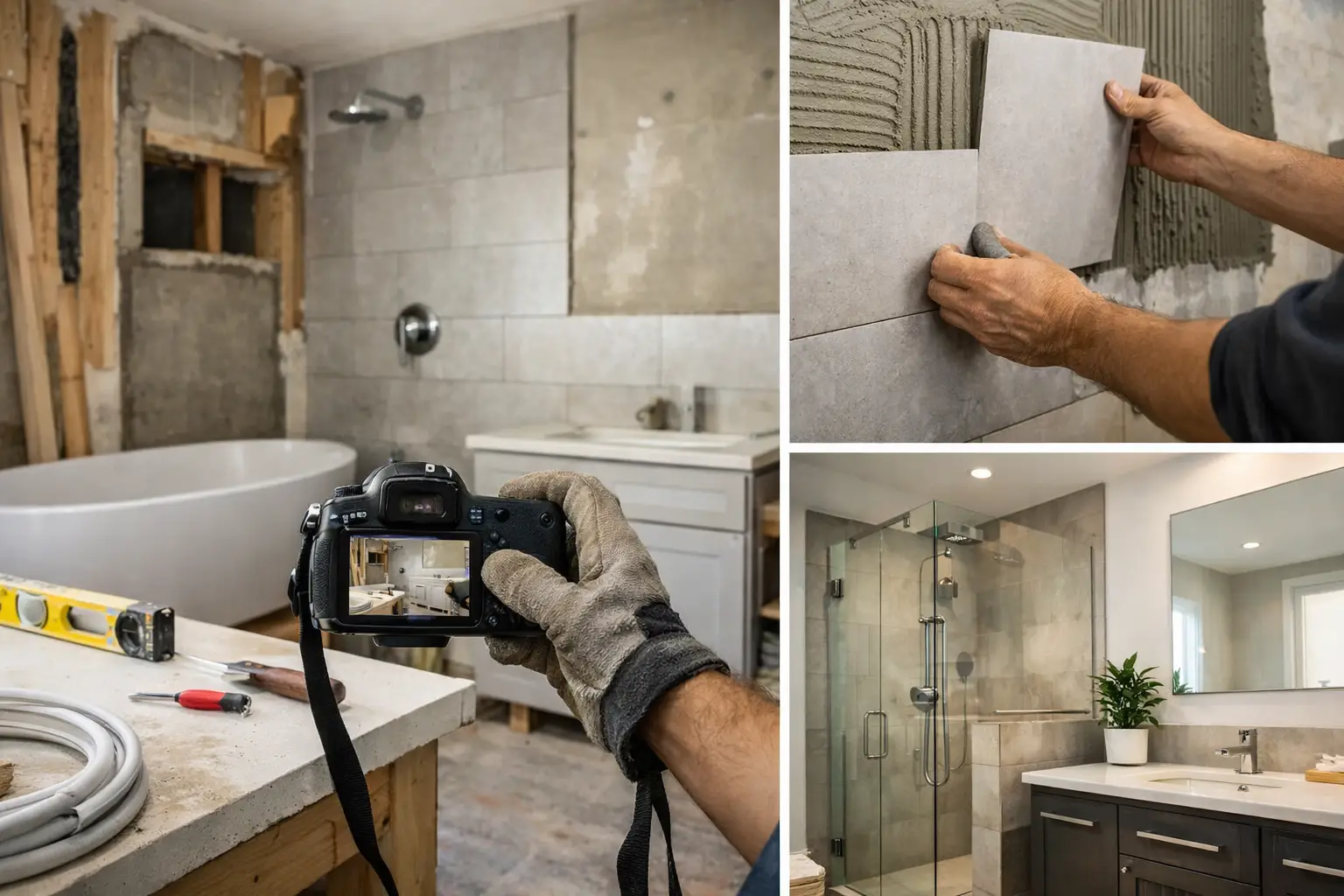
Bathroom renovation progress photos close that gap. They turn invisible progress into visible progress. A series of clear images can show demolition, framing corrections, plumbing rough-in, electrical updates, backer board installation, tanking or waterproofing, tile layout, grout, fixture installation, and final detailing. When each stage is documented, the client gets context instead of silence.
This is especially useful on projects where the client has already paid a deposit and wants reassurance that the job is under control. Silence tends to generate questions. A simple visual update often prevents them.
What clients actually want to see in bathroom renovation progress photos
Most clients do not need a technical site report every day. They want confirmation that the project is moving and that important work is being done properly. Good photo updates answer practical questions without forcing the client to ask them.
The most useful images usually show stage changes. A photo of the stripped-out room explains demolition. A close shot of new pipework shows infrastructure changes. A wide shot of waterproofed walls and floors shows preparation before tiling. A mid-stage tile image shows visible progress. A nearly finished image with fixtures in place signals that completion is close.
It also helps to show details that will later be hidden. Once tile is up and fittings are installed, nobody can see the waterproofing layer, pipe routes, or wall preparation. If there is ever a question later, those photos become part of a clean project history rather than a scramble through old messages.
There is a balance to get right. Too few photos leave clients guessing. Too many low-value images create noise. A handful of meaningful progress photos at the right moments usually works better than a constant stream of random site pictures.
How to structure bathroom renovation progress photos for clients
The problem is rarely taking the photo. The problem is what happens after. In many businesses, the image is buried in a phone camera roll, sent in a chat, forwarded in email, or lost between unrelated messages. That makes the update feel casual, and it makes the history hard to find later.
A better approach is to organize bathroom renovation progress photos by stage. The client should be able to follow the job in order without piecing together fragments from different channels.
Start with stage-based updates
For bathroom renovations, stage-based communication is usually clearer than daily communication. Not every day produces a meaningful visual change, but every stage does. Demolition, first fix, prep, waterproofing, tiling, second fix, and completion are all natural update points.
This keeps communication steady without becoming excessive. It also helps your team stay consistent across projects, because everyone knows what kind of update should be shared and when.
Add short notes to each photo set
Photos alone can still leave room for misunderstanding. A short note changes that. One or two sentences can explain what the client is seeing, what has been completed, and what happens next.
For example, a waterproofing photo means more when paired with a note that says the substrate has been prepared, waterproofing has been applied, and tiling will begin after curing. That gives the client both visual proof and timing context.
Show wide shots and detail shots together
A wide shot helps the client understand the room as a whole. A detail shot highlights quality or hidden work. Used together, they create a more complete picture.
This matters in bathrooms because much of the value is in technical execution. If all the client sees is a room that still looks incomplete, they may underestimate what has been achieved. Detail shots help explain the work behind the finish.
Common mistakes that make photo updates less effective
Some teams already take progress photos, but the updates still do not reduce client questions. Usually the issue is not effort. It is presentation.
One common mistake is sending images only when the client asks. That turns photo sharing into a reactive task rather than a communication system. Another is sending photos without explanation, which can leave the client staring at a picture of pipes or cement board with no idea why it matters.
There is also the problem of scattered communication. If some updates go by text, some by email, and some in a messaging app, the client never has one clear place to check progress. The business ends up repeating itself, and the client still feels under-informed.
Another mistake is treating progress photos as informal content when they are actually part of the service experience. Bathroom renovations are personal, expensive, and disruptive. Clients remember how informed they felt during the process, not just how the room looked at the end.
Why a visual project history is useful after the renovation too
The value of bathroom renovation progress photos does not end at handover. They can support warranty conversations, clarify what was installed behind finished surfaces, and help resolve future questions about changes made during the project.
They also help with internal consistency. If a manager needs to review what happened on a job, or a team member needs to check a previous stage, organized photo records make that easy. Instead of searching through phones and chat threads, the project history is already there.
For businesses doing multiple bathroom projects at once, this becomes even more important. Communication quality tends to slip when volume increases. A structured visual record helps maintain the same standard across all jobs.
This is where a client-facing update system becomes more valuable than ad hoc messaging. A platform like CustomWorks gives each project a private update feed where photos, videos, notes, stages, and changes can be presented in one timeline. For companies managing long-running renovations, that means less scattered communication and a clearer experience for the client.
What good bathroom photo updates look like in practice
A good update is simple. It shows what changed, explains why it matters, and sets the next expectation.
If demolition is complete, show the cleared room and mention that hidden water damage was checked and first fix starts next. If underfloor heating has gone in, show both the full floor and a close-up, then note that the area is being prepared for tile. If tile installation is halfway done, show enough of the room for the client to understand progress and mention whether grouting or fixture fitting is next.
This approach works because it respects how clients think. They are not following your internal schedule. They are asking three basic questions: Is work happening? Is it being done properly? When will I see the next visible step?
Bathroom renovation progress photos can answer all three when they are organized well.
A simple standard your team can follow
If you want photo updates to reduce friction instead of creating more admin, the process needs to be light. Teams usually do best with a simple standard: take photos at key stage changes, choose a small number of clear images, add a short explanation, and publish them in one place the client can revisit anytime.
That is enough for most bathroom projects. You do not need a full report every day. You need visible proof of progress delivered consistently.
The businesses that do this well tend to look more professional without adding bureaucracy. Clients feel informed, teams get fewer update requests, and the project has a usable visual record from strip-out to final handover.
When a bathroom is out of action and the room looks chaotic, silence creates doubt faster than most teams realize. Clear progress photos do the opposite. They show movement, create trust, and give the client something solid to look at while the work is still taking shape.