Garage Conversion Project Updates That Work
A garage conversion usually looks simple from the outside. One room, one new purpose, a clear start and finish. In practice, it rarely stays that tidy. Once work begins, clients want to know what has happened, what changed, what still needs a decision, and whether the timeline is holding. That is why garage conversion project updates matter more than many contractors expect.
For builders, renovation firms, and fit-out teams, the problem is not just sharing progress. It is sharing the right progress in a way that feels clear to the client and manageable for the team. If updates live across texts, email threads, camera rolls, and quick calls from site, even a well-run job can feel disorganized. The work may be fine. The communication often is not.
CustomWorks.app
Keep clients updated without messy chats
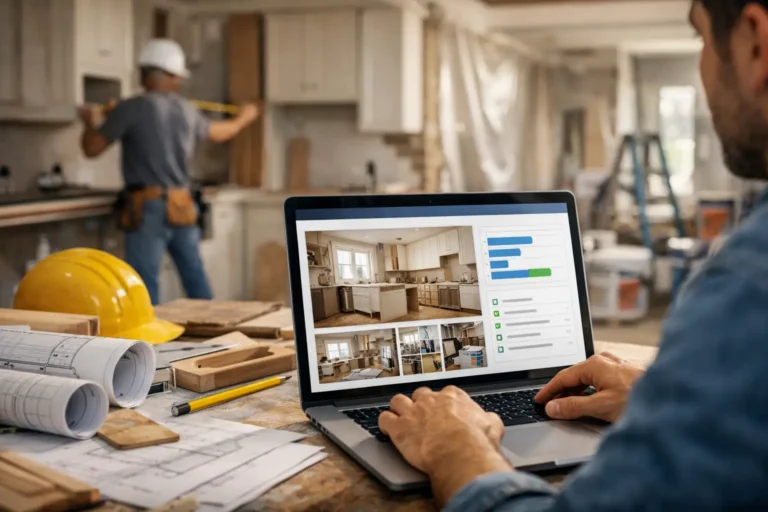
Give each project a private feed for client updates — and keep a clear history of photos, videos, notes, stages, decisions, and delivery moments for your team.
Why garage conversion project updates affect trust
Garage conversions are personal projects. Clients are not just paying for labor and materials. They are paying to turn dead space into something useful – an office, guest suite, gym, studio, utility room, or rental unit. Because the space sits inside or attached to the home, the client notices every pause and every change.
Silence creates its own story. If there is no visible progress, many clients assume there is a problem. They send messages asking if insulation is done, whether first fix happened, or why the plastering date moved. None of those questions are unreasonable. But when they arrive one by one across different channels, they create friction for the team.
Consistent updates reduce that friction. They give clients proof that work is moving, even when progress is not dramatic from the street. A photo of framing, a short note about electrical rough-in, or confirmation that a building control visit passed can do more to maintain confidence than a long phone call at the end of the week.
What clients actually want to see
Most clients do not need a full project management system. They want a clear, client-facing record of what happened and what happens next. For garage conversion project updates, that usually means a mix of visual proof and simple commentary.
Photos matter because much of the work is hidden later. Insulation, wiring routes, damp-proofing, subfloor prep, and structural reinforcement are all easier to appreciate before walls are closed up. If you fail to record them at the time, you lose a useful part of the project story.
Short notes matter because photos alone can be misleading. A client may see exposed studs and think nothing has moved for days. A brief explanation changes that: framing complete, electrics started, insulation booked for Thursday, window lead time confirmed. The value is not in writing more. It is in removing guesswork.
Milestones matter because they help clients orient themselves. Demolition, structural opening, first fix, insulation, plasterboard, plaster, second fix, decorating, and handover give shape to a job that might otherwise feel like a blur.
And decisions matter because delays often come from waiting on the client. Flooring choice, socket positions, heating panel location, paint finish, door style, or bathroom fittings can all hold up the schedule. A good update system captures the decision, the timing, and the result.
The communication mistakes that create extra work
Many teams think they have an update process because they send messages when something important happens. That is better than nothing, but it still leaves gaps.
The first mistake is relying on memory. A site manager means to send photos at the end of the day, gets pulled into another issue, and forgets. The update never goes out. The next morning starts with a client message asking for news.
The second mistake is using too many channels. A few photos go to WhatsApp, a variation is discussed by email, and a completion date is mentioned on a call. Later, nobody has a clean record of what was shared or agreed.
The third mistake is only communicating problems. If the client only hears from you when there is a delay, communication becomes associated with bad news. Routine progress updates create balance. They show momentum and make occasional changes easier to explain.
The fourth mistake is overloading the client with internal detail. They do not need every delivery issue or every subcontractor conversation. They need a simple view of progress, key decisions, changes, and next steps.
A practical structure for better project updates
The most effective approach is usually the simplest one: keep every garage conversion update in one chronological timeline that the client can follow without asking for context.
Start each update with the stage of work. That instantly tells the client where the project sits. Then add one to three photos or a short video. After that, include a brief note covering what was completed, what is happening next, and whether anything needs client input.
For example, after structural work, an update might show the steel installed, mention that the opening is complete and signed off, and note that framing starts Monday. During first fix, the update could show cable runs and pipework, confirm that socket positions match the latest plan, and remind the client that light fitting choices are needed by Friday.
This structure works because it answers the three questions clients always have: what happened, what does it mean, and what comes next.
Where garage conversion updates are especially valuable
Not every stage needs the same level of communication. Some moments carry more weight and deserve clearer documentation.
The early strip-out phase is useful because it shows visible movement fast. Even basic photos help reassure the client that the project is active.
Structural and compliance-related work deserves careful updates because clients often cannot judge it themselves. If a new opening, lintel, fire-rated assembly, insulation upgrade, or window installation is part of the conversion, showing that work clearly builds confidence.
Hidden-stage work is another critical moment. Once walls close, clients lose visibility. Good records of insulation, membranes, electrics, and plumbing can prevent confusion later and help during snagging or future maintenance.
Finishing stages benefit from updates too, but for a different reason. At that point, clients start focusing on quality and details. Sharing trim work, decorating progress, flooring, and fixture installation helps align expectations before handover.
What good updates do for the business
Better communication is not just a client service issue. It changes how the team operates.
A clear update history reduces repeated status requests. Instead of answering the same question three different ways, the team can rely on an organized record. That saves time, but it also lowers the risk of inconsistent information.
It improves professionalism. Many small and mid-sized firms do excellent technical work but still present updates in an improvised way. A clean client-facing feed makes the business look more controlled and more mature.
It also protects margin. When changes and decisions are recorded properly, it becomes easier to show why a schedule moved or why extra work was required. That does not remove every disagreement, but it gives the conversation a factual basis.
For companies handling multiple residential jobs at once, this matters even more. Without a standard update method, communication quality depends too much on individual habits. One client gets regular photos. Another gets silence. A simple structure creates consistency across projects.
Some firms use tools built for internal project management, but clients rarely want to learn a full system just to check progress on a garage conversion. A simpler approach works better. Platforms like CustomWorks are designed around client project updates, with one private timeline for photos, videos, notes, work stages, changes, and delivery moments. For long-running custom jobs, that keeps communication visible without turning the client into part of your internal workflow.
How to make updates sustainable for the team
The test is not whether an update process looks good in theory. It is whether the team can keep doing it on busy weeks.
That usually means assigning ownership. If nobody owns updates, they slip. In some businesses, the project manager handles them. In others, a site lead captures photos and the office team turns them into short client-ready entries. Either model can work.
Frequency should match the pace of the job. Daily updates are helpful during intensive phases, but not every project needs them throughout. Two or three useful updates per week often perform better than daily messages with little substance.
It also helps to standardize what gets captured. If the team knows to document milestones, hidden works, decisions, variations, and handover items, the update habit becomes easier to maintain.
The goal is not more communication. It is cleaner communication. Garage conversion clients do not need constant contact. They need enough visibility to trust that the work is progressing and enough context to make decisions at the right time.
That is what strong garage conversion project updates really deliver. They turn progress into something the client can see, not just something the team says is happening. And when clients can see the work clearly, the whole project tends to run more smoothly for everyone involved.
If your clients keep asking for updates, they are not asking for more noise. They are asking for a clearer view of the job they already paid to start.