Better Bespoke Furniture Project Updates
A bespoke furniture order rarely feels long at the quote stage. Then the deposit is paid, the timber is selected, drawings are revised, hardware changes get discussed, workshop time shifts, finishing takes longer than expected, and suddenly the client wants to know where things stand every few days.
That is why bespoke furniture project updates matter more than many workshops realize. They are not just a courtesy. They are part of how you protect trust during a project that may run for weeks or months and include design decisions, material approvals, production stages, delays, and delivery coordination.
CustomWorks.app
Keep clients updated without messy chats
Give each project a private feed for client updates — and keep a clear history of photos, videos, notes, stages, decisions, and delivery moments for your team.
For furniture makers, cabinet shops, joinery studios, and fit-out teams, silence is expensive. It creates uncertainty for the client and extra admin for the team. Once a client feels out of the loop, the messages start stacking up across email, text, and chat apps. Each reply takes time. Each missing photo or forgotten decision creates more risk.
Why bespoke furniture project updates affect more than communication
When clients commission custom furniture, they are not buying something off a shelf. They are paying in advance for work they cannot fully see yet. That creates a gap between payment and visible progress. Good communication closes that gap.
If updates are inconsistent, clients often assume the worst. They may worry the job is delayed, forgotten, or going off brief. Even when work is progressing normally, a lack of visibility makes the project feel unmanaged.
For the business, the problem is not only client anxiety. It also shows up in wasted time. Teams repeat the same answers, search for the latest approved drawing, resend workshop photos, and try to reconstruct when a decision was made. The issue is rarely the project itself. The issue is that the project history is scattered.
This is where a more structured approach to bespoke furniture project updates makes a practical difference. When every update, image, change, and milestone is captured in one place, clients can see progress for themselves and the team spends less time proving that work is happening.
What clients actually want from project updates
Most clients do not need a full production management system. They do not want to log into a complex portal, read internal notes, or interpret workshop schedules. They want clear reassurance that the project is moving, that decisions are recorded, and that they will not be surprised later.
In practice, that usually means a simple timeline of progress. A few site or workshop photos. Short notes explaining what has been completed, what is waiting on approval, what changed, and what happens next. If there is a delay, clients usually handle it better when it is explained early and clearly.
The strongest updates are visual and specific. “Frames assembled and dry-fitted today” is stronger than “making good progress.” A photo of installed drawer runners or the first coat of finish tells a much clearer story than a vague status email.
That does not mean every update needs to be long. In most bespoke furniture projects, short and regular beats detailed and occasional.
The common failure points in bespoke furniture project updates
Many businesses already try to keep clients informed, but the method breaks down as jobs increase.
One common problem is relying on personal messaging apps. A project manager sends one photo on WhatsApp, the maker shares another by email, and a design revision is approved in a separate thread. It feels fast in the moment, but over time it becomes difficult to track what the client has actually seen and what the final agreed version is.
Another problem is updating only when something major happens. That sounds efficient, but long gaps create the impression that nothing is moving. In furniture making, a lot of meaningful work happens between obvious milestones. Material prep, templating, joinery, sanding, finishing, curing, and packing may not look dramatic individually, but they matter to the client because they show steady progress.
A third issue is that updates are written from the team’s perspective rather than the client’s. Internal shorthand may make sense in the workshop, but clients need context. They need to know whether a change affects timing, appearance, cost, or installation.
What a good update system looks like
A strong client update process for custom furniture is simple enough that the team will actually use it. If it feels like extra administration, it will slip. If it is quick to update and easy for clients to follow, it becomes part of the normal project rhythm.
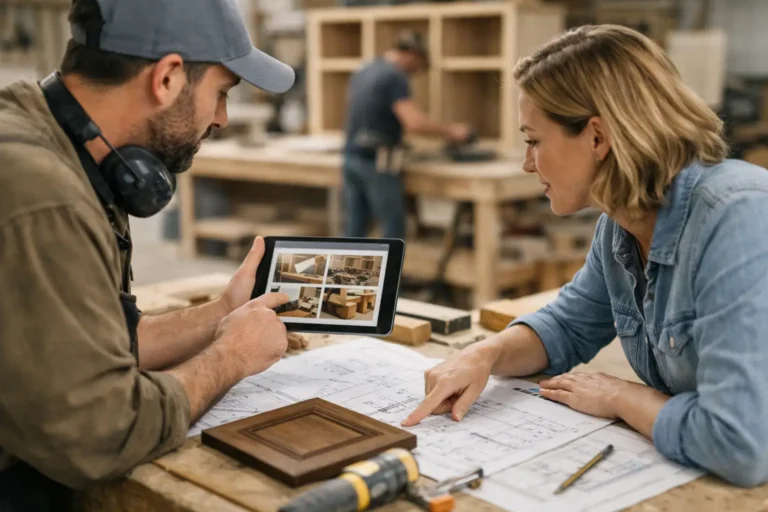
The best setup usually includes a private project feed where each update sits in chronological order. Photos, videos, short progress notes, key decisions, changes, and delivery information all stay attached to the same project. That gives clients one clear place to check status without chasing the team.
For the business, this creates a visible record of the job. You can see when drawings were shared, when finishes were approved, when fabrication started, when fitting was completed, and when any change was explained. That helps reduce misunderstandings and gives the whole team a cleaner communication trail.
A platform like CustomWorks fits this model because it focuses on client-facing project updates rather than internal task management. That distinction matters for bespoke furniture businesses. Most clients do not need your production system. They need a clear, professional view of progress.
How to structure bespoke furniture project updates
The format does not need to be complicated, but consistency matters. A useful update usually answers three questions: what happened, what the client needs to know, and what comes next.
For example, if the carcasses are assembled, say so plainly and include a photo. If the brass handle supplier has changed lead times, explain whether that affects delivery. If the next step is spray finishing next Tuesday, include that expectation. This keeps the project grounded in real activity rather than general reassurance.
It also helps to label stages in a way clients understand. Design approval, materials confirmed, production started, first assembly, finishing, quality check, delivery scheduled, installation complete – these stages make sense outside the workshop and give the client a feeling of progression.
Frequency depends on project length and complexity. A simple two-week job may only need a handful of updates. A multi-room interior package, high-end fitted joinery job, or complex commission will usually need more regular communication. The right cadence is the one that prevents silence without creating unnecessary noise.
Why visuals matter in furniture projects
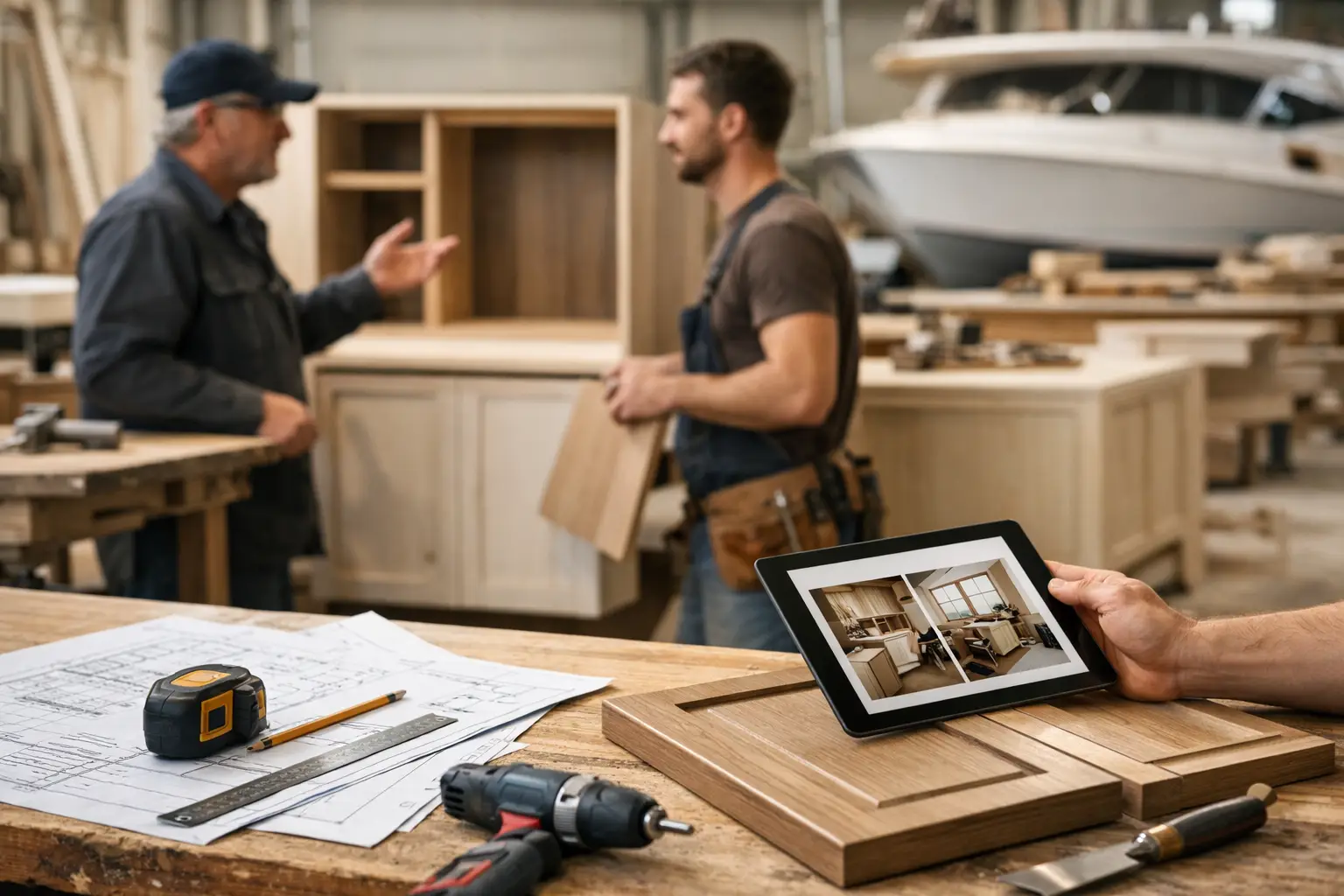
Furniture is tactile and visual. Clients care about grain, proportions, finish, hardware, alignment, and detail. A written update can tell them the work is moving, but images prove it.
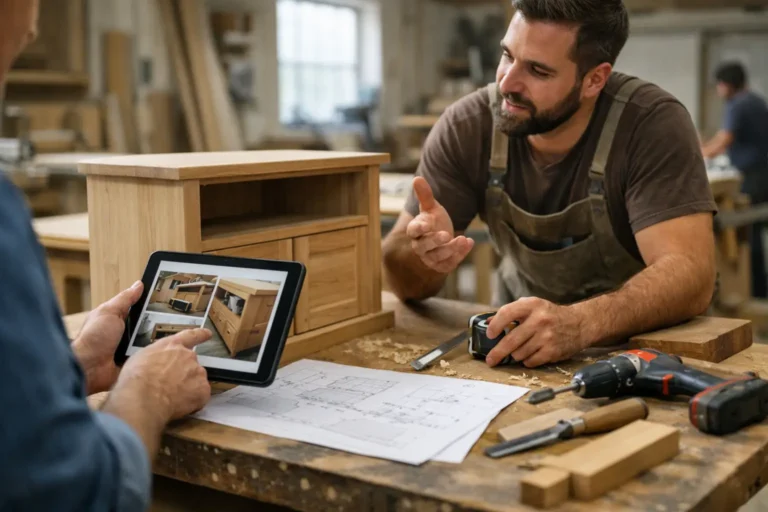
This is especially useful during the middle stages of a project, when the final result is not yet obvious. A photo of timber selection, a video of drawer action, or an image showing mock-up proportions can answer questions before they are asked. It also gives clients confidence that the specification is being followed.
There is a trade-off here. Too many raw workshop images without explanation can create confusion, especially if parts are unfinished or temporary. The answer is not fewer visuals. It is better context. A short note explaining that components are still in pre-finish stage or that protective wrapping will be removed at installation keeps expectations realistic.
Better updates mean fewer interruptions
Many furniture businesses treat updates as something done for the client. In reality, they also protect the team.
When clients can see recent progress in a structured timeline, they are less likely to send repetitive messages asking for reassurance. That reduces interruptions for owners, project managers, designers, and makers. Instead of stopping work to answer the same question in three different places, the team can point to a current project record.
This also improves professionalism. A well-presented update history makes the business look organized and controlled. That matters in custom work, where confidence is often part of the sale. Clients notice when communication feels deliberate rather than improvised.
For smaller companies especially, this can level up the client experience without adding heavy process. You do not need a large office team to look structured. You need a reliable way to show what is happening.
Where to start if your process is messy now
If your current update system lives across texts, emails, camera rolls, and memory, the first step is not a major overhaul. It is choosing one client-facing format and sticking to it.
Start each project with a dedicated place for updates. Record the major milestones. Add photos as work progresses. Note approvals and changes when they happen, not days later. Keep the language plain. If a client opens the project feed after a week of silence, they should be able to understand the current status in less than a minute.
The key is not perfection. It is visibility. Clients are usually reasonable when they can see movement, understand decisions, and know what happens next.
In bespoke furniture, craftsmanship matters. But during a long project, communication shapes the experience just as much as the final piece. If clients never have to ask where things stand, you are not just sending better updates. You are running a more trustworthy business.