Custom Furniture Client Communication That Works
A client pays a deposit for a custom dining table, built-in wardrobe, or full furniture package, then waits. Your team is busy sourcing materials, confirming dimensions, resolving workshop issues, and keeping production moving. From the client side, though, silence often feels like delay. That is why custom furniture client communication matters so much. When updates are inconsistent, even a well-run project can start to feel disorganized.
For furniture makers, joinery shops, interior studios, and bespoke production teams, the communication problem usually starts small. A few updates go out by email, a few photos get sent in WhatsApp, one finish approval happens by text, and a delivery change gets mentioned in a call. Nothing seems broken at first. But over a project that runs for weeks or months, the history becomes scattered, and clients start asking for reassurance instead of waiting for the next step.
CustomWorks.app
Keep clients updated without messy chats
Give each project a private feed for client updates — and keep a clear history of photos, videos, notes, stages, decisions, and delivery moments for your team.
Why custom furniture client communication breaks down
Most custom furniture businesses do not struggle because they do poor work. They struggle because project communication is spread across too many places and handled too reactively.
A made-to-order project naturally creates uncertainty. Lead times can shift. Materials can be delayed. A detail that looked straightforward on a drawing may need a workshop adjustment once production starts. Clients usually accept that custom work takes time, but they do not accept feeling uninformed.
That gap is where trust starts to weaken. If the only communication happens when the client asks, your team is already behind. Every “Any updates?” message creates extra admin, interrupts production, and forces someone to reconstruct the current status from memory, old messages, or photos buried in a phone.
There is also a presentation issue. High-value custom furniture projects are personal. Clients are often investing significant money in pieces designed around their home, space, or brand. If communication arrives through scattered chat threads and informal photos, the experience can feel less professional than the work itself.
What clients actually want during a custom furniture project
Most clients are not asking for full production management. They do not need internal schedules, workshop task boards, or procurement details. They want clear visibility.
In practice, that usually means four things. They want to know that the project is moving, what stage it is in, whether any decisions are needed from them, and when they should expect the next milestone.
Photos matter because they turn progress into something visible. A short note matters because it gives context to the image. Stage updates matter because they show movement from design approval to material prep, fabrication, finishing, assembly, and delivery. Decision records matter because they reduce confusion later, especially around finishes, hardware, dimensions, or installation details.
The mistake many teams make is assuming the client needs more volume. Usually they need more structure, not more messages.
A better system for custom furniture client communication
The simplest fix is to move from ad hoc replies to a repeatable update rhythm.
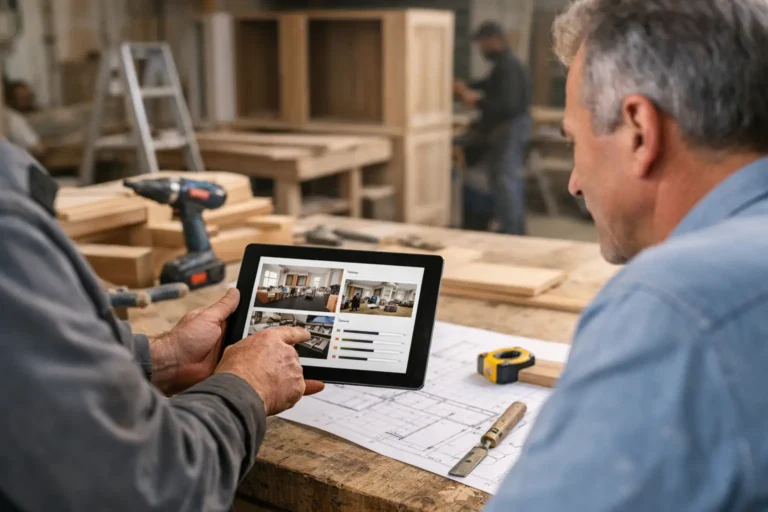
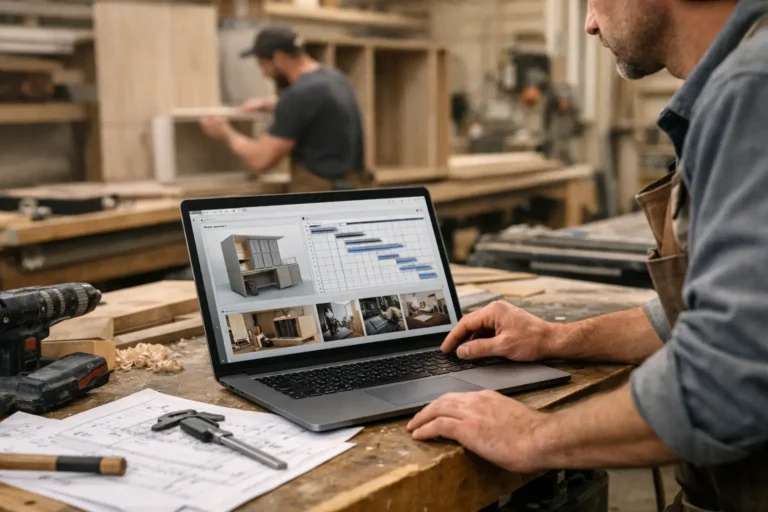
That does not mean sending long weekly reports or forcing clients into complicated software. It means giving each project one clear place where progress is documented in order. When updates, photos, videos, stage changes, variations, and delivery notes live in a single timeline, communication becomes easier for both sides.
A structured update flow changes the dynamic. Instead of the client chasing your team for answers, they can see what has happened and what comes next. Instead of your staff repeating the same status explanation across calls, texts, and email threads, they can post one clear update that keeps everyone aligned.
This is especially useful in custom furniture because so much of the work is visual. A frame in production, a stone top arriving, a stain sample approved, or a fitted cabinet ready for installation tells the story quickly. When those moments are captured and organized, the project feels controlled.
What good communication looks like in real projects
A wardrobe installation project might begin with approved drawings and a note confirming final site dimensions. Next comes material arrival, then carcass production, then door finishing, then hardware fitting, and finally installation scheduling. None of these updates needs to be long. Each one just needs to be timely and clear.
A restaurant fit-out furniture package may need a different style of communication. The client may care more about batch progress, coordination with site readiness, and delivery sequence. In that case, updates should focus less on craftsmanship detail and more on readiness, dependencies, and dates.
For a one-off statement piece, such as a conference table or custom reception desk, the client may want to see more of the making process. Here, communication can lean more heavily on photos, craftsmanship milestones, and finish approvals.
So the right communication style depends on the job. What stays consistent is the need for one reliable record of progress.
What to include in client updates
The strongest updates are short, specific, and easy to scan. They usually include what was completed, what is happening now, what the client needs to know, and the next expected step.
Photos should be tied to context. A workshop image without explanation can create more questions than confidence. If you post a picture of unfinished timber, say whether it is cutting, dry assembly, sanding, or pre-finish prep. That avoids the client misunderstanding normal production stages as a problem.
Changes and decisions should be documented clearly. If the client approves a finish revision or accepts a delivery date change, that should sit in the project history where everyone can find it later. This matters when projects involve multiple stakeholders, such as homeowners, designers, site managers, or procurement contacts.
Delivery and installation updates deserve special care because this is where pressure often peaks. A client who has waited eight weeks is not only asking whether the furniture is done. They are asking whether the final handover will happen as expected. Clear notices about readiness, access requirements, delivery windows, and completion status reduce last-minute friction.
The business impact of better custom furniture client communication
Better communication is not just a client service improvement. It affects operations.
When updates are organized, your team spends less time answering repeated questions. Project managers and office staff stop searching through emails and chat threads for old approvals or progress photos. Workshop teams can stay focused instead of being pulled into constant status requests.
It also supports trust after payment. Custom furniture projects often involve deposits, staged payments, and long lead times. The moment after a client pays is often the moment they become more alert, not less. If they hear little for two weeks, concern builds quickly. Visible progress helps protect confidence during that waiting period.
There is also a reputational effect. Businesses that communicate clearly tend to look more established and more in control. Even when a project hits a delay, clients are usually more reasonable if they can see the situation, understand the reason, and know what happens next.
That is an important trade-off to acknowledge. Good communication will not remove every delay or complication. It does, however, stop uncertainty from turning every issue into a trust problem.
How to make the process easier for your team
The system has to be simple enough that people actually use it.
If client updates require heavy admin, they will be skipped during busy periods. A practical process is usually built around quick visual updates, short notes, clear stage markers, and an agreed cadence. Some teams post at key milestones only. Others post once or twice a week for active projects. The right frequency depends on project length, project value, and how much visible change happens between stages.
What matters more than frequency is consistency. Clients can adapt to a slower rhythm if it is predictable. What creates anxiety is irregular silence followed by rushed explanations.
This is where a dedicated client-facing update system can help. Platforms such as CustomWorks are designed around that exact need: one private timeline per project where teams can share progress photos, videos, notes, stage changes, decisions, and delivery updates without turning the client into part of the internal project management setup.
For custom furniture businesses, that approach is often a better fit than asking clients to follow internal tools or rely on fragmented conversations across multiple apps.
Where to start if your communication is messy today
Do not try to redesign your whole operation at once. Start by choosing one active project and creating a clearer update flow from this week forward.
Decide who posts updates, what types of updates should always be recorded, and how often the client should expect communication. Keep the format simple enough that it survives busy workshop days and installation weeks.
Then look at the friction points that create most of the back-and-forth. It may be finish approvals, delivery timing, design changes, or basic status visibility. Once those moments are documented consistently, the volume of reactive messages usually drops.
Clients do not expect perfection. They expect clarity, especially when they are paying for work that takes time, care, and coordination. If your communication gives them a reliable view of progress, your projects feel more professional long before the final piece is installed.
The real goal is not sending more updates. It is making every update easier to trust.