How to Reduce Client Status Update Requests
A client who asks for updates every few days is usually not being difficult. They are reacting to silence.
That is the real issue behind most repeated check-ins, and it is why learning how to reduce client status update requests is less about saying no and more about building a clearer communication system. If your projects run for weeks or months, clients want visible proof that work is moving, decisions are recorded, and nothing has gone off track after the deposit is paid.
CustomWorks.app
Keep clients updated without messy chats
Give each project a private feed for client updates — and keep a clear history of photos, videos, notes, stages, decisions, and delivery moments for your team.
For companies handling renovations, custom builds, fit-outs, fabrication, bespoke manufacturing, and other long-running work, this problem shows up in familiar ways. One client sends WhatsApp messages asking if anything changed. Another asks for photos that were already sent by email. Someone else wants a delivery update that your team discussed internally but never shared properly. The result is the same each time: your team answers the same question repeatedly, communication gets scattered, and the client still feels uncertain.
Why clients keep asking for status updates
Most clients are not asking for more communication. They are asking for more certainty.
A long-running custom project is hard for the client to see. Unlike buying a standard product, they cannot easily tell whether progress is normal, whether delays are expected, or whether key decisions have been captured. If they do not have a simple way to check the current state of the project, they create their own system by emailing, calling, or messaging your team.
This gets worse when updates are inconsistent. If one week includes photos and a short note, then the next two weeks are quiet, the client starts to assume something is wrong. Even when work is continuing normally, silence creates room for doubt.
There is also a trust factor. Many custom projects involve a large budget, a long lead time, and some level of disruption or dependency. A homeowner waiting on a renovation, a business owner waiting on a fit-out, or a client paying for a bespoke production run all need confidence that the job is moving forward in a controlled way. Reassurance matters almost as much as raw information.
How to reduce client status update requests at the source
If you want fewer incoming questions, the goal is not to communicate more in every direction. The goal is to communicate more clearly in one direction.
That means replacing reactive updates with a predictable update rhythm and a single client-facing record of progress. When clients know where to look, what kind of updates to expect, and when they will hear from you next, they stop checking in as often.
This shift sounds simple, but it changes the client experience. Instead of feeling like they have to chase your team for information, clients feel informed by default.
Set expectations before the project gets busy
The best time to prevent repeated status requests is at the beginning, not after the messages start piling up.
Clients should know how communication will work from day one. Tell them what kinds of updates they will receive, how often they should expect them, and where those updates will appear. If there are parts of the project where visible progress is slower, say that early. If change requests, approvals, or supply lead times can affect timing, make that clear too.
This does not mean overwhelming the client with process detail. It means giving them a simple structure. For example, you might explain that they will receive progress updates at each key stage, with photos, notes, and any decisions that need their input. That one explanation can prevent weeks of ad hoc messaging later.
Create a consistent update cadence
Inconsistent communication creates more questions than limited communication.
A client can usually accept weekly updates, stage-based updates, or milestone updates if the pattern is reliable. What causes anxiety is randomness. If updates only happen when someone on your team remembers, the client has no way to judge whether silence is normal.
The right cadence depends on the project type. A kitchen renovation may need more frequent visible progress than a fabrication job during a planning or procurement phase. A yacht refit may have long technical phases where progress is real but not obvious to the client. The point is not that every project needs the same schedule. The point is that each project needs a visible rhythm.
Short updates work well here. A few photos, a sentence on what was completed, a note about what is next, and any decisions or delays worth flagging are often enough. Clients rarely need a long report. They need a steady signal that the project is moving.
Show progress visually
For long-running custom work, photos and short videos do more than text alone.
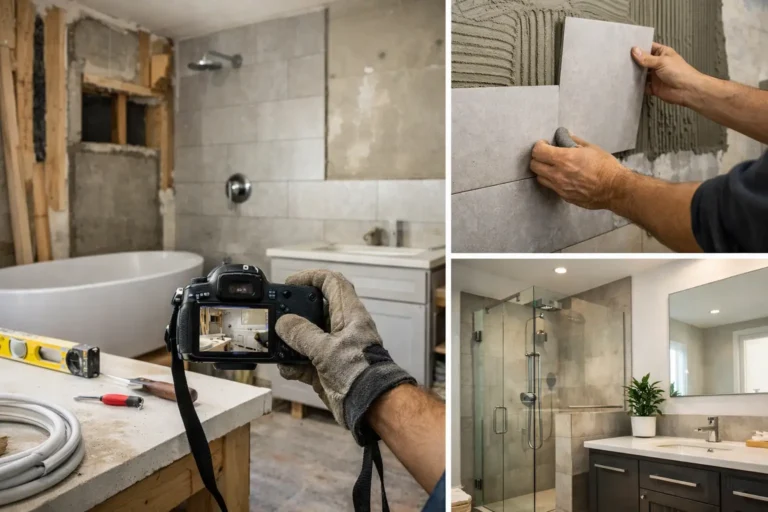
A written message saying materials were installed is useful. A photo showing the installed materials is reassuring. Visual updates reduce interpretation, make progress tangible, and cut down the need for follow-up questions like, “Can you show me what that looks like?”
This matters especially in industries where the final result takes shape gradually. Joinery, interior fit-outs, restorations, fabrication, and renovation work often look incomplete until late in the process. A visual history helps clients understand that partial progress is still progress.
It also protects your team from repeating the same explanation across different channels. If the latest work is already documented clearly, many client questions answer themselves.
Replace scattered messages with one source of truth
One of the biggest drivers of repeated status requests is fragmented communication.
When updates live across email threads, messaging apps, camera rolls, and verbal conversations, clients do not know where the latest information sits. Your team may have already answered the question, but if the answer is buried somewhere hard to find, the client asks again.
A single client-facing timeline solves this better than sending more messages. It gives the client one place to review progress, check what was shared, and revisit earlier decisions. That cuts repetition on both sides.
This is where a dedicated update tool can make a practical difference. CustomWorks, for example, is built around a private project feed where teams can share photos, videos, short notes, stages, changes, and delivery updates in one organized timeline. For businesses managing custom projects, that structure is often more useful for client communication than pushing clients into full project management software.
The trade-off is that a central update feed only works if your team actually uses it consistently. The system does not need to be complicated, but it does need ownership. Someone has to make sure updates happen and that key moments are recorded while the work is in motion.
Record decisions, not just progress
Clients do not only ask, “What has been done?” They also ask, “What did we agree?”
That second question causes a surprising amount of back-and-forth. If finish choices, scope changes, material substitutions, scheduling updates, or delivery details are not recorded in a visible place, clients will keep checking because they are unsure whether everyone is aligned.
A good update system captures both movement and decisions. That means not only sharing progress photos, but also noting approvals, changes, delays, and next steps. This gives the client confidence that the project is being managed carefully, not just worked on.
Write updates for the client, not for the team
Internal language often creates confusion when it is passed directly to the client.
A status note like “first fix complete, snagging next” may make perfect sense inside your business. The client may read it and still wonder what happened, what comes next, and whether anything needs their attention. The update should answer those questions in plain language.
That does not mean oversimplifying technical work. It means translating it into client-relevant meaning. What was completed, what the client can expect next, and whether any action is required should be obvious in every update.
Clear language reduces follow-up. Vague or internal wording invites it.
Build a process your team can actually maintain
The reason many businesses fall back into reactive communication is not that they do not value transparency. It is that their update process is too manual, too dependent on one person, or too disconnected from the real workflow.
If posting updates feels like extra admin, it will slip during busy periods, which is exactly when client anxiety rises. A better approach is to make updates part of the job as it happens. Take the photo when the stage is completed. Add the short note while the details are fresh. Record the change when it is approved, not later when someone tries to reconstruct the timeline.
The simpler the process, the more likely it will hold under pressure.
Not every project needs the same level of detail. High-value, long-duration, or design-sensitive work usually benefits from a richer update history. Smaller or faster jobs may only need milestone updates. It depends on project complexity, client expectations, and how much uncertainty exists during delivery. But in all cases, consistency beats volume.
When clients stop asking for constant updates, it usually does not mean they care less. It means they trust the system more. That is the real goal: communication that feels organized enough that nobody has to chase it.