Better Electrical Contracting Project Updates
When a client pays a deposit for an electrical project, silence starts to feel expensive. A panel upgrade, full rewire, tenant improvement, or multi-phase commercial install can stretch across days or weeks. If the client cannot see progress, they fill the gap with questions, assumptions, and follow-up calls.
That is why electrical contracting project updates matter more than many teams realize. They are not just a courtesy. They shape how clients judge professionalism, control, and reliability while the work is still in progress.
CustomWorks.app
Keep clients updated without messy chats
Give each project a private feed for client updates — and keep a clear history of photos, videos, notes, stages, decisions, and delivery moments for your team.
For electrical contractors, the challenge is rarely the work itself. The challenge is communicating progress clearly without creating extra admin for the office, the project manager, or the field team. Most companies already have photos on phones, notes in text messages, and decisions buried in email threads. The problem is that none of it lives in one clean client-facing record.
Why electrical contracting project updates break down
Most update problems start with good intentions. A project manager means to send an email at the end of the week. A foreman takes progress photos and plans to share them later. The office promises the client a call once the inspection is complete. Then the job gets busy.
Electrical work often happens in bursts that make client communication harder, not easier. Rough-in may look messy and incomplete to a client who does not understand what they are seeing. Then there are invisible stages like coordination, material delays, permit steps, testing, and punch corrections. From the contractor side, progress is obvious. From the client side, it can feel like nothing is happening.
That gap creates the classic pattern: the client sends “Any updates?” The team replies manually. A few days later, the client asks again, but this time someone else answers with partial information. Photos sit in one person’s camera roll. A change request is mentioned on a call but not documented where everyone can find it. The communication starts to feel reactive.
This is not just inefficient. It changes the client experience. Repeated status requests make even competent contractors look disorganized.
What clients actually want from project updates
Most clients do not want a technical site diary. They want reassurance that the project is moving, clarity on what has been completed, visibility into what happens next, and a record of any changes that affect timing or scope.
For electrical contractors, that means updates should answer simple questions in plain language. What was done this week? What stage is the job in now? Are there any decisions needed from the client? Has anything changed? What should the client expect next?
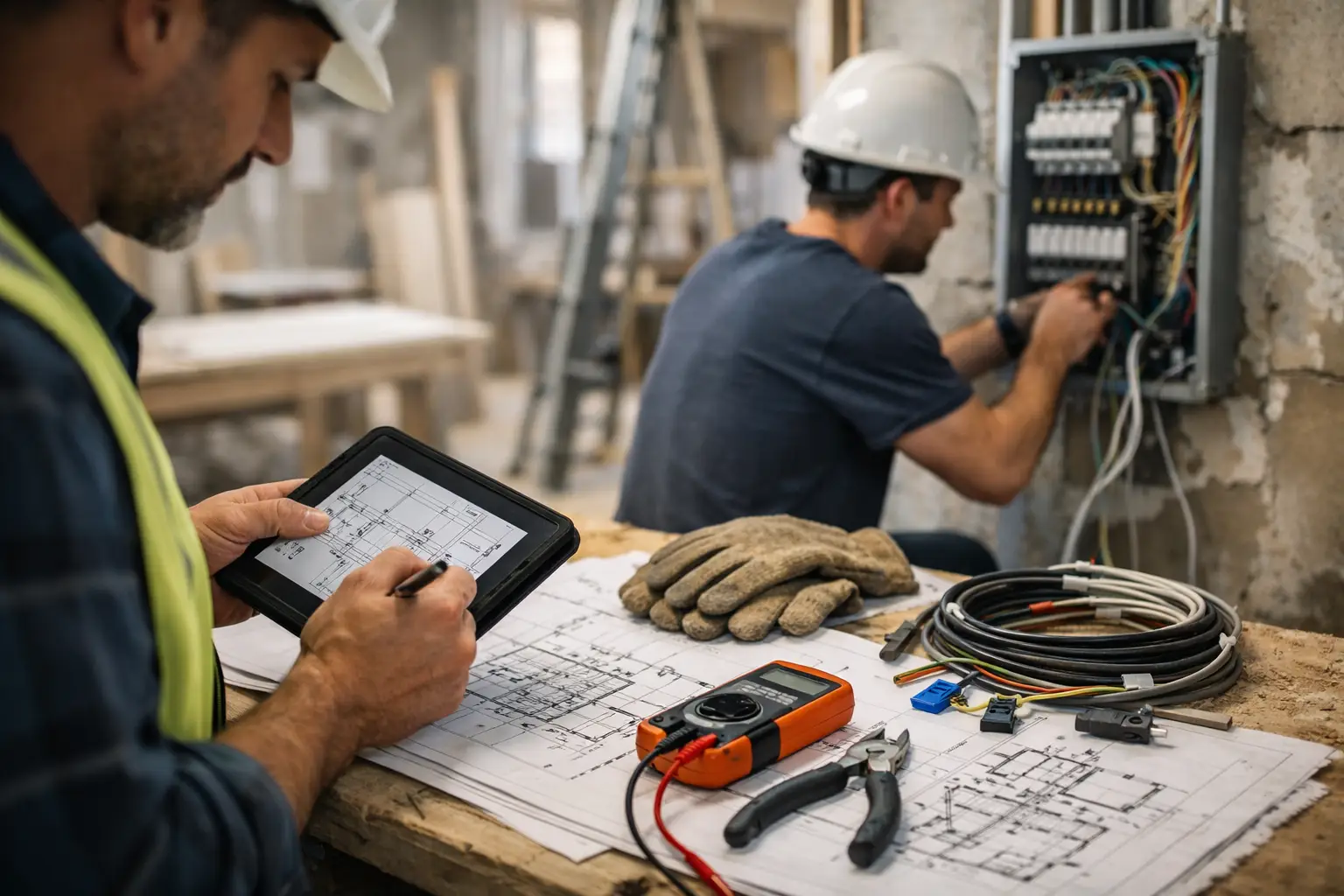
Photos and short videos are especially useful in electrical work because so much of the project is hidden behind walls, ceilings, panels, and finished surfaces. A few images of conduit runs, first fix wiring, switchboard progress, or fixture installation can do more than a long message. They make progress visible.
The trade-off is that too much detail can create confusion. If every update is overly technical, clients may misread normal project complexity as a problem. The goal is not to show everything. The goal is to show the right things, in the right order, with enough context to reduce uncertainty.
What good electrical contracting project updates look like
Good updates are regular, visual, and easy to scan. They do not need to be long. In fact, shorter is often better if the structure is consistent.
A strong update usually includes a brief note about completed work, one or two visuals, and a simple next-step statement. For example, a contractor might show installed cable trays on level two, note that rough-in is now complete in the office zone, and explain that inspection is booked before ceiling closure. That gives the client progress, proof, and forward visibility in less than a minute.
Timing matters too. Weekly updates work well for many electrical projects, but it depends on the job. On a fast-moving commercial fit-out, twice-weekly updates may be more useful. On a residential rewire with obvious site activity, one clear end-of-week update may be enough. The right rhythm is the one that prevents the client from needing to chase.
Consistency matters more than polish. Clients do not expect studio-quality communication. They expect a reliable flow of information.
Why email threads and chat apps make this harder
Many electrical contractors still rely on a mix of email, WhatsApp, text messages, and occasional calls. That works at the start of a project, but it tends to fall apart as the timeline gets longer and more people get involved.
Email threads become cluttered. Important photos are hard to find later. Decisions disappear into chat history. The client may message the estimator, the project manager, and the site lead separately. Everyone has part of the picture, but no one has a clean timeline.
This creates two business problems. First, the team wastes time repeating the same update in different places. Second, the company loses control of the client experience. Communication starts depending on who replies first, not on a structured process.
That is why more contractors are shifting toward a simple client update system rather than trying to force client communication through internal project management tools. Internal software is designed for tasks, procurement, scheduling, and job costing. Clients usually do not need access to that. They need a clear view of progress.
A platform like CustomWorks is built for that specific gap: private client-facing project updates with photos, videos, short notes, stages, changes, and delivery milestones in one timeline. For teams managing long-running custom work, that kind of structure can reduce repetitive status requests without adding another messy channel.
How to make project updates easier for your team
The best communication process is the one your team will actually maintain. If updates depend on one person writing perfect reports, the system will fail under pressure.
A better approach is to make updates part of the project rhythm. Field teams capture photos during normal site activity. Project leads add short context. Office staff or managers review and publish if needed. The format stays simple enough that no one delays it.
It also helps to decide in advance what belongs in a client update. For electrical contractors, that usually includes completed stages, visible progress, scheduled inspections, key material arrivals, approved changes, and handover milestones. Internal snags, labor allocation issues, or supplier back-and-forth may matter operationally, but they are not always useful to the client unless they affect timing or outcome.
Language matters here. A client update should sound controlled, not defensive. If there is a delay, explain it plainly and state the next step. If a variation affects the schedule, document it clearly. Clients are usually more tolerant of change than they are of vagueness.
The business value goes beyond fewer calls
Reducing “Any updates?” messages is a real benefit, but it is not the only one. Clear updates also protect trust during the quiet middle of a project, when the deposit has been paid and the final result is still weeks away.
That matters in electrical work because many milestones are not naturally visible to the client. A finished light fitting is easy to appreciate. Cable routing above a ceiling is not. Without communication, the client may underestimate how much has been done and overestimate the risk that the project is drifting.
A visible project history also helps at handover. When clients can see the sequence of work, key decisions, changes, and completion points in one place, the final delivery feels more organized. It becomes easier to explain what was completed, when issues were resolved, and how the job progressed.
There is also a reputation benefit. Contractors who communicate clearly tend to look more established, even when they are smaller teams. Professionalism is often judged through communication habits, not just technical execution.
A practical standard for update quality
If you want to improve updates quickly, use a simple test. At any point in the job, could the client open one place and understand what has happened, what is happening now, and what comes next?
If the answer is no, the issue is not effort. It is structure.
Electrical contracting project updates work best when they are visible, chronological, and easy for clients to follow without chasing your team for context. That does not require more meetings or more administration. It requires a cleaner way to turn normal project activity into client-facing communication.
The companies that do this well tend to earn something valuable beyond smoother projects. They earn a client’s confidence while the work is still underway, which is usually when confidence is tested most.