Exhibition Stand Project Timeline Explained
Miss the timing on an exhibition stand, and the problem is rarely just one late task. The artwork gets approved a week behind schedule, the fabricator has to reshuffle production, shipping windows tighten, and suddenly everyone is making expensive decisions under pressure. That is why an exhibition stand project timeline matters so much. It is not just a planning document. It is the structure that keeps design, approvals, fabrication, logistics, and client communication moving in the right order.
For companies that design and deliver custom stands, the timeline also shapes the client experience. A client can tolerate complexity. What they usually do not tolerate well is silence, vague answers, or last-minute surprises after a large deposit has already been paid. A good timeline helps the team stay organized internally, but just as importantly, it gives clients visible progress they can understand.
CustomWorks.app
Keep clients updated without messy chats
Give each project a private feed for client updates — and keep a clear history of photos, videos, notes, stages, decisions, and delivery moments for your team.
What an exhibition stand project timeline really needs to cover
An exhibition stand project timeline should reflect the full life of the project, not only the build phase. That includes discovery, concept development, revisions, technical planning, production, pre-show checks, transport, installation, and post-event breakdown if your scope includes it.
The biggest mistake is treating the schedule like a neat sequence of independent steps. In reality, several stages overlap. Design may continue while suppliers quote specialist elements. Print files may be prepared while structural details are still being finalized. Logistics planning often starts before fabrication is complete because venue rules, loading windows, and freight constraints do not wait.
That overlap is normal, but it only works when dependencies are clear. If the team does not know which decisions block the next step, the project starts drifting without anyone noticing until the deadline is too close.
A practical exhibition stand project timeline by phase
1. Brief and scope definition
This stage usually starts with the event date, stand size, venue rules, budget range, and business goals. Some clients arrive with a clear brief. Others have only a rough idea of what they want to achieve at the show.
That difference matters because a vague brief adds time. If the client is still deciding whether the stand needs product demo zones, storage, meeting space, or premium finishes, the early schedule should allow for that uncertainty. Trying to force speed too early often creates more revision rounds later.
At this point, the team should also identify fixed deadlines such as organizer submission dates, artwork cutoffs, and payment milestones. Those are often more important than the final event date because they shape the real production window.
2. Concept design and early approvals
Once the brief is clear enough, concept work begins. This may include layout ideas, 3D visuals, material direction, branding placement, and visitor flow. For smaller stands, this phase can move quickly. For larger or more premium builds, it may take longer because stakeholders tend to multiply.
This is where many timelines become unrealistic. A design team may need five working days, but the client then takes ten days to review, asks for a revised pricing option, and brings in a marketing director who was not involved in the original brief. The schedule should account for client-side decision time, not just studio time.
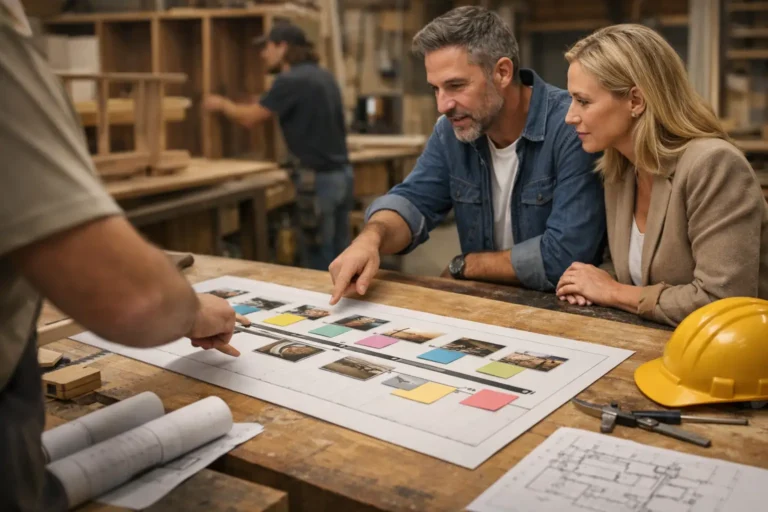
If you want fewer delays here, define approval points clearly. One sign-off for concept, one for budget alignment, and one for final production design is often more effective than endless soft approvals spread across email threads.
3. Technical design and production planning
After concept approval, the project moves into the technical stage. This is where attractive visuals become something that can actually be built, packed, transported, and installed safely.
Detailed drawings, structural solutions, materials, lighting specs, print dimensions, power requirements, and joinery details all start to matter. If the stand includes AV, interactive elements, suspended features, or venue-specific compliance requirements, this stage may take longer than the client expects.
Trade-offs are common here. A finish that looks excellent in a render may be too fragile for transport. A dramatic feature may exceed venue height restrictions. A custom element may be possible, but only with a longer fabrication lead time. The timeline needs room for these practical adjustments.
4. Procurement and fabrication
This phase is where the schedule becomes less forgiving. Once materials are ordered and workshop slots are booked, delays usually have a direct cost.
Fabrication lead times depend on complexity and sourcing. Modular stands with standard elements can move fast. Fully custom structures, specialist finishes, bespoke lighting, or imported components create more exposure to delays. Even one late supplier can affect multiple downstream tasks.
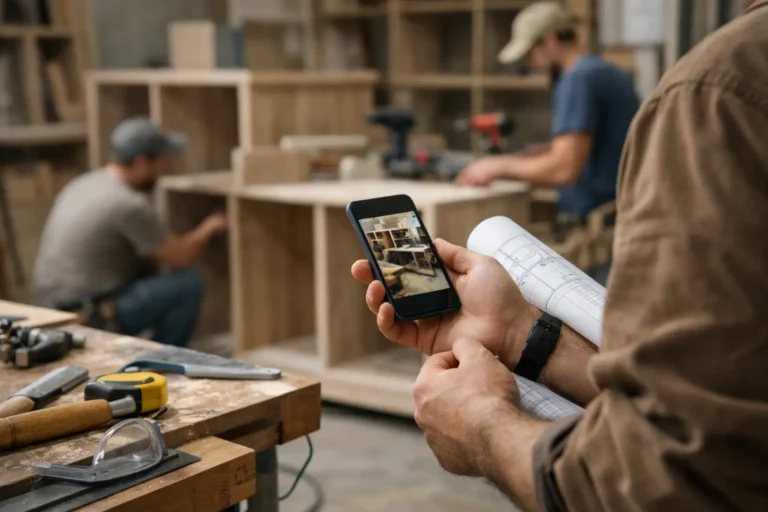
This is also the phase where clients often become anxious if communication drops. From their point of view, money has gone out, the event is getting closer, and visible progress may be limited unless the team shows it. Short updates with workshop photos, material arrivals, print checks, and stage completions help turn a silent production period into a visible, credible process.
For teams handling multiple custom jobs at once, a client-facing progress record through a platform like CustomWorks can reduce the usual stream of status messages while keeping the project history organized in one place.
5. Graphics, content, and final approvals
Artwork is one of the most underestimated parts of the timeline. It often looks simple from the outside, but graphic production depends on correct dimensions, approved messaging, high-resolution assets, and final sign-off from the client.
If the client is still changing product claims, campaign slogans, or brand visuals late in the process, print deadlines become fragile very quickly. This is not always the stand contractor’s fault, but it still affects delivery.
A practical schedule treats graphics as a parallel track with a hard stop. If files are late, everyone should understand the impact immediately. Otherwise, the team ends up absorbing avoidable pressure in the final week.
6. Pre-build checks, packing, and logistics
Before dispatch, experienced teams build in time for checking. That may mean a partial workshop test fit, a full pre-assembly, electrical testing, graphics inspection, labeling, and pack-down planning.
Skipping this stage can save a day on paper and lose two days on site. If something does not fit, if a cable route was missed, or if key hardware is not packed correctly, the installation team pays for it later under venue time pressure.
Logistics planning is equally critical. Access windows, delivery sequencing, labor bookings, international freight, customs paperwork, and site rules all need to be confirmed well before installation day. The closer the event gets, the fewer recovery options exist.
7. Installation and handover
Install day is the most visible part of the project, but by this point the timeline has mostly already succeeded or failed. A smooth installation is usually the result of disciplined work earlier on, not heroic effort on the day.
Even so, a realistic plan includes contingency. Venues run late, neighboring stands block access, organizer instructions change, and small fixes are common. Build some buffer into the schedule where possible. If every hour is allocated with no margin, minor issues turn into major stress.
Where exhibition stand timelines usually break down
Most timeline failures come from predictable sources. The first is delayed client decisions. The second is unclear scope, where added features appear after pricing and scheduling are already set. The third is fragmented communication, with approvals, questions, and updates spread across calls, chat apps, and long email chains.
There is also a more subtle issue: teams often track internal work but do a poor job of showing external progress. So even when the project is moving, the client feels uninformed. That usually leads to repeated messages, rushed check-ins, and avoidable tension.
A good process fixes both sides. It helps the team manage dependencies, and it gives the client a clear sense of what has been completed, what is waiting on approval, and what comes next.
How much time should you allow?
It depends on stand size, complexity, procurement risk, and venue requirements. A smaller stand with limited customization may move from brief to delivery in a few weeks. A larger custom build can require several months, especially when design development, specialist fabrication, and event logistics are all involved.
What matters is not forcing every project into the same template. The timeline should reflect the real work. If a client wants a heavily customized stand on a compressed schedule, that may still be possible, but only with trade-offs such as reduced revisions, faster approvals, premium freight, or simpler material choices.
That kind of honesty is useful. Clients generally respond better to a realistic schedule with visible milestones than to an optimistic promise that starts slipping two weeks later.
A better way to communicate the timeline to clients
Clients do not need every internal production detail. They do need a clear view of progress. The most effective approach is usually stage-based communication with simple updates: concept approved, materials ordered, graphics in review, fabrication underway, pre-assembly complete, dispatched, installed.
When those updates include photos, short notes, and visible milestones, the timeline becomes more than a spreadsheet. It becomes proof that the project is moving. That reduces uncertainty, cuts back on “Any updates?” emails, and makes the delivery process look more controlled and professional.
A well-run exhibition stand project timeline is not about making the work look easy. It is about making the work visible, predictable, and easier for the client to trust. When the project is complex, that trust is often what keeps everything calm enough to finish well.