Custom Trailer Project Updates That Build Trust
A client who has paid a deposit for a custom trailer does not just want the delivery date. They want proof that the project is moving. When those updates are inconsistent, custom trailer project updates turn into scattered texts, missed photos, and the same status question asked three different ways.
That communication gap creates more than annoyance. It puts pressure on your team, makes your process look less organized than it really is, and leaves the client filling in blanks on their own. For trailer builders, fabricators, and specialty shops managing builds that take weeks or months, updates are not a side task. They are part of the product experience.
CustomWorks.app
Keep clients updated without messy chats
Give each project a private feed for client updates — and keep a clear history of photos, videos, notes, stages, decisions, and delivery moments for your team.
Why custom trailer project updates matter more than most shops expect
A custom trailer is rarely a simple off-the-shelf purchase. The client may be waiting on a concession trailer, a race trailer, an equipment hauler, a mobile workshop, or a fully branded unit for commercial use. In many cases, they have already committed a meaningful budget and are planning other work around your timeline.
That makes silence expensive.
When clients do not see progress, they usually do one of two things. Either they start contacting your team for reassurance, or they become quietly uneasy and lose confidence. The first outcome creates operational drag. The second damages trust before the trailer is even delivered.
Neither issue means your team is doing poor work. In many shops, the real problem is that progress exists but is not being presented clearly. Photos stay on someone’s phone. Changes are discussed in calls. Delivery timing gets mentioned in email. Approval notes sit in a messaging app. From the client’s side, the project can feel invisible even when the shop is busy.
What clients actually want from trailer build updates
Most clients are not asking for a full internal production system. They do not need every task, vendor detail, or scheduling constraint. What they want is much simpler. They want to know what has been completed, what stage the trailer is in now, whether any decisions are needed, and whether the delivery plan is still on track.
That sounds basic, but many businesses still deliver those answers inconsistently. One client gets regular photos because they ask often. Another gets almost nothing because they seem patient. A third gets updates from whichever team member happens to reply first. Over time, communication quality depends on personality and memory instead of process.
Good custom trailer project updates create the opposite experience. They give every client a clear view of the build without forcing your team to rewrite the same explanation each time.
The cost of using email threads and chat apps
Email, text messages, and chat apps feel convenient at first because your team already uses them. The problem is not access. The problem is structure.
A long-running trailer build can include frame work, axle fitment, electrical installation, wall and roof assembly, interior fit-out, paint or wrap, testing, and handover preparation. Add client changes, part delays, compliance steps, and staged approvals, and communication gets messy fast.
In email, updates split into multiple threads. In chat apps, photos disappear into conversation history. In text messages, key decisions are hard to find later. None of these tools creates a clean project timeline the client can review on their own.
That leads to repeated questions that sound familiar to almost every custom builder: Where are we at now? Has fabrication started? Did you receive the lighting components? Are we still on schedule? Can you resend the last photos?
The issue is rarely that the answer does not exist. It is that the answer is spread across too many places.
A better way to handle custom trailer project updates
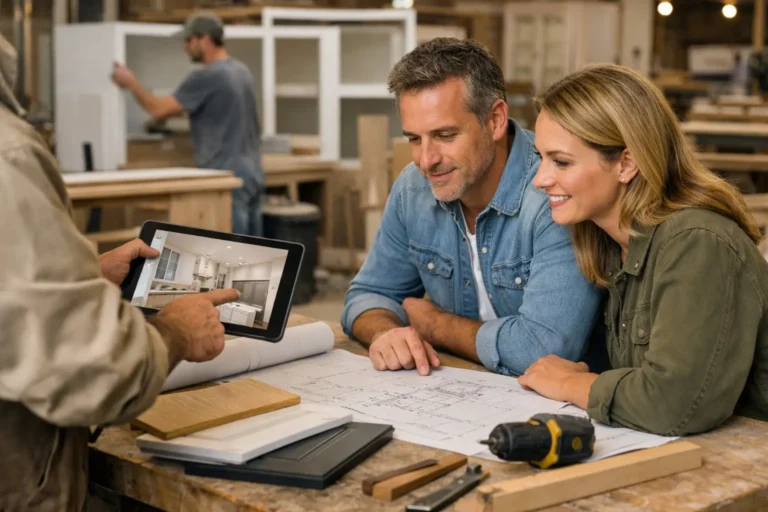
The most effective update system is simple, visual, and client-facing. It does not try to turn clients into project managers. It gives them one organized place to follow progress.
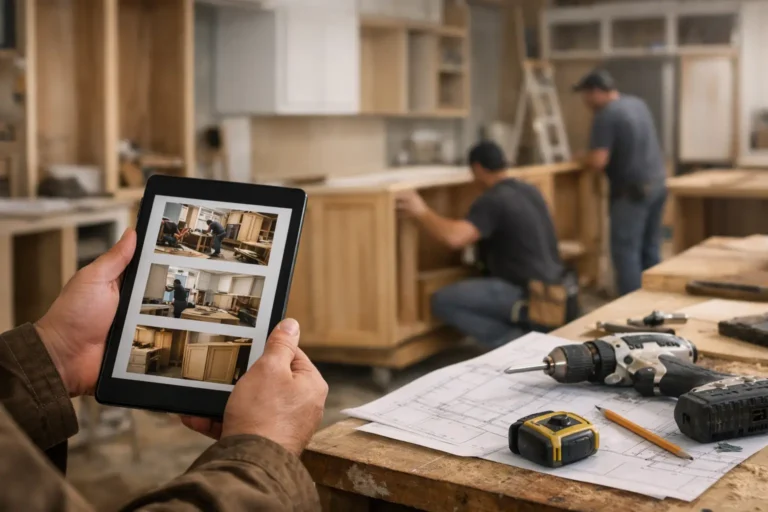
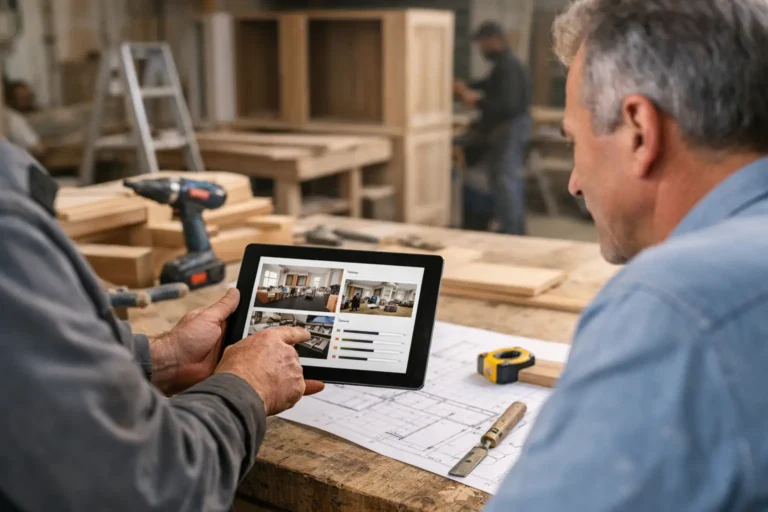
That usually means sharing updates as a running timeline with photos, short videos, stage notes, key changes, and delivery-related information. Instead of sending one-off messages, your team adds progress to a private project feed as work happens. The client can check the build history at any time without asking someone on your team to reconstruct it.
This is where a platform like CustomWorks fits naturally for businesses handling long-running custom projects. It gives each project a private client update feed, which is much closer to what trailer shops actually need than traditional project management software. The goal is not internal task control. The goal is clear client visibility.
What to include in your project updates
The right level of detail depends on the trailer type, the build complexity, and the client relationship. But in most cases, the most useful updates are visual and stage-based rather than overly technical.
Photos matter because they remove doubt. A short note matters because it gives the photo context. A stage label matters because it helps the client understand where the project sits in the bigger process.
For example, an update might show chassis fabrication complete, wall framing in progress, electrical rough-in installed, or final finish work scheduled. If a client decision is needed, that can be logged clearly at the right point in the timeline instead of getting buried in a side conversation.
Video can be especially useful for custom trailer work because it shows motion, proportions, fitment, and functional details that still photos sometimes miss. A quick walkaround of a near-complete unit often answers several client questions at once.
The main point is consistency. You do not need to publish long updates. You need updates that are easy to create, easy to review, and easy to find later.
How often should you send updates?
There is no perfect rule for every shop. A two-week fabrication phase may not need daily communication, while a high-value build with frequent client choices may need updates several times a week. What matters most is that the cadence feels predictable.
If clients know they will see progress at defined moments, they are less likely to chase your team for reassurance. Predictability lowers anxiety even when the project itself is complex.
A practical approach is to post updates at milestone points rather than trying to narrate every small action. Start of fabrication, structural completion, systems installation, finish phase, and pre-delivery checks are all meaningful moments. If there is a delay or change, update that separately and plainly.
This is one of the biggest trade-offs in client communication. Too few updates create uncertainty. Too many low-value updates create noise. The right balance usually sits in the middle: enough visibility to show momentum, without overwhelming the client with internal detail.
Why this improves operations, not just client satisfaction
Organized updates are often treated as a customer service extra, but they have operational value inside the business too.
First, they reduce interruption. When clients can review progress themselves, your team spends less time answering repeat status requests. That protects production time and keeps office staff from constantly relaying information.
Second, they create a clean history of what happened and when. If a client asks about a design change, a stage delay, or a previous approval, the project record is easier to reference. That matters on builds with long timelines and multiple decision points.
Third, they make the business look more structured. Many custom trailer companies do excellent work but present updates in a way that feels improvised. A consistent client-facing timeline signals control and professionalism, which is especially valuable after the client has paid upfront and is waiting on delivery.
Common mistakes in custom trailer project updates
One mistake is treating updates as something to send only when a client asks. That puts your team in reactive mode and usually means the client has already become uncertain.
Another is overexplaining production details that the client does not need. Most clients care about progress, changes, approvals, and timing. They do not need a full shop-floor narrative.
A third mistake is relying on one person to remember everything. If update communication depends on a single manager digging through photos and messages every Friday, it will eventually break down. The process has to be simple enough that the team can maintain it during busy weeks.
The last common issue is separating visual proof from written context. A photo with no explanation can confuse clients. A written note with no visual proof can feel abstract. Together, they work much better.
Building a repeatable update process for every trailer build
The strongest systems are boring in the best way. They do not depend on chasing information at the end of the week. They build update capture into the normal flow of the project.
That might mean taking photos at key production stages, adding a short note when a milestone is completed, logging any approved changes in the same timeline, and marking delivery-related milestones as they are confirmed. Once that pattern becomes routine, updates stop feeling like extra admin.
This is especially useful for businesses with multiple active builds. Without a defined system, each project develops its own communication style. With a standard client update process, every project feels more controlled and every client gets a clearer experience.
Custom trailer work is detailed, high-value, and often highly personal to the buyer. People are not just purchasing a trailer. They are waiting on a business asset, a specialized tool, or a major custom investment. If you show that progress clearly and consistently, clients spend less time wondering what is happening and more time feeling confident they chose the right team.
The shops that handle updates well are not necessarily the ones writing the longest messages. They are the ones making progress visible in a way clients can trust.