Aircraft Interior Project Updates That Work
An aircraft interior project rarely goes quiet because nothing is happening. It usually goes quiet because the work is happening across too many moving parts at once – approvals, materials, engineering checks, cabin components, inspections, reinstallations, and schedule changes. For the client, that silence creates doubt. For the team, it creates another round of calls, emails, and “just checking in” messages. That is why aircraft interior project updates matter far more than most teams expect.
When a cabin refurbishment, VIP completion, seating upgrade, galley rework, or soft goods replacement stretches across weeks or months, the quality of communication starts affecting the perceived quality of the project itself. Clients do not just want the final result. They want to know the project is controlled, progressing, and documented properly.
CustomWorks.app
Keep clients updated without messy chats
Give each project a private feed for client updates — and keep a clear history of photos, videos, notes, stages, decisions, and delivery moments for your team.
Why aircraft interior project updates become a problem
Aircraft interior work is highly visible to the client but often opaque during execution. A customer may approve a refreshed cabin concept, updated veneers, new upholstery, revised lighting, or a connectivity upgrade, then hear very little while the actual work moves through disassembly, sourcing, fabrication, fit checks, compliance review, and reinstallation.
From the operator or owner perspective, this can feel risky. They may have committed significant budget, arranged downtime, and tied aircraft availability to a narrow schedule. If updates arrive inconsistently, they start asking for reassurance rather than information. That usually means the project manager, sales contact, or operations lead becomes the human status portal.
The issue is not that teams are failing to communicate. The issue is that communication is often scattered. Some photos sit on a technician’s phone. Decisions live in email. A material approval happened in a message thread. A schedule shift was explained on a call. By the time the client asks for an update, someone has to reconstruct the story manually.
In aircraft interiors, that is a weak system. It wastes time and makes even well-run projects look less organized than they are.
What clients actually want from aircraft interior project updates
Most clients are not asking for a detailed internal production report. They want confidence that the work is moving, visibility into what has been completed, and clarity around anything that affects scope, timing, or decisions.
That sounds simple, but many teams either under-share or over-share. Under-sharing creates anxiety. Over-sharing can create noise, especially when raw internal details are sent without context. The best update rhythm sits in the middle. It shows meaningful progress in a structured way and explains changes before the client has to ask.
For aircraft interior projects, that usually means updates should include visual proof where possible, short plain-language notes, clear stage markers, and explanations around any dependency that might affect delivery. If a seat cover install is complete, show it. If veneer panels are delayed pending finish approval, say so clearly. If the aircraft moved from strip-out to reassembly, make that visible.
Clients tend to respond well when they can see a clean timeline rather than chase disconnected messages.
The cost of poor update habits
Bad update habits do more than create annoyance. They add operational drag.
When clients cannot easily see progress, they ask more questions. Those questions usually go to senior staff, because clients want answers from someone they trust. That means project leaders spend time repeating information that already exists somewhere in the business. It also increases the chance of inconsistent answers, especially if different people are pulling from different records.
There is also a commercial cost. Aircraft interior work depends heavily on trust. Owners, operators, and representatives notice how a team communicates during the middle of the project, not just at handover. If the process feels unclear, confidence drops. Even if the finished cabin is strong, the journey can still feel disorganized.
This matters for repeat work. A client who had to chase for every milestone is less likely to describe the experience as professional, even if the technical outcome was solid.
A better structure for client-facing updates
The most effective approach is not more communication. It is more organized communication.
A good aircraft interior update process gives the client one place to follow the project. Not a mix of inboxes, phone images, spreadsheets, and chat history. One clear record that shows what happened, what changed, and what comes next.
For most aviation interior teams, the practical format is a private client-facing timeline. Each update can include photos, short videos, stage progress, approvals, change notes, and key delivery information. That creates continuity. It also reduces the pressure on staff to rewrite the same status summary over and over.
This is where a platform like CustomWorks fits naturally for teams that need simple, client-facing project communication without turning the customer into part of an internal project management system. The value is straightforward: less back-and-forth, clearer visibility, and a cleaner project history.
What to include in aircraft interior project updates
The right content depends on project scope, but the principle stays the same: show real progress and explain decisions clearly.
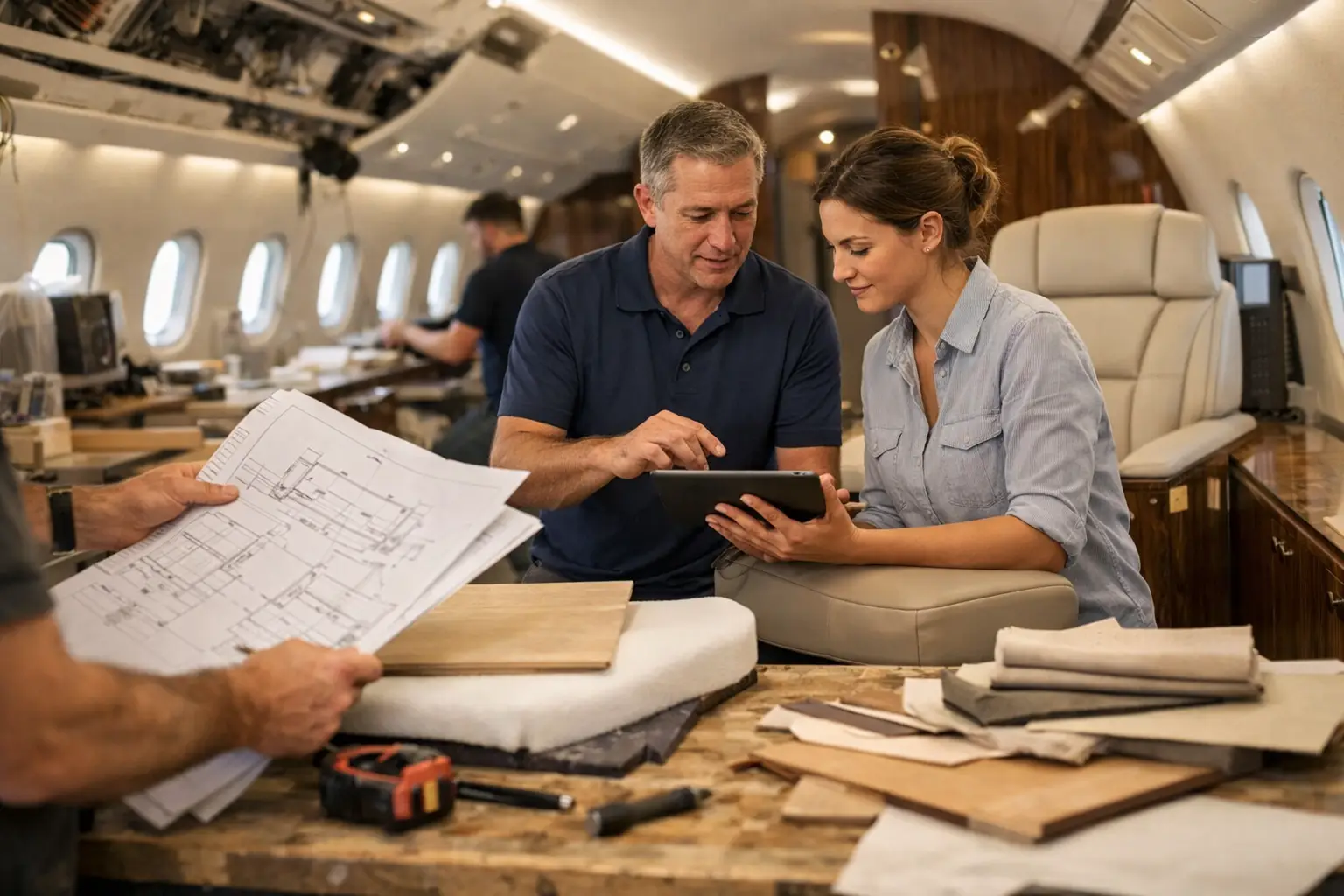
Photos usually do most of the work. A stripped cabin, completed seat upholstery, installed sidewalls, refinished tables, updated carpet sections, or testing in progress all help the client understand momentum. Short notes add context. Without context, a photo may look impressive but still leave questions.
Stage-based updates are especially useful in aircraft interiors because they help clients understand the sequence of work. A project might move through intake and condition review, removal and inspection, material confirmation, fabrication, installation, quality checks, and delivery prep. If those stages are visible, clients feel the structure of the job.
Changes also need careful handling. A revised part lead time, a design adjustment, or an approval delay should not be buried. It is usually better to explain it early in a calm, direct way. Clients are far more tolerant of change when they can see the reason and understand the impact.
How often should updates be sent?
There is no perfect schedule for every aircraft interior project. It depends on project length, client expectations, and how much visible progress occurs between milestones.
Weekly updates are a strong default for longer projects. They create a reliable rhythm without overwhelming the client. For shorter or more intensive phases, two updates in a week may make sense, especially if major approvals or visible cabin progress occur. For quieter phases such as parts waiting periods, a short note is still useful. Silence is what creates concern.
The key is consistency. An update every few days for two weeks followed by nothing for twelve days feels unstable, even if the team is busy. A predictable pattern sends a message that the project is under control.
Common mistakes teams make
One common mistake is treating updates as a last-minute admin task. When that happens, the quality drops. Photos are missing, notes are rushed, and key details get left out. Updates need to be part of the delivery process, not something squeezed in afterward.
Another mistake is sending highly technical information without translating it into client language. Technical detail has its place, especially with experienced aviation stakeholders, but many clients still want the practical meaning first. What was completed, what is pending, and does anything affect delivery?
A third mistake is relying on individual team members to hold the project history in their heads. That works until someone is unavailable, leaves the business, or simply forgets what was shared. A documented update trail solves that problem.
Why visual project history matters after delivery
Aircraft interior project updates are not only useful during the job. They continue to matter once the aircraft is back in service.
A clean visual history helps with handover conversations, final sign-off, and future reference. If a client asks when a material choice was confirmed, what changed during install, or how a particular cabin section looked before refurbishment, that record is valuable. It reduces ambiguity and makes the entire project easier to review.
It also helps the business internally. Teams can look back at previous projects to understand what clients responded well to, where delays were introduced, and how communication could be improved next time.
The real goal is confidence, not volume
The best aircraft interior project updates do not try to impress clients with constant activity. They aim to remove uncertainty. That is the real standard.
If the client can see that work is advancing, decisions are documented, changes are explained, and delivery is being managed with discipline, the project feels professional. That reduces chasing, protects trust, and gives the team more room to focus on the actual work.
For aircraft interior specialists, communication is part of the product whether they plan for it or not. The only real choice is whether that communication feels scattered or controlled.
A clear update process will not remove every schedule change or approval delay. But it does something just as valuable: it keeps the client informed enough to stay confident while the work gets done.