Cabinetry Project Updates That Clients Value
When a cabinetry project goes quiet for two weeks, clients rarely assume everything is fine. They assume something is delayed, forgotten, or going wrong. That is why cabinetry project updates matter more than most shops realize. Good work in the workshop is only part of the client experience. The other part is visible progress, clear communication, and a record that shows the project is moving.
For cabinet makers, millwork shops, and custom joinery teams, the communication problem usually starts small. A client asks for a quick update. Then they ask for photos. Then they want to confirm a finish change discussed over text. Later, someone needs to check whether hardware was approved before production. None of this feels dramatic in the moment, but over a six- to twelve-week job, scattered updates create friction for both sides.
CustomWorks.app
Keep clients updated without messy chats
Give each project a private feed for client updates — and keep a clear history of photos, videos, notes, stages, decisions, and delivery moments for your team.
The real issue is not that clients ask questions. The issue is that many cabinetry businesses answer those questions in ways that do not scale. A photo goes through WhatsApp. A design adjustment gets buried in email. A delivery note is sent by text. The team knows the job is moving, but the client sees a fragmented story. That gap is where doubt appears.
Why cabinetry project updates affect trust
Cabinetry is often sold on craftsmanship, finish quality, and customization. But once a deposit is paid, trust is maintained through communication. Clients do not stand in the workshop watching carcasses being assembled, edges being finished, or doors being sprayed. They judge progress based on what they can see.
That means updates are not an administrative extra. They are part of delivery. A short progress note with current stage information, a few workshop photos, and the next milestone can prevent several follow-up messages. Just as important, it reassures the client that the project is active and controlled.
This matters even more on projects with longer lead times, custom materials, or dependencies with other trades. If installation is waiting on site readiness, silence feels like delay. If a finish sample is being remade, silence feels like a mistake. When clients do not know what is happening, they fill the gap with their own assumptions.
What clients actually want from cabinetry project updates
Most clients are not asking for a detailed production report. They want to know three things: what has happened, what is happening now, and what comes next. If those three points are consistently clear, communication becomes much easier.
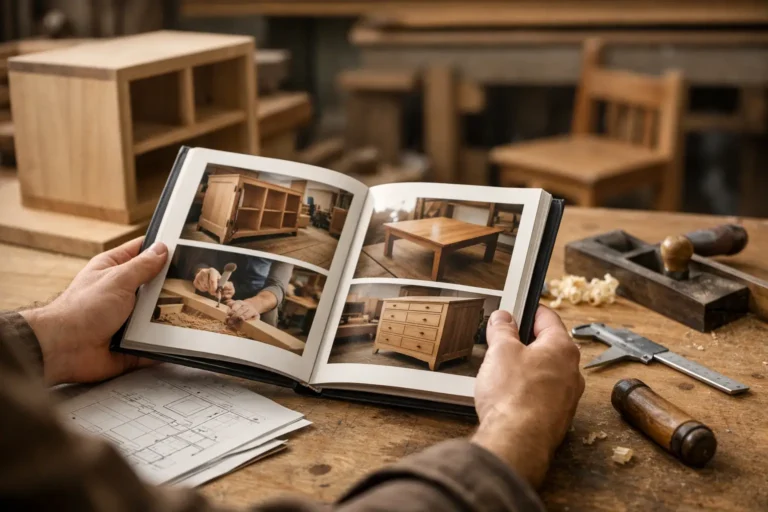
In cabinetry, that can be as simple as showing approved drawings, material arrival, box assembly, door production, finishing, quality checks, packing, and installation scheduling. Photos make a major difference because they convert abstract progress into visible evidence. A client may not understand shop workflow in depth, but they understand a labeled image showing their units in production.
The balance matters. Too little information creates uncertainty. Too much information can overwhelm clients and create unnecessary questions. For example, internal workshop issues that do not affect outcome or timeline do not always need to be surfaced. The best updates are selective, factual, and relevant to the client experience.
A better structure for cabinetry project updates
If updates are sent only when a client asks, the shop is already on the back foot. A better model is a simple, repeatable structure that the team can follow from deposit to handover.
Start with a project kickoff update. This should confirm scope at a high level, expected stages, and what the client can expect in terms of communication. It sets the tone early. Clients stop wondering how updates will arrive because the process has already been defined.
From there, update by milestone rather than by random message. In cabinetry, milestones might include final measurements, drawing approval, materials in, production started, finishing underway, pre-install quality check, delivery confirmed, and installation complete. Not every project needs every stage shown in detail, but the logic should stay consistent.
Each update works best when it includes a date, a short plain-language note, and visuals where available. If there is a client decision required, isolate it clearly. If there is a timeline shift, say so directly and explain the reason without overcomplicating it. Clients usually handle changes well when they are informed early and clearly.
What to include in each update
A strong update is usually brief. It should show current status, attach relevant photos or video, and mention the next expected step. If a change has been approved, record it there. If a delivery window is now fixed, record that too.
This creates something many cabinetry businesses do not realize they are missing: a usable project history. Instead of hunting through email threads and message apps, the team and client can both see one timeline of decisions, progress, and key moments. That reduces errors, but it also makes the business look more organized and professional.
When updates are too vague
Phrases like “work is progressing” or “we are on track” do very little on their own. They sound reassuring, but they do not answer the client’s real question. A better version would be: boxes for the pantry wall are assembled, drawer fronts are in sanding, and spray finishing is booked for Thursday. Installation is still scheduled for the week of the 18th.
Specificity builds confidence. It shows control without creating a flood of technical detail.
Common mistakes that make cabinetry updates harder
One common mistake is relying on whichever team member happens to have the latest photo. That works on small jobs until it does not. Images stay on personal phones, updates get delayed, and nobody is sure what the client has already been told.
Another mistake is mixing internal coordination with client communication. Internal task management can be messy because production is messy. Client-facing updates should not be messy. They should present a clean version of reality: accurate, current, and easy to follow.
A third problem is treating updates as a courtesy rather than a process. If communication depends on spare time, it will always slip during busy periods. Ironically, that is when clients are most likely to get nervous and send more messages.
How structured cabinetry project updates reduce admin
Some teams worry that better communication will create more work. In practice, the opposite is often true. Repeated status requests, duplicated explanations, and time spent finding old decisions create a hidden admin load that adds up quickly.
When updates follow a consistent structure, clients ask fewer open-ended questions because they already have context. They can see the latest stage, review photos, and understand what is pending. The team spends less time reconstructing the story of the project and more time moving the project forward.
This is where a dedicated client update system is different from email chains or messaging apps. A private project feed gives each cabinetry job a single place for photos, videos, short notes, stage updates, changes, and delivery information. For businesses handling multiple custom projects at once, that structure matters. CustomWorks is built for exactly this kind of client communication, where the goal is not full project management but clear, professional visibility for the client.
The trade-off: frequency versus relevance
There is no perfect universal schedule for cabinetry project updates. A high-end residential kitchen with design revisions may need more touchpoints than a straightforward office storage package. A project with imported finishes may also need more communication because lead times create longer quiet periods.
What matters is consistency and relevance. Weekly updates can work well, but only if there is meaningful information to share. Milestone-based updates are often better for production-heavy jobs, as long as no stage goes silent for too long. If a project hits a slow period, even a short note explaining what is pending can prevent unnecessary concern.
This is one of those areas where it depends on the job type, the client, and the length of the project. But silence is rarely the right choice.
A practical standard for cabinet makers and joinery teams
If you want cabinetry project updates to feel professional without becoming a burden, keep the standard simple. Decide who owns the update, when it is posted, what media should be included, and where the client should expect to see it. Then use the same approach on every project.
That consistency does more than reduce questions. It changes how clients experience your business. Instead of chasing information, they see steady progress. Instead of searching through chats, they have one clear record. Instead of wondering whether anyone is in control, they can see the process moving from approval to production to installation.
For custom cabinetry businesses, that level of clarity is not just nice to have. It supports trust during the weeks when the finished product is not yet in the room, but the client has already paid, already committed, and is waiting to see proof that the job is advancing.
If your projects are strong but your communication still feels improvised, start there. Better updates do not require more noise. They require a clearer way to show the work that is already happening.