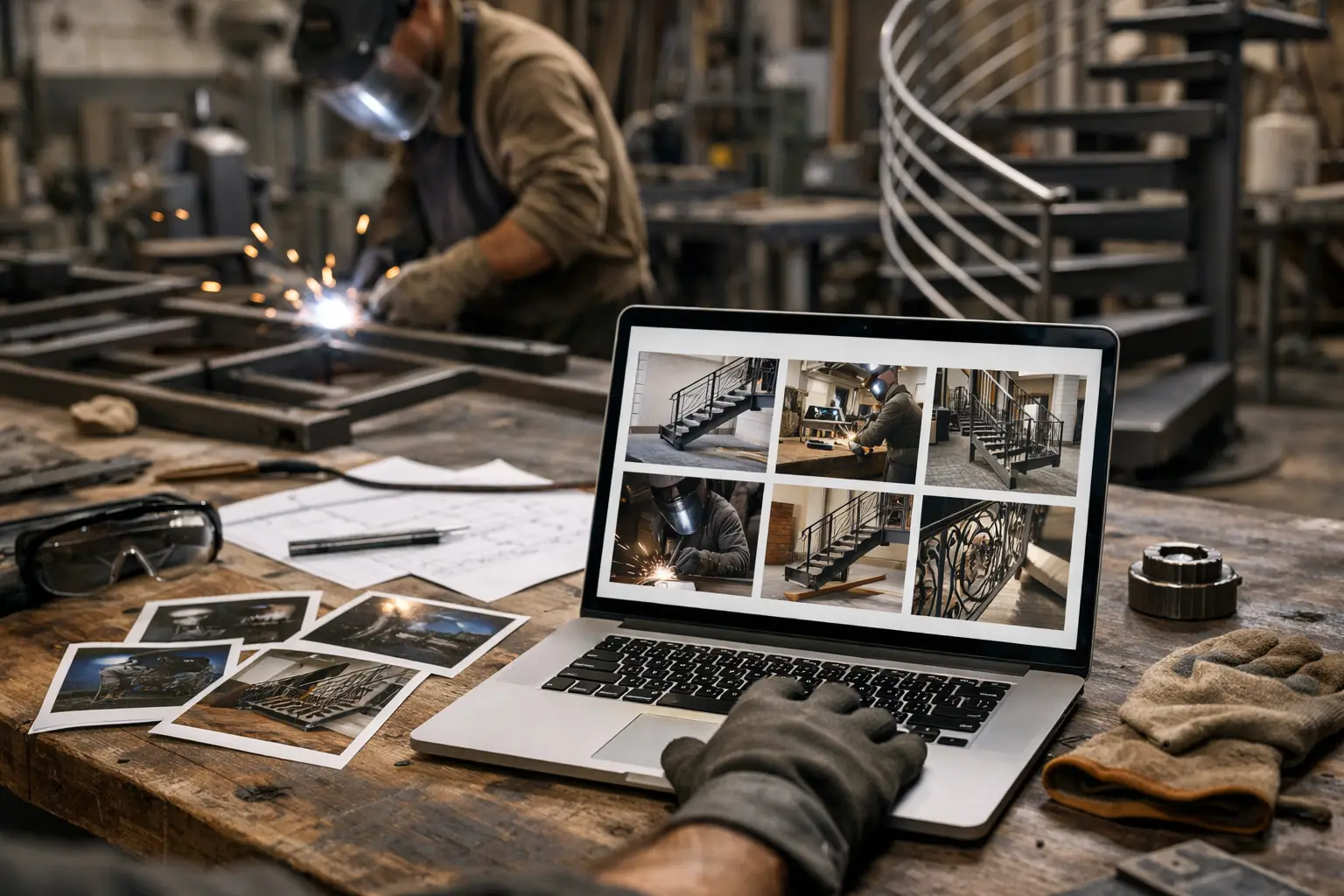
Visual Project History for Custom Metalwork
A custom stair, railing package, gate system, or architectural fabrication job can look stalled to a client long before it is actually stalled. Steel gets cut before it looks like anything. Parts move from design review to material prep, welding, grinding, coating, and site installation. If the customer only sees the start date and the invoice, they are left filling in the blanks. That is why a visual project history for custom metalwork matters. It gives clients a clear record of what has happened, what changed, and what comes next.
For metalwork shops, this is not just about keeping people happy. It is about reducing friction during long projects, protecting trust after deposits are paid, and presenting the work in a more structured way. When updates live across text threads, camera rolls, email chains, and a foreman’s memory, the client experience becomes inconsistent. The project may be under control internally, but from the client side it can feel quiet and uncertain.
CustomWorks.app
Keep clients updated without messy chats
Give each project a private feed for client updates — and keep a clear history of photos, videos, notes, stages, decisions, and delivery moments for your team.
Why custom metalwork needs visual project history
Custom metalwork is one of those trades where real progress is often hard for a non-technical client to read. A homeowner might understand that a kitchen is being installed because they can picture cabinets going in. A commercial client might understand drywall because the space visibly changes day by day. Fabrication is different. The work happens through stages that are meaningful to the shop but not always obvious to the buyer.
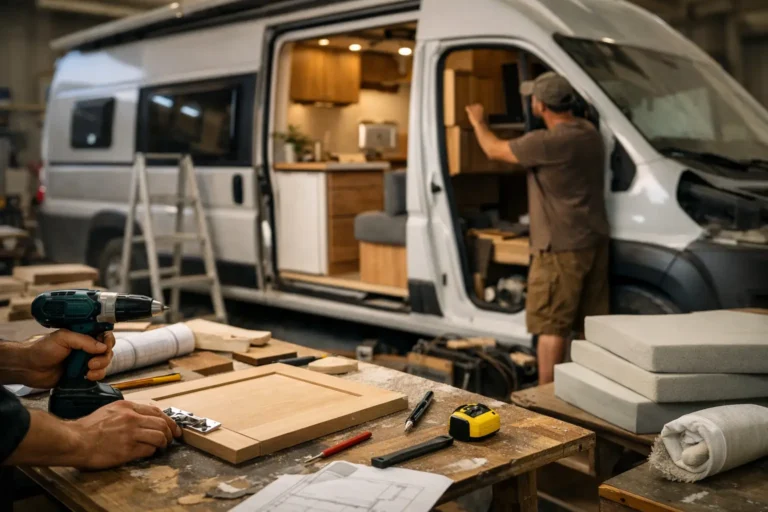
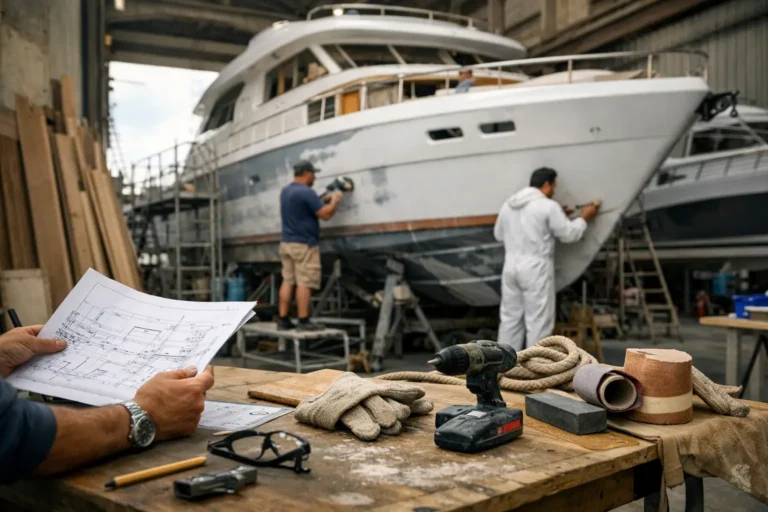
A visual project history solves that gap. Instead of asking the client to interpret technical updates, it shows the story of the job in a format they can follow. Photos of raw stock, jigs, weld assemblies, surface prep, powder coating, trial fitting, packaging, and installation create continuity. Short notes explain what the image means. Decisions and revisions sit next to the work they affected.
That changes the tone of communication. The conversation moves away from “Any updates?” and toward confidence that the project is progressing.
What a visual project history for custom metalwork should include
The best project history is not a dump of random shop photos. It needs enough structure to help a client follow the project without turning updates into admin work.
At minimum, a useful visual timeline should cover design approval, material arrival, fabrication milestones, finish selections, changes, installation planning, and delivery or handover. Each update should have a visual element and a short explanation. The point is not to document every weld. The point is to make the project legible.
For example, if a client approved a revised handrail detail due to code requirements, that decision should sit in the record with the related image or sketch. If powder coating is delayed because a finish sample changed, that should be visible too. Clients do not need every internal detail, but they do need a clear explanation when timing or scope shifts.
This is where many shops run into a trade-off. More updates improve transparency, but too many low-value updates create noise. A good visual history focuses on moments that matter to the client: visible progress, approvals, changes, blockers, and completion stages.
The business problem behind scattered updates
Most fabrication teams already take photos. The issue is not whether the information exists. The issue is where it ends up.
One image is sent by text from the shop floor. Another is buried in a WhatsApp thread with the site supervisor. Finish notes are in email. Change approvals happened during a call. Installation photos are on someone else’s phone. A month later, the client asks when the balustrade was modified, or whether the blackened steel sample was approved before production. The answer may exist, but it is not easy to retrieve.
That creates two problems. First, clients experience uncertainty because they do not have a clear place to check progress. Second, the business loses time repeating information, searching for old messages, and explaining decisions that should already be documented.
A visual project history brings those fragments into one client-facing record. That is often more valuable than adding more communication. Shops usually do not need to send more messages. They need a cleaner way to organize the updates they are already producing.
How visual history improves trust in long-running fabrication jobs
Trust in custom metalwork is built in stages. The client pays a deposit, expects movement, reviews details, approves changes, and waits through fabrication and finishing. Silence at any point can make the project feel risky, even if the job is on track.
Visual history reduces that silence. It shows momentum. It also gives context to the slower parts of a project, especially when work is happening off-site or in stages that do not look dramatic. A sequence of short updates can reassure a client far better than a single long email every few weeks.
There is also a practical advantage when the project becomes more complex. On custom jobs, details change. Site dimensions shift. Connection methods are adjusted. A finish option is reconsidered. If those decisions are visible in a running history, fewer conversations need to be repeated later.
That matters for commercial projects, architects, designers, and private clients alike. Different buyers ask different questions, but all of them want clarity.
Where this works best in custom metalwork
The need for visual project history is strongest when projects take weeks or months and involve multiple stages, approvals, or site dependencies. That includes architectural metalwork, custom gates, railings, staircases, structural feature pieces, commercial fit-out fabrication, restaurant and retail fixtures, bespoke furniture frames, marine metalwork, restoration pieces, and one-off installations.
It is less critical for simple repeat work with short lead times. If a client orders a standard bracket package that ships in three days, a full visual history may be unnecessary. But for custom, high-value work where the buyer cares about process, finish, and timing, it becomes a strong part of the client experience.
How to set up a useful process without adding bureaucracy
The common concern is that documenting a project will create extra admin. That can happen if the system is too complicated. The solution is to make updates part of the normal rhythm of the job.
In practice, this usually means assigning responsibility at key stages rather than trying to capture everything. A project manager might post the kickoff and approval updates. A shop lead might add fabrication milestone photos. The site team might post delivery and installation progress. Each update can stay short if the timeline itself provides the continuity.
It also helps to standardize what counts as an update-worthy moment. Material arrival, approved revisions, visible fabrication progress, finish completion, pre-install readiness, install progress, and sign-off are usually enough. That gives the client a reliable flow without creating clutter.
The format matters too. Clients should not need to log into full project management software just to check if their metal staircase is moving forward. They want a simple, private place to see photos, short notes, stage changes, and key decisions in order. That is the practical value of a client-facing platform like CustomWorks, which is built around project visibility rather than internal task management.
What clients actually want to see
Many teams overestimate how much technical detail a client wants. Most clients do not need full fabrication reports. They want proof of movement, confirmation that decisions were captured, and confidence that nothing is being lost.
That means good updates are usually plain and specific. “Base plates welded and test-fitted today” is better than a vague note saying work is progressing. “Matte black sample approved, coating booked for Friday” is better than a long explanation about finishing workflows. Clear beats detailed when the client is scanning for reassurance.
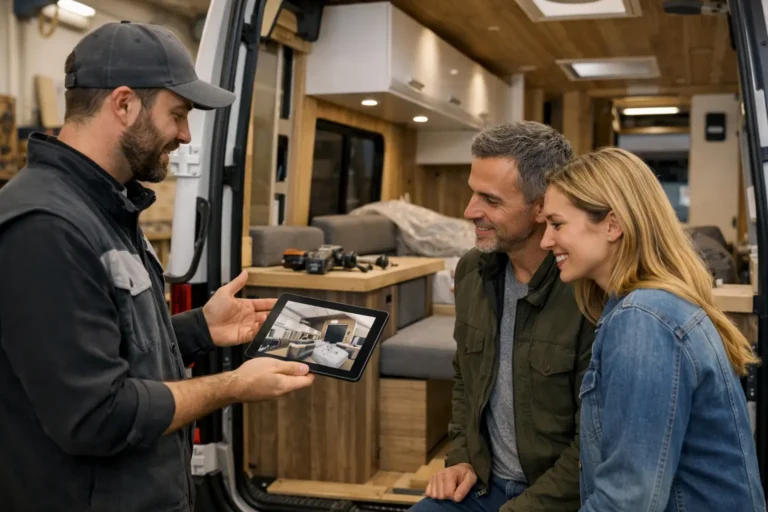
Photos and short videos help because they remove ambiguity. They also set realistic expectations. A client looking at fabrication in progress can see that the piece is not ready for install yet, but they can also see that real work is happening.
A better record for the team, not just the client
Although the client benefit is obvious, the internal value is just as important. A well-kept visual history becomes a reference point for the business itself. It helps new team members catch up on a project. It supports handovers between office and site. It provides a clean record if questions come up around scope or timing.
That record is especially useful when projects span many weeks, involve subcontractors, or move between workshop and installation teams. Instead of reconstructing the story from memory, the team can see it in sequence.
For small and mid-sized shops, this can be a real operational improvement. It reduces the dependence on one person remembering everything. It also makes the business look more consistent and professional, which matters when the work itself is bespoke and high value.
A strong visual project history for custom metalwork does not need to be elaborate. It needs to be clear, current, and easy for the client to follow. When clients can see the project taking shape, they ask fewer status questions, decisions are easier to trace, and the whole job feels more controlled. That is often the difference between a project that feels stressful and one that feels well managed.