Client Updates for RV Conversion Shops
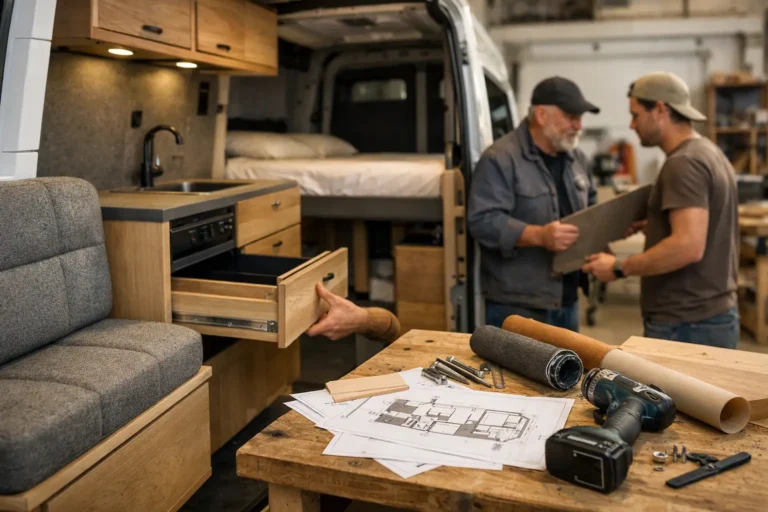
A client drops off a Sprinter, pays a large deposit, and then waits while the van disappears into your workshop for eight or twelve weeks. From their side, silence feels longer than the build itself. That is why client updates for RV conversion shops are not a nice extra. They are part of the job.
When updates are inconsistent, clients fill the gap with questions. They text for progress photos, email to ask whether plumbing is finished, and call after seeing no activity for a few days. None of that means they are difficult. It usually means they are trying to reduce uncertainty around a high-value custom project that they cannot see for themselves.
CustomWorks.app
Keep clients updated without messy chats
Give each project a private feed for client updates — and keep a clear history of photos, videos, notes, stages, decisions, and delivery moments for your team.
For RV conversion shops, the communication problem is easy to underestimate. Most teams think the real work is fabrication, wiring, cabinetry, insulation, and install coordination. That is true, but for the client, the experience is split in two. One part is the physical build. The other is visibility into what is happening, what has changed, and whether the project still feels under control.
Why RV conversion clients ask for updates so often
An RV conversion is not a standard retail purchase. Clients are buying a custom outcome, often based on drawings, samples, and conversations rather than something finished and visible on day one. They have usually paid a meaningful deposit. They may also be working toward a travel date, a family move, or a launch for a mobile business.
That combination changes expectations. Clients do not just want a final handover. They want signs of progress along the way. A few build photos, a note about electrical rough-in, confirmation that appliances arrived, or a message that a layout decision was finalized can do more to maintain trust than a long email sent once a month.
There is also a practical reason they ask so many questions. RV conversions involve dozens of details that can affect cost, timing, and finish. If a client picks materials late, if a part is delayed, or if a hidden issue appears after strip-out, they need context. Without that context, every delay feels avoidable and every change feels suspicious.
What goes wrong when updates are handled informally
Many shops start with good intentions and then fall into reactive communication. A project manager sends a few photos by text. A builder answers a WhatsApp message after hours. Someone emails an invoice and includes a quick progress note. A client asks for the same update again because they cannot find the last message.
The result is not just inconvenience. It creates a messy project record. Photos end up on personal phones. Important decisions live in separate threads. A client remembers one version of a request, while the shop remembers another. When handover gets close, nobody has one clean timeline of what happened.
This is where communication starts costing real time. Repeated status requests interrupt production. Team members answer the same question in different places. Clients chase reassurance because there is no predictable rhythm. Even a well-run build can feel disorganized if the updates around it are scattered.
For RV conversion shops, that matters because buyers are not only evaluating craftsmanship. They are evaluating professionalism. If the communication feels loose, they start wondering whether the build process is loose too.
What good client updates for RV conversion shops actually look like
Good updates are simple, visual, and consistent. They do not need to be long. In most cases, clients want three things: what has been completed, what is happening now, and what comes next.
That means a short note paired with relevant photos or video usually works better than a polished report. If the subfloor is done, show it. If the solar wiring is in before the wall panels go up, document it. If the water tank position changed because of weight distribution, explain that change in one clear sentence while the decision is fresh.
The best update process also follows the real structure of the build. RV conversions naturally move through visible stages: strip-out, prep, insulation, electrical and plumbing rough-in, framing, cabinetry, finishes, testing, and delivery prep. When clients can see progress by stage, the build feels real and measurable.
There is a trade-off here. Too few updates create anxiety, but too many create noise. Daily messages can become another burden for the team and can train clients to expect constant access. Weekly updates are often the better default, with additional posts when a major milestone, change, or decision happens.
What each update should include
A useful update does not try to cover everything. It should answer the questions clients are already thinking about.
Photos matter most because they remove ambiguity. A picture of installed insulation, routed wiring, or cabinet frames tells the client more than three paragraphs ever will. Short captions make those photos meaningful. Instead of writing, “Making progress this week,” say, “Electrical rough-in completed on the driver side wall and roof cavity. Next step is plumbing before insulation closes up the rear section.”
When there is a change, explain the reason early. Clients are usually reasonable when they understand the logic. They get frustrated when they discover a change late, or when it sounds improvised. If a hardware item is backordered and an alternative is being proposed, say what changed, why it changed, and whether it affects timeline or price.
Milestones are also worth marking clearly. A conversion has emotional checkpoints: first day in the shop, systems installed, cabinetry fitted, final finish work, testing completed, and delivery scheduled. These moments help clients feel movement, even during less visible weeks.
A better process than texts, email threads, and chat apps
RV conversion shops do not need more internal project management software for clients. Most clients do not want to log into a complicated system or learn a new workflow. They want one clear place where they can see the history of their van.
That is why a private client-facing update feed works better than scattered communication. Instead of sending photos across chat apps and hoping nobody loses context, the team posts progress in one timeline. The client can review photos, videos, notes, stages, changes, and delivery updates without searching old messages.
For the shop, this creates control. The update process becomes repeatable. Every project follows the same communication structure. Team members know where updates belong. Clients know where to look before sending another “Any news?” message.
A platform like CustomWorks is designed for exactly this type of long-running custom project. It is not trying to replace your workshop process. It gives you a cleaner way to show progress, maintain a visual project history, and keep client communication organized.
How to set up client updates without adding admin work
The biggest objection from shop owners is fair: updates sound useful, but someone still has to do them. If the process becomes extra admin, it will fail after the first few busy weeks.
The answer is to build updates into existing moments instead of treating them as a separate task. The simplest version is this: take photos when a stage is completed, add a short note while the details are still fresh, and post on a consistent day each week. If a change order or decision happens, record it at that moment rather than reconstructing it later.
In practice, one person should own the final posting rhythm, even if multiple team members contribute images. That could be the project manager, shop manager, or client coordinator. Shared responsibility sounds efficient, but it often leads to silence because everyone assumes someone else handled it.
You also do not need to document every screw and bracket. Focus on progress the client can recognize and decisions that may matter later. Hidden work is still worth showing, especially in electrical, plumbing, insulation, and structural prep, but only when it helps explain quality, sequence, or change.
The business effect of better updates
Better communication does more than reduce interruptions. It changes how clients experience the entire build.
When clients see regular proof of progress, they are calmer. They ask fewer repetitive questions. They are more prepared for decisions because they have context. When issues come up, they are less likely to assume the worst. That alone saves time and protects margins.
It also improves handover. A documented visual history gives clients something valuable beyond the finished van. They can see what sits behind the panels, how systems were installed, and how the project came together over time. For a custom RV build, that history supports confidence in the work and often becomes part of how clients talk about your shop afterward.
Not every shop needs the same update cadence or format. A high-volume, standardized converter may keep updates lighter. A fully bespoke builder with six-figure projects may need more detailed stage-by-stage communication. But in both cases, the principle is the same: silence creates doubt, while visible progress creates trust.
If your team is producing strong work but still dealing with status messages, follow-ups, and scattered project communication, the problem may not be the build. It may be that the client cannot see the build clearly enough. Give them that visibility, and the entire project starts to feel more controlled on both sides.