Photo Progress Updates That Clients Trust
A client pays a deposit, waits two weeks, and starts wondering whether anything is happening. Your team is busy, the work is moving, and there are photos on someone’s phone – but the client can’t see any of it. That gap is where stress builds, repeat messages start, and trust gets tested. Photo progress updates solve a very practical problem: they make visible progress feel real.
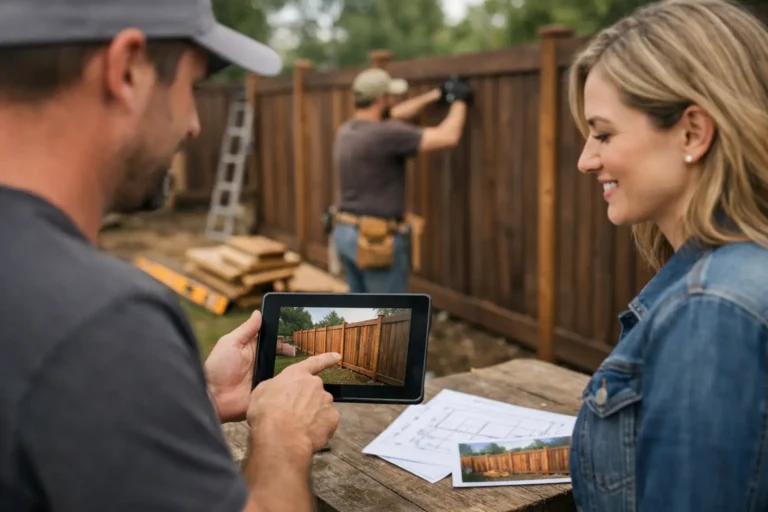
For companies handling renovations, custom builds, fit-outs, fabrication, restoration, and other long-running project work, silence is rarely neutral. Clients usually interpret it as delay, confusion, or lack of control. A simple stream of photo-based updates changes that. Instead of asking for reassurance, clients can see where the project stands, what has been completed, and what is happening next.
CustomWorks.app
Keep clients updated without messy chats
Give each project a private feed for client updates — and keep a clear history of photos, videos, notes, stages, decisions, and delivery moments for your team.
Why photo progress updates matter so much
Most custom projects do not move in a straight line. One week may look dramatic on site, while the next is full of hidden work, approvals, sourcing, or fine adjustments that are hard to explain in a quick text. That is exactly why photos are useful. They show tangible movement, even when the work is technical or behind the scenes.
Photos also reduce a common communication problem: every update starts from zero. Without a clear visual record, teams end up repeating the same explanations across email threads, chat apps, and phone calls. One client asks for a status update. Another wants proof that materials arrived. A third cannot remember whether the layout change was already approved. If your updates are scattered, your team spends time reconstructing the story instead of moving the project forward.
A well-managed photo update process creates a simple visual history. It gives clients confidence that work is active and organized. It gives your team a cleaner way to communicate progress without writing long reports. And when questions do come in, they tend to be better questions because the basics are already visible.
What good photo progress updates actually look like
The best photo progress updates are not polished marketing content. They are clear, consistent, and easy to understand. Clients do not need perfect photography. They need context.
That usually means each update includes a few images, a short note explaining what they are looking at, and some indication of where this fits in the project timeline. A photo of exposed wiring means very little on its own. A photo with a note saying first-fix electrical complete in kitchen and utility area, pending inspection, is much more useful.
Consistency matters more than volume. Sending 25 photos once a month is often less effective than posting 3 to 5 photos every few days or at the end of each stage. Frequent updates create rhythm. They reassure clients that the job is active, even when progress is incremental.
There is also a trade-off to manage. Too few updates create uncertainty. Too many low-value updates can create noise and make clients pay less attention. The right cadence depends on the project type. A kitchen renovation may justify updates several times a week. Bespoke manufacturing may work better with stage-based updates tied to cutting, assembly, finishing, and delivery prep.
Where teams usually get it wrong
Most companies already take project photos. The problem is not capture. The problem is structure.
Photos get left on personal phones. They are sent through WhatsApp to one client contact but not another. They end up mixed with supplier screenshots, voice notes, and unrelated conversations. A project manager emails some images, while the site lead sends others directly. After a few weeks, nobody has a clean record of what the client has actually seen.
That creates avoidable friction. Clients ask for updates because they do not have one place to check. Team members waste time searching for the latest images. Important decisions get buried between casual chat messages. And when there is a dispute, delay, or scope question, the photo history is incomplete.
This is why a dedicated, client-facing update process works better than ad hoc messaging. It turns project communication into something visible and repeatable rather than dependent on whoever remembered to send a message that day.
How to make photo progress updates useful for clients
The goal is not just to show activity. The goal is to make activity understandable.
Start by thinking in stages. Every long-running custom project has natural milestones, even if the day-to-day work is messy. Preparation, demolition, framing, fabrication, first fix, fitting, finishing, snagging, delivery – whatever fits your work. When updates are tied to stages, clients can place each photo in a broader story.
Then keep the written part short but specific. A good note answers three questions: what happened, what it means, and what comes next. That gives clients orientation without forcing them to decode site jargon.
Photo selection matters too. Wide shots help clients understand overall progress. Detail shots help them see quality, materials, and specific completed work. A mix of both is usually best. If every image is a close-up, the client may struggle to understand scale. If every image is too wide, they may miss the detail that proves real progress.
It also helps to document less visible moments. Material arrival, templates, mockups, test fits, protected finishes, workshop assembly, and pre-delivery checks may not look dramatic, but they show care and process control. For many clients, that is just as reassuring as a finished install photo.
Photo progress updates and client trust
Trust during a long project is rarely built through one big moment. It is built through a pattern of visible follow-through.
When clients can regularly see what is happening, they are less likely to assume the worst during quiet periods. They can see that work is progressing, that decisions are being recorded, and that the project has direction. This is especially important after an upfront payment, when clients are relying heavily on your communication to feel secure.
There is another benefit that matters just as much internally. A clear photo record helps your team communicate with more confidence. Instead of reacting to anxious messages, you can point to a visible timeline of work completed. That changes the tone of the relationship. The conversation becomes calmer and more factual.
For many businesses, this is where a purpose-built tool makes a noticeable difference. A platform like CustomWorks gives each project a private update feed where photos, notes, videos, stages, and delivery updates live in one client-facing timeline. That is very different from asking clients to follow scattered messages across email and chat apps.
Building a workable process inside your team
The strongest update system is the one your team will actually use under pressure. That means it needs to be simple.
Assign responsibility clearly. Someone needs to own the habit of posting updates, even if multiple team members contribute photos. In smaller companies, that may be the owner or project manager. In larger teams, the site lead or account manager may collect content while one person publishes the client-facing update.
Set a baseline rhythm. For example, updates may go out every Friday, at every completed stage, or whenever a meaningful change is visible. A fixed rhythm reduces the chance that clients sit in silence too long.
Create a basic standard for every update. Three to five images, one short note, one stage label, and a next-step line is often enough. You do not need a complicated communication policy. You need a repeatable format.
It is also worth deciding what not to share. Not every internal issue belongs in a client update feed. If there is a supplier delay, quality issue, or scheduling change, the best approach depends on the situation. Clients value transparency, but they also need information framed clearly and constructively. The point is not to expose internal noise. The point is to show honest progress and maintain control of communication.
Why this matters across industries
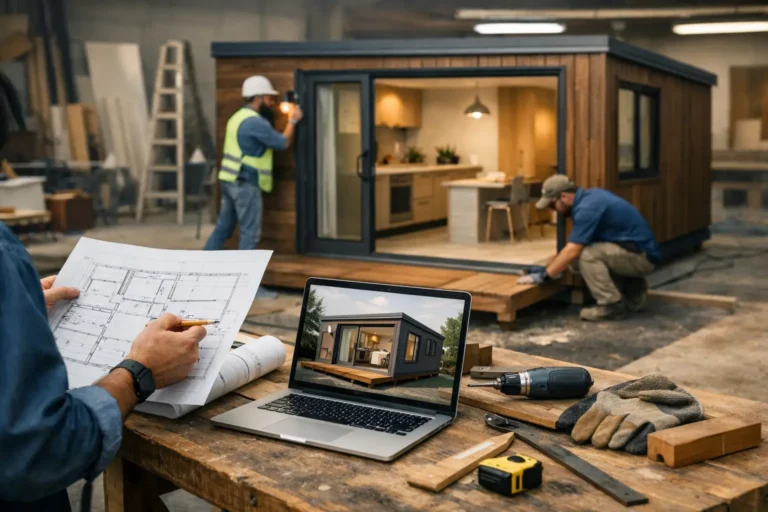
Photo-led updates work well in construction and renovation because change is visual. But the same logic applies in workshops, studios, and production environments.
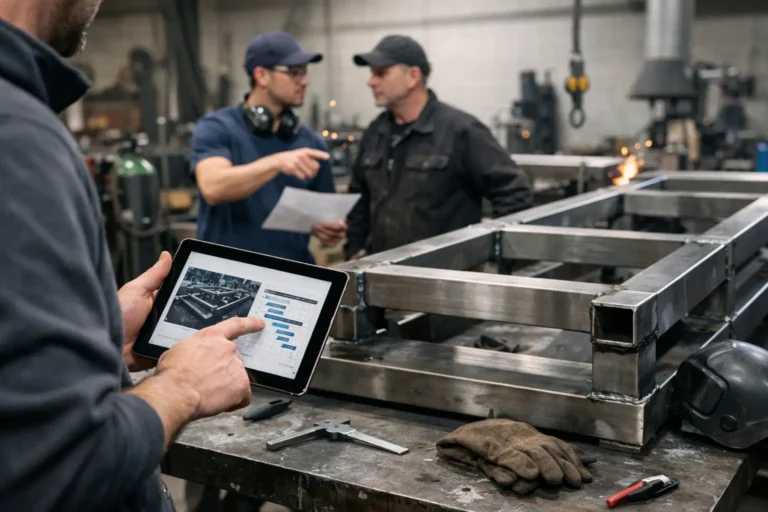
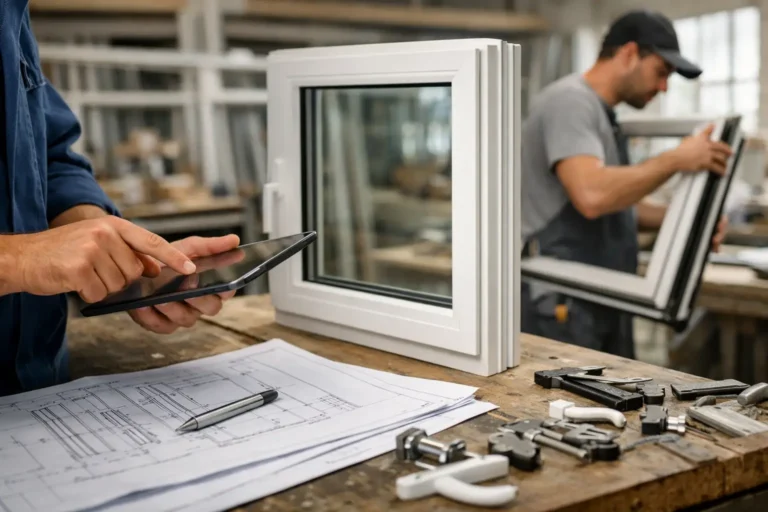
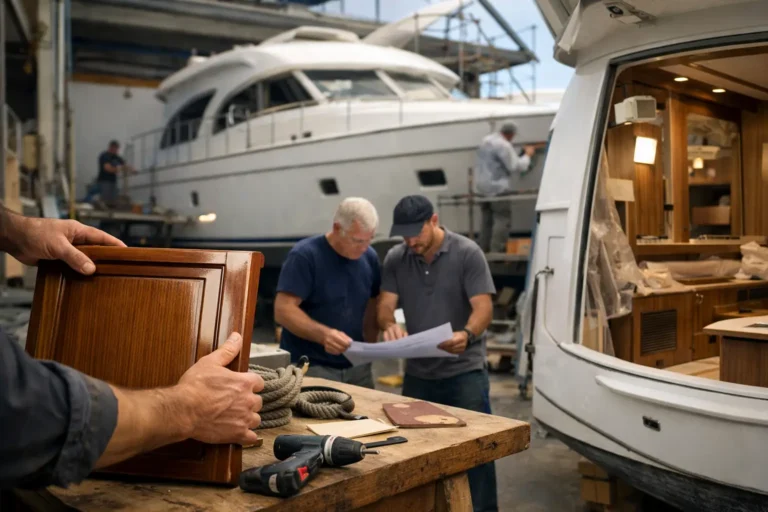
A furniture maker can show frame assembly, finishing, upholstery, and final inspection. A fabricator can document material arrival, cutting, welding, coating, and packing. A boatyard can record strip-out, structural repairs, systems work, and refit stages. An interior fit-out team can show site readiness, partitions, services, finishes, and handover preparation.
In each case, the benefit is the same. Clients stop feeling disconnected from a project they are paying for but cannot physically monitor every day. Your business looks more organized, more transparent, and easier to trust.
The practical value of photo progress updates is not in the photos alone. It is in what they prevent: uncertainty, repeated status requests, lost context, and fragmented communication. When clients can see the project moving, your team spends less time proving that work is happening and more time doing it.
If your projects take weeks or months, visibility is part of the service whether you formalize it or not. The difference is whether that visibility feels improvised or professional. A simple, consistent photo update process gives clients something they want very badly during a long custom job: clear evidence that the project is moving forward.