Motorhome Renovation Project Updates That Work
A motorhome renovation rarely feels slow to the team doing the work. Strip-out happens fast, hidden issues appear faster, and before long the original plan has changed twice. To the client, though, silence between deposit and delivery can feel much longer. That is why motorhome renovation project updates matter so much. They turn a complex, weeks-long refit into something visible, structured, and easier to trust.
For companies that renovate motorhomes, campers, RVs, and expedition vehicles, the communication problem is familiar. Clients want progress, but they usually do not want a technical breakdown every day. At the same time, the team cannot afford constant calls, scattered photo requests, and long message threads asking whether insulation is done, whether cabinetry has started, or whether the electrical rework changed the timeline. Good updates solve both sides of that problem.
CustomWorks.app
Keep clients updated without messy chats
Give each project a private feed for client updates — and keep a clear history of photos, videos, notes, stages, decisions, and delivery moments for your team.
Why motorhome renovation project updates matter more than you think
A motorhome build is personal. Clients are not just paying for labor and materials. They are handing over a vehicle they plan to live in, travel in, or rely on for long trips. That makes uncertainty harder to tolerate than in a more standardized job.
When communication is inconsistent, clients often assume the worst. They wonder whether work has stalled, whether a problem is being hidden, or whether their project has dropped behind other jobs in the workshop. None of those concerns require an actual failure to appear. They grow naturally in the gaps between updates.
For the business, those gaps create avoidable admin work. One missed update can lead to several follow-up calls, repeated explanations from different team members, and a messy search through phones and emails to find the latest photos. Over a multi-month project, that adds up.
A clear update process changes the experience. Instead of reacting to client anxiety, the company sets the rhythm. Instead of answering the same status question five different ways, the team keeps one visible record of progress, changes, and decisions.
What clients actually want to see in renovation updates
Most clients do not need every workshop detail. They want proof that progress is real, clarity on what stage the project is in, and confidence that important changes are being communicated early.
For motorhome renovation project updates, visual evidence matters most. Photos of demolition, structural repairs, insulation, subfloor work, wiring, plumbing runs, cabinetry fitment, wall panels, upholstery, and final detailing give clients a simple way to understand movement. Short videos can help when showing systems in operation, such as lighting, water pumps, or slide-out functionality.
Just as important are short notes that explain what changed. A photo of exposed corrosion means more when paired with a plain statement that the team found rust beneath the shower tray, removed damaged material, and added two extra days for repair before continuing. That kind of note reduces confusion and prevents difficult conversations later.
Clients also value milestone updates. They want to know when strip-out is complete, when hidden repairs are resolved, when first fix electrics and plumbing are done, when furniture installation starts, and when the vehicle is moving into finishing and testing. These stage markers help them understand where the job stands without needing to interpret workshop terminology.
The real cost of messy communication
Many renovation businesses still run updates through a mix of WhatsApp, text messages, personal phones, email chains, and occasional calls. That may feel manageable at first, especially with a small team, but it usually breaks down as project volume grows.
The first problem is inconsistency. One client gets regular photos from a technician, another gets only occasional email replies from the office, and another speaks directly with the owner. That creates different expectations across projects and makes service quality depend too much on individual habits.
The second problem is lost context. A client may approve a layout change by message, ask about a material swap by email, and receive install photos in a separate chat. Later, when questions come up, nobody has a clean timeline of what happened and when.
The third problem is presentation. Even if the work is excellent, communication can still feel improvised. For high-value custom projects, that matters. Clients judge reliability not just by craftsmanship, but by whether the business looks organized while the work is in progress.
A better structure for motorhome renovation project updates
The most effective approach is simple: keep every project update in one place, in chronological order, with visuals, short notes, and clear stage references.
That structure gives the client an easy way to follow the job from strip-out to handover. It also gives the business a repeatable system that does not rely on memory or scattered conversations. One update feed can show what has been completed, what is being handled now, what decisions were made, and whether anything has affected timing or scope.
This matters even more in motorhome work because surprises are common. Water damage behind panels, outdated electrical systems, poor previous repairs, or hidden structural wear can all change the plan. When those issues are documented clearly as part of the ongoing project record, scope changes feel managed rather than chaotic.
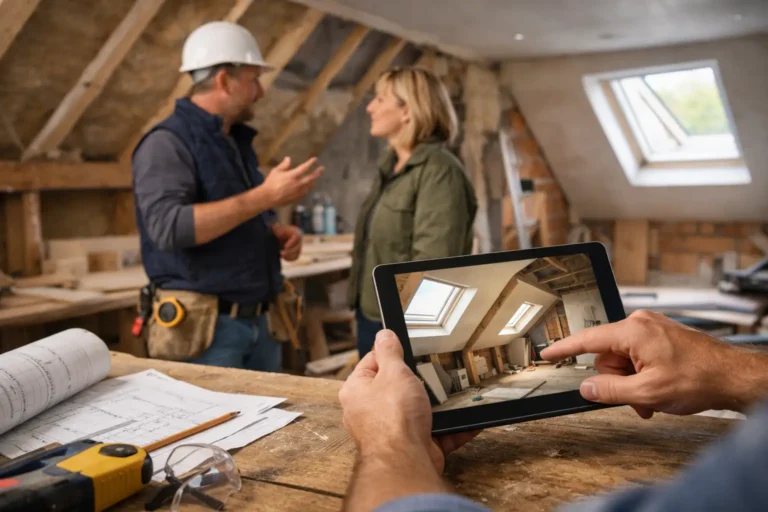
This is where a platform such as CustomWorks fits naturally. Instead of treating updates as an afterthought, it gives each project a private client-facing timeline where teams can share photos, videos, notes, stage changes, and delivery progress in one organized view.
How to make updates useful without creating extra admin
A common concern is that more communication means more work. In practice, the opposite is often true if the process is set up properly.
The key is to make updates short, visual, and tied to real project moments. A technician or manager does not need to write a report. Two or three photos with a clear note are often enough. For example, “Old wiring removed. New 12V runs installed for lighting and USB points. Next step is insulation and wall prep.” That takes less time than answering multiple separate client questions later.
Frequency depends on the project, but consistency matters more than volume. A weekly update is usually enough for many motorhome renovations, with extra posts for major discoveries, approvals, or milestone completions. Daily updates can be helpful on fast-moving phases, but only if the team can sustain them without turning communication into a burden.
It also helps to standardize what each update includes. Many teams do well with a simple format: what was completed, what comes next, and whether anything needs client attention. That keeps updates practical and keeps expectations clear.
When more detail is necessary
Not every client wants the same level of visibility. Some want frequent photos and detailed explanations. Others just want reassurance that the job is on track. A good update process can serve both without creating duplicate work.
The core record should still be complete enough to stand on its own. That way, when a client becomes more involved, the history is already there. They can scroll back through the progression, see decisions in context, and understand why certain changes happened.
This is especially useful when the schedule shifts. Delays are not always a communication failure. Sometimes parts are late, custom materials need to be remade, or hidden repairs take priority. Clients generally accept this more easily when they can see the facts as the project unfolds.
There is a trade-off, of course. Too little detail creates uncertainty, but too much technical detail can overwhelm the client. The sweet spot is usually visual progress paired with plain-language explanation. Enough to build trust, not so much that every update feels like a workshop logbook.
What organized updates do for the business
The immediate benefit is fewer status requests. Clients who can see progress clearly are less likely to chase the team for reassurance. That gives workshop staff and managers more time to focus on delivery.
There is also a stronger commercial benefit. A documented project history makes the business look controlled and professional. It shows that progress is real, communication is deliberate, and changes are handled transparently. That can reduce friction on variation approvals, improve client confidence during long lead times, and create a better overall handover experience.
It also protects internal knowledge. If one team member is offsite or unavailable, the project record still shows what was done, what was found, and what the client has already seen. That continuity matters in any company running multiple custom jobs at once.
For motorhome renovation specialists, the strongest update process is not the one with the most words. It is the one that gives clients a clean view of progress, issues, decisions, and results without sending the team back into message chaos. If the work takes weeks or months, the update system should be built for that reality.
Clients do not expect perfection on complex renovation jobs. They do expect visibility. When they can see the project moving, understand the changes, and trust that nothing important is being hidden, the relationship stays calmer from deposit to delivery.