RV Renovation Project Updates That Work
A client pays a deposit for an RV renovation, drops off the vehicle, and then hears almost nothing for two weeks. From your side, work is moving. Demolition is done, hidden damage has been documented, materials are on order, and the electrical rework is underway. From the client’s side, it feels like silence. That is where rv renovation project updates stop being a nice extra and start becoming part of the job.
For shops handling camper van builds, trailer refits, motorhome restorations, or custom RV interiors, the communication gap is usually not caused by bad intent. It happens because updates are spread across phone photos, technician messages, supplier emails, and quick conversations on the shop floor. The work is real, but the client cannot see it clearly. When that happens, trust starts to rely on reassurance instead of evidence.
CustomWorks.app
Keep clients updated without messy chats
Give each project a private feed for client updates — and keep a clear history of photos, videos, notes, stages, decisions, and delivery moments for your team.
Why RV renovation project updates matter so much
RV work is unusually exposed to client uncertainty. These projects are expensive, personal, and often full of surprises once panels come off and systems are opened up. A kitchen refit can uncover water damage. A solar upgrade can require extra wiring changes. A flooring replacement can turn into subfloor repair. Clients usually understand that this kind of work evolves, but they still want proof that progress is happening and that decisions are being managed well.
The problem is not just the occasional “Any updates?” message. It is the accumulated drag that comes from answering the same question in five places. One client texts the owner. Another emails the office. Someone else messages the installer directly. Photos sit on one person’s phone. A change approval is buried in an email thread. By the time delivery day comes, the full story of the project is hard to reconstruct.
Good communication fixes more than client nerves. It protects your team’s time, reduces misunderstanding, and gives your business a more organized, professional shape. For RV renovation companies, that matters because buyers are not just paying for labor and materials. They are paying for confidence while their vehicle is out of their hands.
What clients actually want from rv renovation project updates
Most clients do not want a technical project management system. They do not want to log into a complicated tool, learn construction terminology, or read internal task notes. What they want is simple. They want to know what has been done, what happens next, whether anything changed, and if you need a decision from them.
That means the best update format is usually a clear timeline, not a scattered conversation. A dated photo of insulation going in says more than a vague message saying progress is good. A short note explaining that a wall cavity revealed old moisture damage gives context without creating alarm. A stage-based view helps the client understand the project as a sequence rather than a mystery.
This is especially true in RV renovation work because visual progress is persuasive. Stripped interiors, new cabinetry, plumbing runs, panel work, upholstery, and finishing details all show tangible movement. If you capture those moments well, clients feel informed without needing to chase you.
What strong update systems look like in practice
The best RV renovation project updates follow a simple pattern. They show progress visually, add just enough context, and keep everything in one place.
Photos are usually the foundation. Before-and-after shots, in-progress images, and close-ups of hidden work all help. Video can be useful when the change is hard to explain in still images, such as slide-out operation, lighting upgrades, or water system testing. Short written notes matter just as much because they explain what the client is seeing and why it matters.
Stages are another practical layer. Even if your internal process is more detailed, the client-facing version can stay simple: intake and inspection, strip-out, structural or system repairs, rebuild, finishing, testing, and handover prep. When updates are tied to these stages, the client can orient themselves quickly.
The last piece is decision tracking. RV projects often involve substitutions, hidden repairs, layout changes, and finish approvals. If those decisions are recorded alongside the update timeline, you reduce the risk of confusion later. This is where many businesses still rely on fragmented messages, and it is also where disputes often begin.
Common mistakes that make updates harder than they need to be
A lot of businesses think they have an update problem when they actually have a structure problem. The issue is not that the team is unwilling to communicate. It is that there is no consistent method for when, where, and how updates get shared.
One common mistake is updating only when the client asks. That creates a reactive pattern where communication feels delayed even if work is on track. Another is sending too much low-value detail. Clients do not need every internal step. They need meaningful signs of progress, changes, and next actions.
There is also a trade-off to manage. If updates are too polished and infrequent, clients may still feel left in the dark between milestones. If updates are too constant and informal, they can become noisy and hard to review later. The right balance depends on project length and complexity, but in most RV renovations, one or two solid updates per week is more useful than a stream of scattered messages.
Another mistake is treating photos as a side task. In reality, photos are part of the deliverable experience. They help justify progress claims, document hidden work, and create a visual project history that remains useful long after completion.
A practical way to manage RV renovation project updates
The easiest system is the one your team can actually maintain. For most shops, that means standardizing updates around a few repeatable moments in the project.
Start with a documented intake update. Show the vehicle as received, note the agreed scope, and record any visible issues or expectations. This creates a clean baseline.
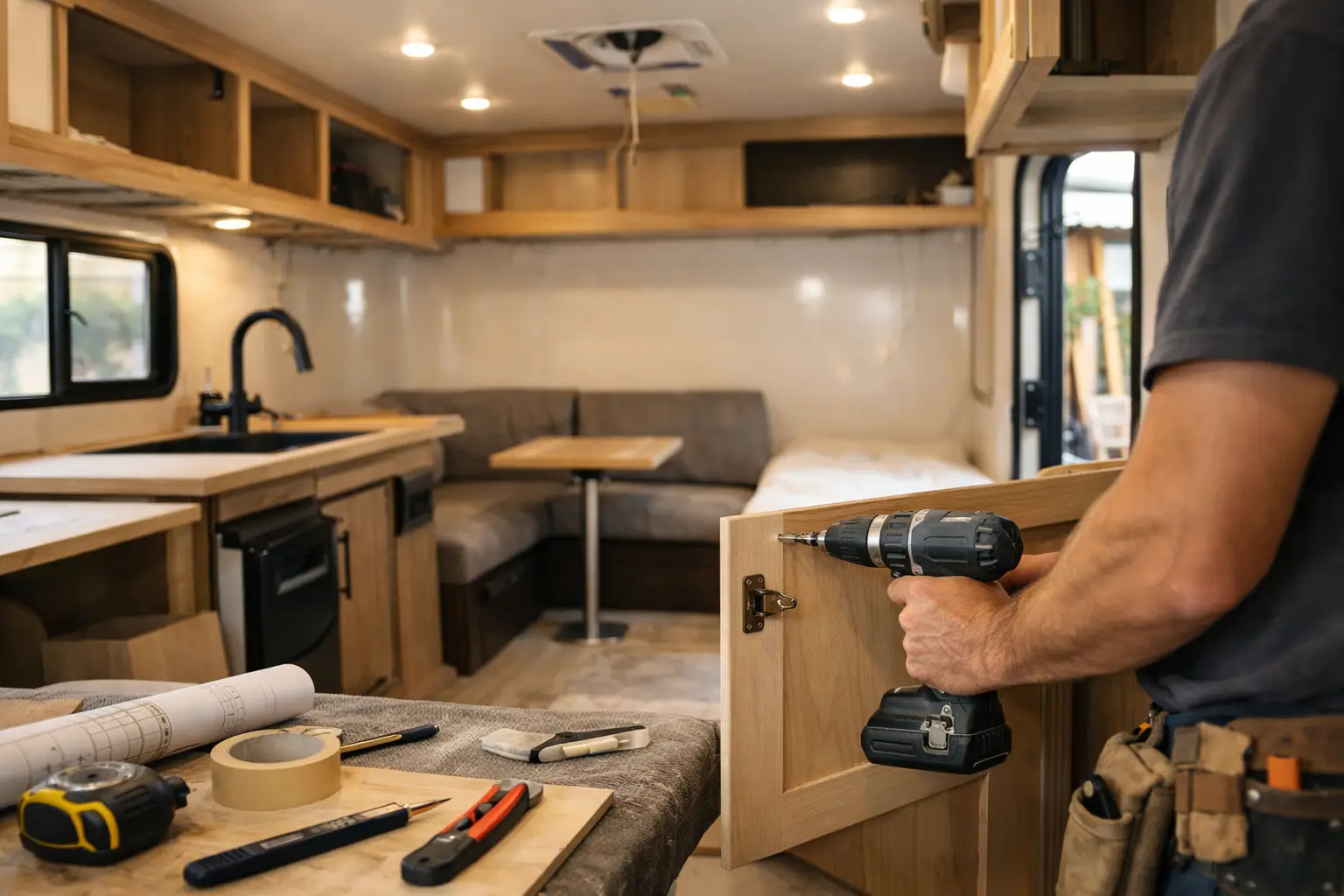
Then move to progress updates at defined checkpoints. In an RV project, that may be after demolition, after system rough-in, after structural repair, after cabinet or furniture installation, and before final handover. Each update should include a few photos, a short note on what was completed, any changes discovered, and whether client input is needed.
Finally, send a delivery update that ties everything together. This is not just a completion notice. It is a record of what was done, what was changed along the way, and what the client should know at handover.
If you want this to work consistently, the process has to be easy for the team. A technician or project lead should be able to upload photos, add a note, and publish the update without turning it into office admin. That is why many project-based businesses now use a client-facing system built specifically for updates instead of relying on email chains and messaging apps. A platform like CustomWorks gives each project a private feed for photos, videos, notes, stages, changes, and delivery milestones, which makes client communication easier to maintain over the full life of the job.
When update frequency should change
Not every RV renovation needs the same rhythm. A short cosmetic refresh might only need a kickoff update, one mid-project check-in, and a completion update. A full gut renovation with electrical, plumbing, insulation, and custom cabinetry needs more regular visibility.
There is also a difference between visible progress and invisible progress. Clients understand a new dinette or fresh wall finish immediately. They are less likely to appreciate hours spent on wiring corrections or leak testing unless you explain it well. During those less visible phases, updates should do more narrative work. A quick note saying the team completed behind-wall electrical and pressure-tested the water system helps clients understand that progress is happening even when the interior still looks unfinished.
When delays happen, frequency often matters more, not less. Silence during a material delay or unexpected repair usually creates more friction than the delay itself. A short factual update is better than waiting until you have perfect news.
The business case for better communication
Better updates do not just improve the client experience. They reduce operational noise.
When clients know where the project stands, your office receives fewer status requests. When photos, approvals, and change notes live in one visible timeline, your team spends less time reconstructing conversations. When handover arrives, you have a cleaner history of the build or renovation. That can help with quality discussions, warranty questions, and future repeat work.
For RV renovation businesses trying to grow, this matters even more. Informal communication can work when the owner personally manages every client. It breaks down when more projects, more technicians, and more custom decisions are in motion at once. A clear update process creates consistency without forcing clients into a full project management environment.
Clients are usually not asking for sophistication. They are asking not to be left guessing. If your business can show steady progress, explain changes clearly, and keep the story of the job organized, you look more capable before the renovation is even finished.
That matters because long-running custom work is judged twice. First while it is in progress, and then again when the final result is delivered. A good RV renovation can lose goodwill through poor communication. A well-run update process helps make sure the quality of the experience matches the quality of the work.
The shops that handle this well are rarely the ones writing the longest emails. They are the ones making progress visible, understandable, and easy to follow from day one to handover.