Woodworking Client Updates That Build Trust
A client pays a deposit for a custom dining table, then hears almost nothing for three weeks. From your side, the project is moving. Timber has been selected, boards are acclimating, joinery is underway, and finish samples are being tested. From the client’s side, it feels like silence. That gap is where woodworking client updates start to matter.
For custom shops, the work is detailed, physical, and often slow in ways clients do not naturally understand. A handmade kitchen, built-in wall unit, staircase, or set of cabinets does not produce visible progress every day, even when plenty is happening. If you only communicate at the start and at delivery, clients fill in the blanks themselves. Usually, they fill them in badly.
CustomWorks.app
Keep clients updated without messy chats
Give each project a private feed for client updates — and keep a clear history of photos, videos, notes, stages, decisions, and delivery moments for your team.
That is why updates are not just an administrative task. They are part of the customer experience. They protect trust during long lead times, reduce repetitive status requests, and help your shop look organized from deposit to handover.
Why woodworking client updates matter so much
Woodworking projects are especially vulnerable to communication gaps because the process is layered. There is design approval, material sourcing, shop scheduling, fabrication, sanding, finishing, curing, delivery planning, and installation. Clients tend to focus on the finished piece. Your team lives inside the steps in between.
When those steps are not visible, clients often assume the project is stalled. That is when the messages start. Any updates? Is everything still on track? Have you started yet? Even polite check-ins create friction if your team has to stop work, search through photos, and reconstruct what happened this week.
A consistent update rhythm changes that dynamic. Instead of reacting to client anxiety, you stay ahead of it. The client sees movement, understands the sequence, and gets reassurance that their project is progressing even when the final shape is not visible yet.
There is also a business reason to take this seriously. Shops that communicate clearly tend to look more premium, even if their process is simple. Clients are not only judging the joinery or finish quality. They are judging whether working with you feels controlled and professional.
What clients actually want to see
Most clients do not want a technical production report. They want clear proof that the project is active and being handled properly. In woodworking, that usually means visual progress paired with a short explanation.
A photo of rough-milled walnut matters more when it is labeled as timber selection for the client’s table top. A quick note about finish testing matters more when you explain that the samples are being checked under natural light to avoid surprises at delivery. The point is not volume. The point is context.
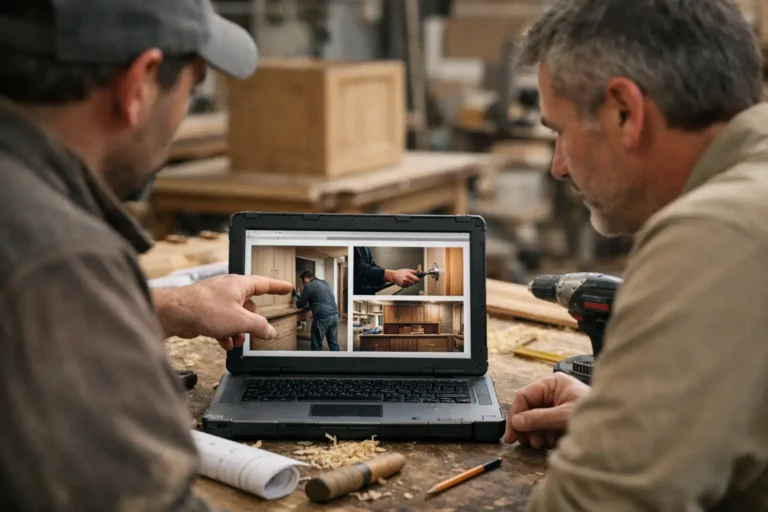
Good woodworking client updates usually include a mix of progress photos, short videos, stage notes, decisions that need client input, approved changes, and timing updates. That creates a record clients can follow without needing to chase your team across texts, email threads, and chat apps.
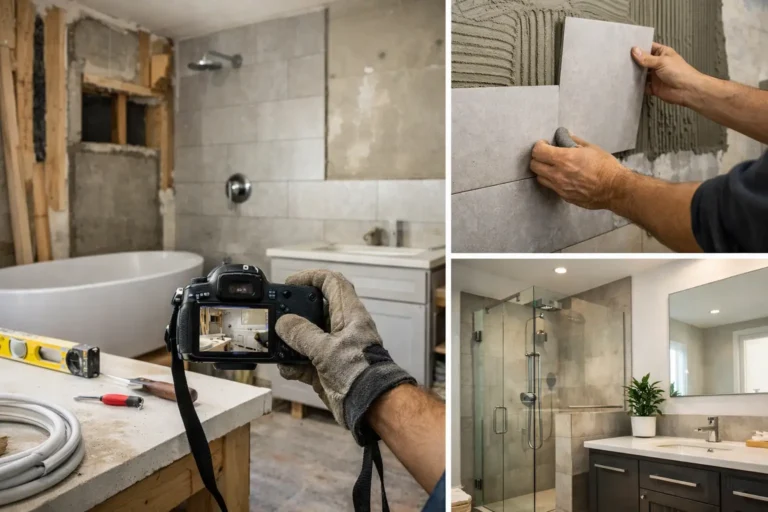
The visual side matters more in woodworking than in many other trades. Clients may not understand mortise and tenon tolerances or moisture content, but they do understand seeing their vanity assembled in the shop, their shelving unit dry-fitted, or their front desk wrapped and ready for dispatch. Pictures remove doubt faster than paragraphs ever will.
The problem with casual updates over chat and email
Many shops handle client communication informally because it feels quick. A few photos on WhatsApp, a note in email, maybe a delivery message by text. That works for very small jobs, but it breaks down once projects run for weeks or months.
The first problem is fragmentation. Photos sit in one place, approvals in another, and schedule changes somewhere else entirely. When a client asks what was agreed two weeks ago, someone on your team has to hunt for it.
The second problem is inconsistency. One client gets frequent updates because they ask often. Another hears nothing because they are quieter. That creates uneven service, and it is rarely intentional.
The third problem is presentation. Messy communication makes even solid businesses look less structured than they are. For custom work, that matters. Clients are trusting you with money, timelines, materials, and personal preferences. They want to feel there is a process.
This is exactly where a client-facing update system helps. Instead of scattering communication across channels, you can keep project progress, visual history, and key notes in one place. That is the core value of CustomWorks, which gives each project a private update feed so clients can follow progress without turning communication into full project management.
How to structure updates without creating extra admin
The best update process is light enough that your team will actually keep using it. If every update takes twenty minutes to write, it will slip as soon as the shop gets busy.
For most woodworking businesses, a simple stage-based structure works well. Start with material and prep, move into build progress, then surface finish and readiness, and finally delivery or installation. Not every project needs the same number of updates, but most benefit from a predictable flow.
A good update is usually one to three photos, a brief note explaining what happened, and a sentence on what comes next. If there is a client decision needed, make that clear. If there is a delay, explain it directly and early.
That last point matters. Updates should not only appear when things are going well. If veneer is backordered, if a finish needs more curing time, or if site access changes installation dates, that should be part of the same communication rhythm. Clients usually handle delays better when they can see the reason and the revised path forward.
A practical rhythm for woodworking shops
Weekly updates are often enough for longer furniture and millwork projects. For shorter jobs, two or three well-timed updates across the full lifecycle may be enough. The right frequency depends on project length, complexity, and how much visible change is happening.
What matters more than frequency is consistency. If you promise updates every Friday, send them every Friday. If your process is stage-based rather than calendar-based, explain that at the start so clients know when to expect communication.
A common pattern looks like this in practice. After deposit, confirm the project is scheduled and note the next milestone. Once materials are in, share photos and confirm they match expectations. During fabrication, show progress at a meaningful point rather than posting every minor step. Before finishing, confirm color or sheen decisions if needed. Before delivery or installation, share readiness photos and timing.
That rhythm gives clients enough visibility to stay confident without overwhelming them with noise.
What a strong update sounds like
The tone should be calm, specific, and direct. Clients do not need shop jargon unless it helps explain a decision. They do need clarity.
Instead of writing, We are continuing with fabrication as planned, say what actually happened. The cabinet frames are assembled, drawer fronts are being shaped today, and we are still on track for finishing next week. That creates confidence because it is concrete.
It also helps to explain why a step takes time. Finishing is a common example. Clients may assume a piece can be sprayed and delivered immediately. A short note that the finish needs proper curing before transport protects expectations and shows care rather than delay.
Where this has the biggest payoff
Not every woodworking business feels the pain equally. The bigger the project value, lead time, and customization level, the more useful structured updates become.
This matters for cabinet makers managing whole-home millwork, furniture studios building one-off pieces, workshop teams producing retail fit-outs, installers coordinating site work, and makers handling restoration or refit jobs with lots of client decisions along the way. In all of those cases, silence creates risk. Clients who cannot see progress tend to ask more questions, worry more about timelines, and remember the communication experience as strongly as the craftsmanship.
There is also an internal payoff. When updates follow a clear process, your team spends less time rewriting the same status messages. Photos and notes become part of the project record. Handoffs get easier because progress is visible. If a client raises a question late in the job, the history is already there.
Start simple, then standardize
If your current process is inconsistent, do not overcomplicate the fix. Start by deciding three things: who sends updates, when they are sent, and what each update should include. Even that level of structure will clean up a lot of avoidable confusion.
From there, you can standardize the format. Keep updates short. Use photos as the main proof of progress. Note decisions and changes in the same place as the visual history. Make sure clients know where to look instead of training them to message your team for every small question.
Woodworking is skilled, high-trust work. Clients are not only buying a finished object. They are buying confidence that the process is under control while that object is being made. Clear updates make that confidence visible, and once clients can see the project moving, they usually stop asking whether it is.