Why Yacht Project History Matters
A yacht refit can look calm from the outside while hundreds of moving parts shift underneath it. One week the focus is structural repairs, the next it is systems routing, finishes, approvals, and supplier delays. For the owner, silence during that process often feels worse than bad news. That is why yacht project history matters so much. It turns scattered updates into a clear record of what happened, when it happened, and what changed along the way.
For boatyards, refit specialists, and custom marine teams, this is not just an admin detail. It directly affects client trust, team efficiency, and how professionally the project is perceived. When the history of a project lives across text messages, inboxes, phones, and verbal conversations on the dock, confusion is almost guaranteed. Photos get lost, decisions become fuzzy, and the same status questions come back again and again.
CustomWorks.app
Keep clients updated without messy chats
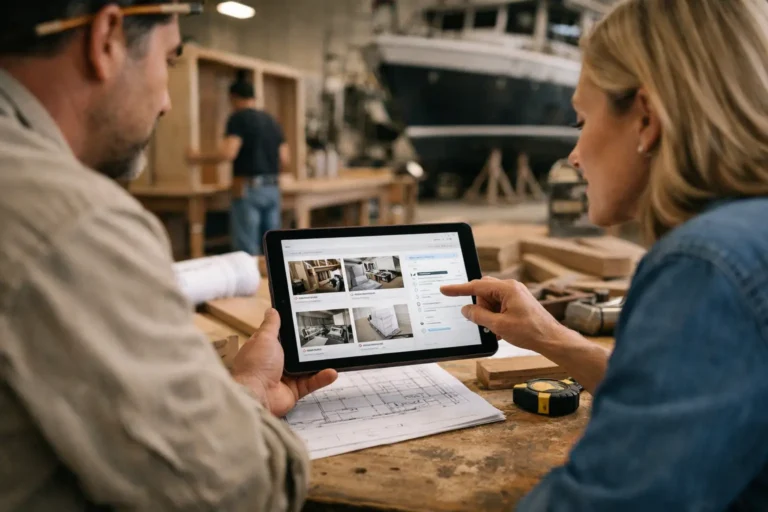
Give each project a private feed for client updates — and keep a clear history of photos, videos, notes, stages, decisions, and delivery moments for your team.
What yacht project history actually means
In practical terms, yacht project history is the documented timeline of a project from kickoff to handover. It includes progress photos, short written updates, stage changes, client decisions, variation requests, issue notes, and key delivery milestones.
That sounds simple, but in many marine businesses the history is fragmented. A project manager may have the latest notes in email. A foreman has progress photos on a phone. Procurement knows a delivery changed. The owner remembers approving a material three weeks ago, but nobody can find the exact message. Each person holds part of the story, and the full picture only exists in memory.
That becomes risky on projects that last months and involve high-value work. A yacht owner paying for a refit, restoration, or custom build expects visibility. Even when they understand that marine work can change once systems are opened up or hidden damage is found, they still want a clear account of progress and decisions.
Why yacht project history matters more on long marine projects
Yacht work has a few characteristics that make structured history especially valuable.
First, the projects are layered. Cosmetic work often overlaps with electrical, mechanical, structural, and interior scope. One delay or discovery can affect several areas at once. Without a visible timeline, clients may only see the date moving, not the reason behind it.
Second, many decisions happen incrementally. Finish samples, layout adjustments, joinery changes, equipment substitutions, and scope revisions do not always happen in one formal meeting. They happen over time. If those moments are not recorded clearly, disagreements later are much more likely.
Third, owners are usually not on site every day. They are relying on updates to replace physical visibility. If they cannot see progress, they often assume less is happening than actually is.
That gap creates unnecessary pressure on the team. You end up answering the same questions in different channels, searching for old photos, or rewriting updates that were already sent to someone else.
The business problem behind poor project history
Most project teams do not avoid documentation because they do not care. They avoid it because the process is messy.
Internal project management tools are often too detailed for clients. Messaging apps are quick, but not structured. Email works for formal communication, but long threads are hard to follow and easy to lose. Shared folders can store media, but they do not explain the story behind the files.
So the project history gets built accidentally instead of intentionally.
That has real costs. Clients feel uncertain after paying a deposit. Managers spend time chasing updates from the workshop. Teams repeat explanations. Disputes become harder to resolve because the timeline is incomplete. Even when the work itself is strong, the communication around it feels less controlled than it should.
For a yacht business, that can damage confidence at exactly the point where confidence matters most.
What a good yacht project history should include
A useful history is not a giant report. It is a simple, ongoing record that helps the client understand progress without needing to ask for it.
The strongest project histories usually include visual progress first, because photos and short videos answer questions faster than paragraphs of explanation. They also include short notes that explain what changed, what was completed, what is waiting, and what decision is needed next.
Milestones matter too. Strip-out completed, structural inspection finished, systems installed, interior fabrication approved, sea trial scheduled, handover completed. These points help the owner understand movement through the project, not just isolated work snapshots.
Changes should also be visible. Not every change is a problem, but undocumented changes often become one. If a material lead time shifts or additional repair work is identified, that should sit inside the same history as the rest of the project. It keeps context intact.
How structured history reduces client anxiety
Clients usually ask for updates more often when they feel uncertainty, not because they want to create extra work. A yacht project is expensive, personal, and time-sensitive. If they do not know what is happening, they fill in the blanks themselves.
A clear project history removes much of that uncertainty. When the client can see recent photos, stage progress, and a record of decisions, they do not need to chase the team for reassurance. They can check the timeline and understand where the project stands.
This changes the tone of communication. Instead of reactive status requests, conversations become more focused on actual decisions and next steps. That is better for the client and better for the team.
It also helps during quieter periods. Not every stage looks dramatic in pictures, and some work is slower or less visible than clients expect. When history is updated consistently, even less visual stages feel real because they sit in an ongoing documented timeline.
Why this matters internally as well
Yacht project history is client-facing, but it also improves internal control.
When updates are centralized, project managers do not need to reconstruct the story each time a client asks a question. New team members can get context faster. If a client references a previous approval or concern, the record is easier to find. Handover becomes cleaner because the path to completion is already documented.
There is also a professionalism benefit. Businesses that present work through a structured history tend to look more organized and more reliable. That matters in custom marine work, where trust is often built through the process as much as through the finished result.
A client may not judge your internal systems directly, but they absolutely notice whether communication feels controlled or scattered.
Building a better yacht project history without adding bureaucracy
The mistake many companies make is assuming that better project history requires heavy reporting. Usually it requires a better format, not more effort.
The easiest approach is to treat project updates as a running timeline rather than a collection of separate messages. Each update should be brief, visual where possible, and tied to a specific moment in the job. A few photos, a short note, and a clear stage marker often do more than a long weekly email.
Consistency matters more than volume. Ten useful updates over three months are better than one huge catch-up sent after weeks of silence. The goal is not to document every screw. The goal is to create enough visibility that the client understands progress, changes, and key decisions.
This is where a platform built for private project updates can help. Custom marine teams do not usually need clients inside a full project management system. They need a clean client-facing history that keeps photos, notes, changes, and milestones in one place. That is the kind of communication structure CustomWorks is designed to support.
Yacht project history as part of the client experience
Owners remember the process, not just the final reveal. If the work is excellent but the communication was hard to follow, that impression stays with them. If the project had complications but the history was transparent and well documented, trust often remains much stronger.
That is the real value here. Yacht project history is not only a record of work completed. It is part of how your business shows control, communicates clearly, and proves progress over time.
For long-running projects, silence creates doubt. A visible history creates confidence. And confidence is what keeps a complex job feeling managed from the first update to final handover.