Visual Project History for Pool Construction
A pool project can look inactive even when a lot is happening. Excavation may be complete, steel may be tied, plumbing pressure-tested, and inspections scheduled, yet from the client’s perspective, all they see is a hole, a fenced-off yard, and a large deposit already paid. That gap is exactly why a visual project history for pool construction matters.
Pool builders deal with long timelines, weather delays, permit dependencies, subcontractor handoffs, change requests, and inspection windows that rarely line up neatly. Clients usually understand that custom construction takes time. What they struggle with is silence. If updates are scattered across texts, phone calls, camera rolls, and email threads, the project starts to feel less organized than it really is.
CustomWorks.app
Keep clients updated without messy chats
Give each project a private feed for client updates — and keep a clear history of photos, videos, notes, stages, decisions, and delivery moments for your team.
A visual project history solves that by turning progress into something visible, chronological, and easy to follow. Instead of answering the same question five different ways, your team creates one clear record of what happened, when it happened, and what comes next.
Why pool construction needs a visual project history
Pool construction is especially vulnerable to communication gaps because so much of the work becomes hidden after each stage. Soil prep, rebar, underground plumbing, electrical rough-in, waterproofing, and backfill are critical milestones, but clients may never fully appreciate them if they only see the finished surface.
That creates two problems at once. First, clients become anxious when visible progress slows down. Second, builders lose an opportunity to document quality. If you do not capture the project as it evolves, you miss the chance to show the care behind the finished result.
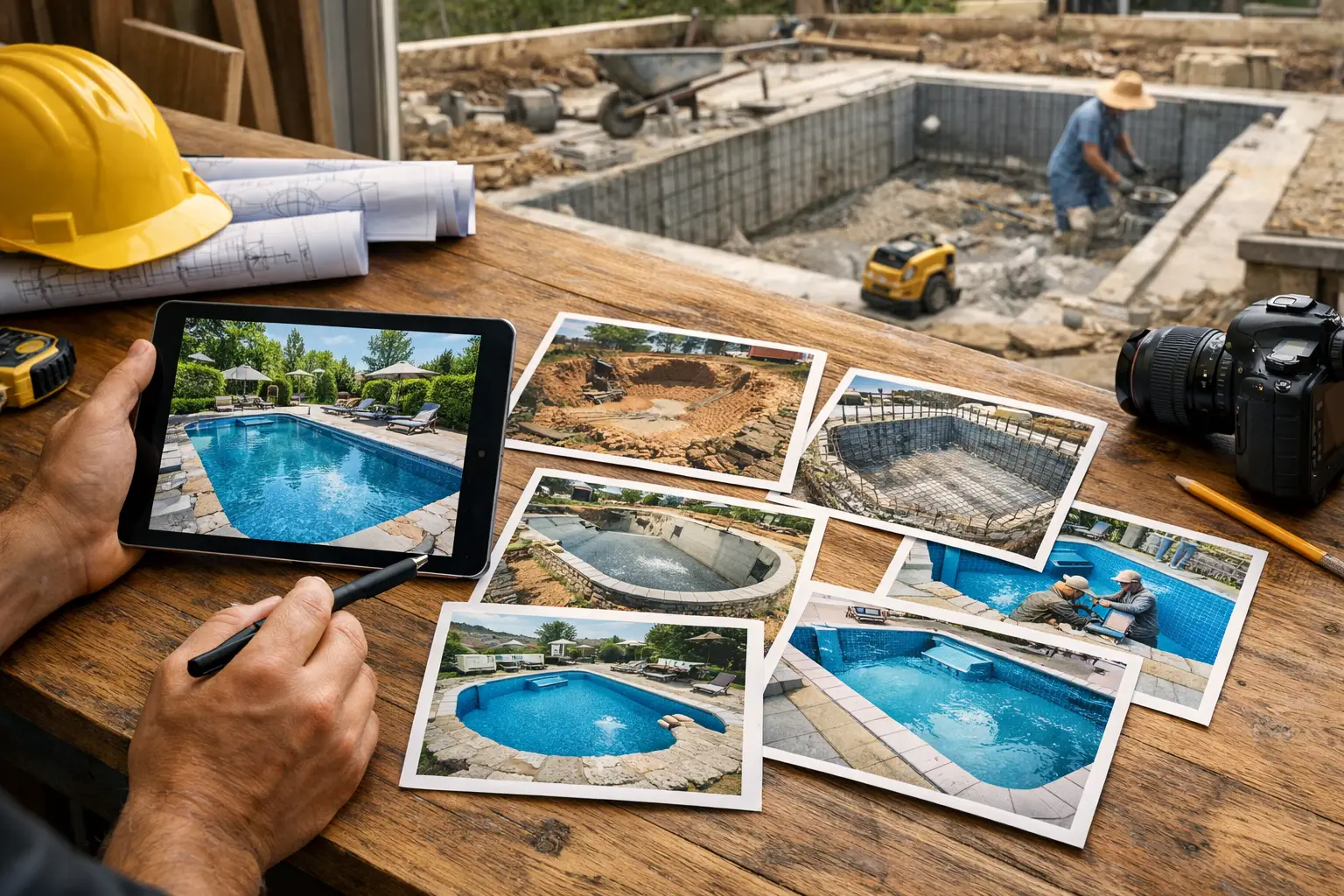
A strong visual project history for pool construction gives clients a structured timeline of the build. Photos from excavation, shell formation, pipe runs, tile installation, coping, decking, equipment setup, and final fill create a record that makes the process easier to understand. Short notes alongside those updates add context that a photo alone cannot provide.
This is not just about reassurance. It also improves professionalism. When a client can open one organized project feed and see stages, decisions, delays, and delivery moments in order, your business looks more controlled and more trustworthy.
What clients actually want to see during a pool build
Most clients are not asking for technical project management access. They do not want to review internal task boards or learn construction software. They want visibility.
In practice, that means simple updates that answer a few basic questions. What was done this week? What changed? Is the project moving? What is waiting on inspection, weather, or materials? What happens next?
For pool construction, visual updates are especially effective because the transformation is dramatic but uneven. One week brings major excavation and shell work. The next may involve inspection hold points with little visible movement. If you show both the visible and less visible stages, the project remains understandable.
A useful project history usually includes progress photos, short videos where needed, brief notes on completed work, work stages marked clearly, changes requested by the client, and key handoff moments such as startup, testing, and final walkthrough. The goal is not volume. The goal is clarity.
The business case for visual project history in pool construction
When updates are inconsistent, the cost is not limited to client frustration. Your team spends time chasing old photos, answering repetitive messages, and restating decisions that were already made once. That time adds up.
A visual project history reduces that friction because it centralizes communication in a format clients can actually use. Instead of asking the site supervisor for photos from two weeks ago or searching text threads for an approved tile change, you have one timeline that shows the project story clearly.
That matters even more in high-value pool projects, where trust is directly tied to the buying experience. The client is not only purchasing excavation, plumbing, and finish materials. They are buying confidence that the build is progressing properly and that their money is being managed responsibly.
This is also useful after completion. Questions about what sits beneath the deck, where lines were run, when equipment was installed, or what was changed during construction are easier to answer when the history is already documented.
What a good visual project history looks like
The best project histories are simple enough for clients to follow and structured enough for your team to maintain consistently. That balance matters. If the system is too detailed, your team stops using it. If it is too vague, clients still feel uninformed.
For pool construction, updates should follow the real rhythm of the build. An excavation update should include before-and-after photos and a note on what comes next. Structural stages should show steel, plumbing, and shell progress with clear labels. Finish stages should document tile, coping, decking, and equipment installation. If there is a weather delay or permit hold, that belongs in the timeline too.
This kind of history works because it reflects reality rather than trying to oversimplify it. Clients do not need every internal detail, but they do need an honest, readable view of progress.
How to build a visual project history without creating more admin
The main reason some companies avoid structured updates is simple: they assume it will become another system to manage. That concern is fair. If updating clients takes too much time, field teams will default back to texts and ad hoc photos.
The solution is to keep the format lightweight. Capture photos and short notes at natural project milestones rather than trying to document every hour of work. Standardize what gets posted for each stage. For example, every major update can include what was completed, one or two visuals, any relevant decision or change, and the next step.
Assign ownership clearly. In some pool companies, the project manager posts updates. In others, site leads send media to an office coordinator who formats the client-facing timeline. There is no single right model. It depends on team size, workflow, and how often crews move between jobs.
What matters is consistency. A simple weekly rhythm often works better than reactive communication. If clients know updates appear in one place at regular intervals, they are less likely to send separate status requests.
For companies that want a cleaner way to present this, CustomWorks offers a private client-facing project feed built specifically for long-running custom work. Instead of relying on scattered chats and email chains, teams can share photos, videos, notes, work stages, changes, and delivery updates in one organized timeline through https://customworks.app.
Where visual history helps most during a pool project
Some stages benefit more than others from visual documentation. Early groundworks are a major one because they reassure clients that real progress is underway. Underground services are another, since they are difficult to verify later once covered. Material selection changes also deserve clear visual records, especially when scope, price, or finish expectations shift.
Delays are another area where a visual history helps more than many builders expect. Clients usually react better to a documented delay than to silence. A short update explaining that decking is paused due to weather or that plastering is scheduled after an inspection keeps trust intact because the project still feels managed.
The final handover is just as important. A completed visual timeline makes the delivery moment stronger because clients can see the full path from excavation to finished pool. That reinforces value in a way a final invoice never can.
Trade-offs and practical limits
Not every project needs the same level of detail. A compact plunge pool with a short schedule may need fewer updates than a complex custom build with integrated landscaping, lighting, automation, and outdoor living elements. The right level of documentation depends on project complexity, client expectations, and how many decision points occur during the job.
There is also a balance between transparency and overload. Too many minor updates can blur the important milestones. Too little detail creates uncertainty. Most companies benefit from documenting meaningful transitions rather than trying to create a complete construction diary.
Privacy and presentation matter too. Client-facing updates should be clean, relevant, and easy to review. Raw internal chatter, subcontractor issues, and fragmented scheduling notes belong elsewhere. A visual project history is for client communication, not internal task management.
Why this becomes a competitive advantage
Many pool builders still rely on a mix of calls, texts, and informal photo sharing. That may work when projects are small or clients are especially relaxed. But as project values rise and timelines stretch, communication quality becomes part of the service.
A well-run visual project history signals that your company is organized before the client ever sees the final result. It shows that progress is tracked, decisions are recorded, and the customer experience has structure. That can reduce tension during the build and leave a stronger impression afterward.
For pool construction, the work is already visual. The mistake is waiting until the end to show it. When clients can follow the project as it develops, they ask fewer status questions, trust the process more easily, and experience the build as something managed rather than mysterious.
If your team is already doing good work, a visual project history helps clients see it while it is happening, not months later when the details are buried under the finished surface.