Glass Installation Project Updates That Work
When a glass job is in progress, silence creates problems fast. A storefront glazing project, a custom shower enclosure, or a full interior partition install can look inactive to the client even when your team is waiting on fabrication, site access, hardware, or final measurements. That is why glass installation project updates matter more than most teams think.
For glazing contractors, installers, and custom glass shops, the work is often highly visible, expensive, and full of details clients do not naturally understand. They see the deposit paid, the opening date approaching, or the rest of the renovation moving around your schedule. If they are not getting clear updates, they start filling the gaps themselves. That usually leads to repeated calls, rushed questions, and unnecessary pressure on your team.
CustomWorks.app
Keep clients updated without messy chats
Give each project a private feed for client updates — and keep a clear history of photos, videos, notes, stages, decisions, and delivery moments for your team.
Why glass installation project updates affect trust
Most client frustration does not come from delay alone. It comes from not knowing what is happening. In glass work, there are many legitimate reasons a project moves in stages. Final field dimensions may change after tile is complete. Tempered or laminated panels may require lead time. Specialty hardware may arrive separately. A site may not be ready for install even if the customer believes it is.
Without a clear update process, each of those normal events feels like a problem. The client asks for status, someone on your team sends a quick text, another person follows up by email, and a photo gets buried in a phone thread. By the second or third week, nobody has one clean record of what was shared, when it was shared, and what the client was told.
That communication gap has a business cost. Your office spends time answering the same questions. Install crews get interrupted for status checks. Small misunderstandings turn into disputes about timing, scope, or responsibility. Even when the work is good, the experience can feel disorganized.
What clients actually want from glass installation project updates
Most clients do not want a technical report. They want confidence that the project is moving, that someone is paying attention, and that they will not be surprised later.
For a glass installation project, useful updates are usually simple. A short note confirming measurements are complete. A photo showing site prep conditions. A message that fabrication has started. A record of hardware selection approval. A progress note that install is booked for a specific window. A final update confirming completion, punch items, or care instructions.
The key is consistency. One update every few days during active stages often does more for trust than a long message sent only when the client starts asking questions. Regular communication changes the tone of the relationship. Instead of reacting to uncertainty, you are setting expectations.
Where glass project communication usually breaks down
The biggest issue is not that teams fail to communicate at all. It is that updates are scattered across too many places.
A project manager may have measurement notes in email. The installer has progress photos on a phone. The office coordinator has scheduling details in a chat app. The client has approval messages in text. When everyone is working hard, that setup can function for a while. But once a project changes, gets delayed, or needs a decision documented, scattered communication starts working against you.
Glass projects are especially vulnerable to this because they combine field conditions, fabrication milestones, and visible finish quality. A single missing message can create confusion. Was the opening confirmed before fabrication? Did the client approve black hardware or brushed nickel? Was the site ready when your team arrived? If the answer exists only in a buried message thread, it might as well not exist.
A better structure for glass installation project updates
The most effective update process is usually the simplest one. Keep one client-facing project record where every meaningful update is posted in order. That record should be easy for your team to maintain and easy for the client to follow without training or explanation.
In practice, that means sharing updates as the job moves through real stages rather than waiting to write a polished report. For a typical glass project, those stages might include initial site check, field measurement confirmation, design or hardware approval, fabrication start, delivery timing, install day progress, and handover.
Each update can be short. What matters is that it shows progress, captures decisions, and gives context. A photo of the prepared opening with a one-sentence note can prevent several back-and-forth messages later. A video of installed panels before final clean-up can reassure a client who cannot visit the site that day. A short note about a revised install date is more useful when it sits in the visible project timeline alongside the reason for the change.
This is where a tool like CustomWorks fits naturally for companies running long, client-specific jobs. Instead of relying on mixed chats and long email chains, teams can keep photos, videos, stage notes, changes, and delivery updates in one private client feed that stays clear from first measurement to final sign-off.
What to include in each update
A good project update does three things. It shows what happened, explains what it means, and makes the next step clear.
For example, if your team completed final measurements, do not stop at saying measurements are done. Add whether fabrication is now approved to begin and whether any site dependency remains. If the install was postponed because the stone countertop was not yet fitted, say that plainly. Clients generally accept delays more easily when the reason is visible and documented.
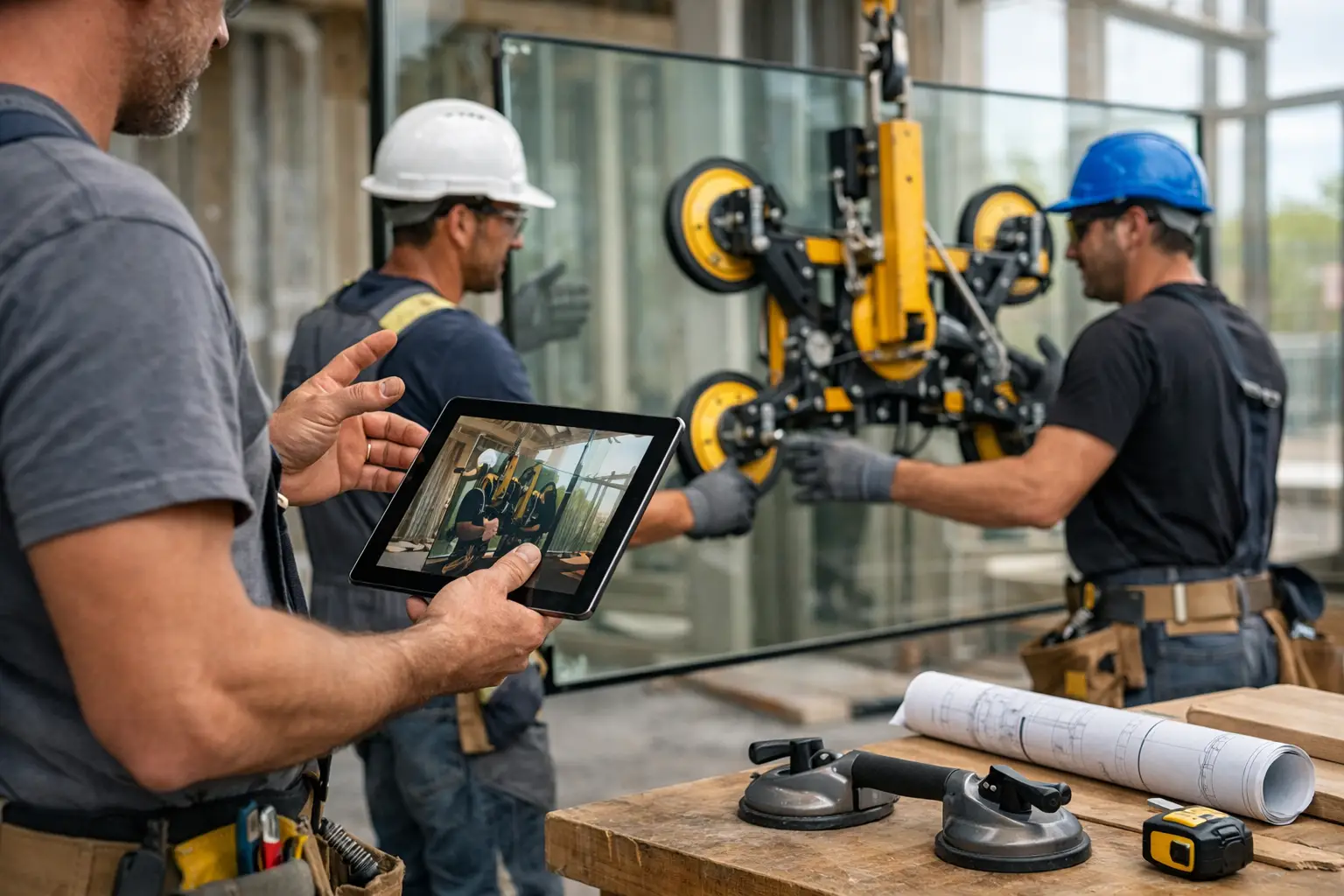
Photos are especially valuable in glass installation because so much of the work is visual. They help clients understand progress even when the stage is not dramatic. A measured opening, hardware laid out for confirmation, protective packaging on delivered panels, or a completed partition frame all tell a useful story.
The trade-off is that updates should stay practical. Too much technical detail can create new questions or distract from the main message. You do not need to turn every note into a lesson on glazing systems. Give enough context for the client to understand the stage and any decision or timing impact.
How often should you send updates?
It depends on the project length, client type, and complexity. A one-day shower enclosure install does not need the same communication pattern as a phased commercial glazing package.
For shorter residential jobs, updates at key milestones are usually enough. Confirm measure-up, fabrication start, install booking, and completion. For larger commercial or multi-stage fit-out work, a regular rhythm matters more. That might mean two updates per week during active production and installation, with additional notes when decisions or changes occur.
The worst option is usually irregular communication. If updates come only when something goes wrong, clients begin to associate every message with bad news. A steady cadence keeps communication normal and lowers tension.
Why this matters for operations, not just client service
Better update habits are not only about making clients feel informed. They also make the business easier to run.
When updates are centralized and chronological, your team wastes less time reconstructing project history. New staff can understand where a job stands without hunting through messages. If a client challenges a date, selection, or scope change, you have a record. If the project extends over several weeks, everyone can see what was already communicated.
That improves internal control without turning the client side into a full project management portal. For many glass companies, that balance is important. Clients do not want to log into a complicated system to decode tasks and dependencies. They want a simple, professional view of progress.
Common mistakes to avoid
One common mistake is sending updates that are too vague. “Work is moving forward” sounds safe, but it does not answer the client’s real question. Say what moved forward.
Another mistake is updating only after the client asks. That keeps your team in reactive mode and makes communication feel inconsistent. A third problem is failing to document changes clearly. Glass projects often involve site-driven adjustments, and if those changes are discussed casually but not recorded, they become future arguments.
There is also a timing mistake some teams make. They wait until they have a complete answer before saying anything. In reality, a short update saying you are waiting on confirmed delivery from the supplier is better than two days of silence.
Building a repeatable update process
If your company handles glass installations regularly, the process should not depend on one organized project manager holding everything together manually. It should be repeatable.
Start by defining the standard milestones your clients usually care about. Then decide what kind of update belongs at each stage. Keep the format simple enough that installers, office staff, or project leads can all contribute without friction. The easier it is to post an update with a photo and short note, the more likely it will happen consistently.
That consistency becomes part of the client experience. Over time, it also becomes part of your reputation. In custom project work, professionalism is not only visible in the finished install. It is visible in how clearly the client was guided from deposit to delivery.
For glass companies, that matters. The product is precise, the expectations are high, and small communication gaps can feel larger than they are. When updates are clear, visual, and organized, clients stay calmer, teams get interrupted less, and the whole project feels more under control.
A good glass installation update does not need to be long. It just needs to remove uncertainty before uncertainty starts running the job.