Retail Fit-Out Progress Updates That Work
A retail fit-out can look calm from the client side right up until the questions start. The lease is live, opening dates are moving closer, money is already committed, and silence from the project team quickly turns into pressure. That is why retail fit-out progress updates matter so much. They are not just a courtesy. They are part of how you keep trust steady while the work is still in motion.
For fit-out companies, the problem is familiar. The site team is busy, procurement is shifting, one subcontractor is late, and the client wants to know whether the joinery is installed, whether signage is approved, and whether the handover date still holds. If updates only happen when the client asks, communication becomes reactive. You spend time repeating the same answers across calls, emails, and chat messages, and the client still feels like they are piecing the story together themselves.
CustomWorks.app
Keep clients updated without messy chats
Give each project a private feed for client updates — and keep a clear history of photos, videos, notes, stages, decisions, and delivery moments for your team.
The better approach is simple. Progress updates should be expected, structured, and easy to follow. When clients can see what happened this week, what changed, and what comes next, the project feels managed even when there are delays or decisions to make.
Why retail fit-out progress updates matter more than most teams think
Retail projects have a different kind of pressure than many other custom jobs. A delayed handover does not just affect the contractor and the client. It can affect staffing, merchandising, marketing, supplier deliveries, and a planned launch date. That means communication gaps feel expensive very quickly.
Good updates reduce that pressure because they replace uncertainty with visibility. A client may not love hearing that floor finishes were pushed back by three days, but they can work with it if they hear it early, understand the reason, and can see how the rest of the sequence is being handled. Most frustration comes less from bad news and more from late news.
There is also a professionalism issue. When updates live across WhatsApp chats, forwarded emails, camera rolls, and voice notes, the project can feel less controlled than it really is. Many teams are doing solid work on site but presenting it in a scattered way. That gap matters. Clients judge the experience not only by the finished store, but by how clearly the path to completion was managed.
What clients actually want from progress updates
Most clients do not want a technical site diary. They want a clear answer to a smaller set of questions. What has been completed? What is happening now? Is anything delayed, changed, or waiting on approval? What should they expect next?
That sounds obvious, but many updates miss the point by either being too vague or too detailed. A message like “works progressing well” says almost nothing. On the other hand, a long internal-style report with every task, issue, and subcontractor movement can create noise instead of clarity.
Retail fit-out progress updates work best when they translate site activity into client-facing meaning. Instead of listing every action, show the visible milestones. Site strip-out complete. First fix electrical done. Ceiling grid installed in the rear area. Shopfront glazing scheduled for Friday. Client decision needed on final paint sample. That gives the client orientation without forcing them to decode the build process.
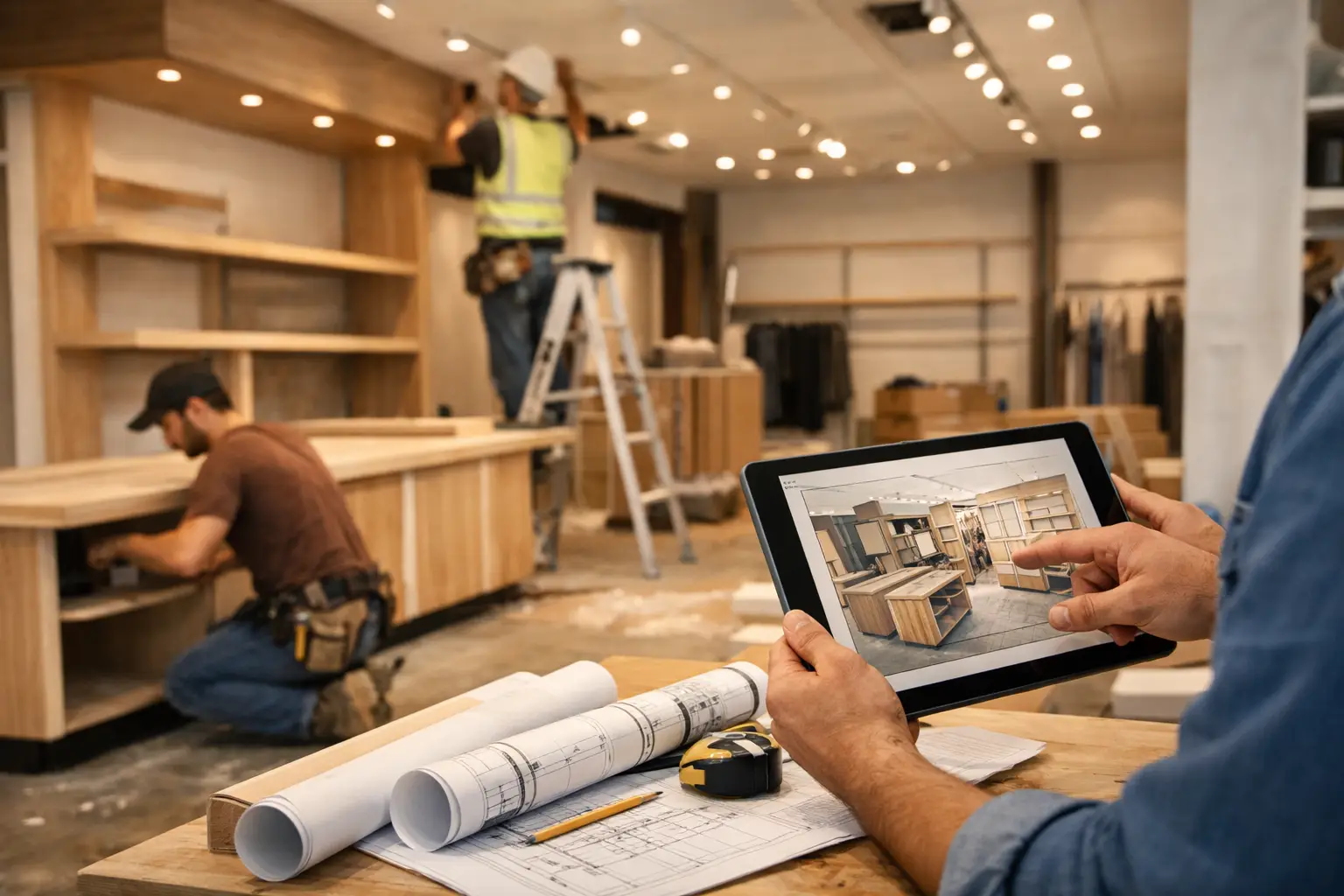
Photos and short videos are especially useful here. Retail clients often want visual confirmation that the project is moving. A few dated images of partitions, fixtures, flooring, signage mockups, or fitting-room construction can remove a lot of anxiety. Visual proof is often more effective than long written explanations.
What to include in a retail fit-out update
The strongest updates usually combine five things: visual progress, a short written status, the current stage, any changes or blockers, and the next expected step. That combination is enough to keep a client informed without turning the update into an internal project document.
The written note should be short and direct. Say what happened, what it means, and whether anything needs attention. If there is a delay, explain the cause in plain language and say what is being done about it. Clients tend to respond better to honest specifics than to polished vagueness.
The stage matters too. Retail projects move through recognizable phases such as site prep, services, partitions, joinery, finishes, signage, and handover. Labeling updates by stage helps clients understand where they are in the process. It also creates a cleaner record when someone needs to look back later.
Changes should never be buried. If a delivery date has shifted, a material has been substituted, or a decision is needed to keep the program moving, put it in the update clearly. Hiding difficult points to keep the message positive usually leads to more friction later.
How often should updates be sent?
It depends on the project pace, client expectations, and phase of work. Weekly updates are a strong default for most retail fit-outs. They are frequent enough to maintain confidence, but not so frequent that the team spends all its time reporting instead of building.
That said, some moments need extra communication. Site start, completion of demolition, major service installations, joinery arrival, storefront completion, and pre-handover are all points where an additional update can be useful. The same applies when there is a meaningful delay, design change, or approval needed.
Too many updates can dilute the signal. If the client gets daily fragments from different people, they may still feel uninformed because there is no single version of where the project stands. Consistency matters more than volume.
The real risk of scattered communication
Many fit-out businesses do not have a reporting problem. They have a communication structure problem. Photos sit on one supervisor’s phone. The PM sends a few notes by email. The client asks for clarification in a messaging app. A design adjustment gets agreed verbally and then is hard to trace two weeks later.
This creates three avoidable issues. First, clients keep asking for updates because they do not know where to look. Second, important project history gets lost across channels. Third, the team spends time reconstructing what was already said instead of moving the job forward.
A single client-facing update timeline solves more than the status question. It creates continuity. Each update builds on the last one, so the client can follow progress from strip-out to handover without searching through message threads. It also gives your team a cleaner record of photos, stage changes, decisions, and delivery moments.
That is where a tool like CustomWorks fits naturally for businesses delivering long-running client projects. Instead of mixing updates across email and chat, teams can keep retail fit-out progress updates in one private project feed with photos, videos, notes, stages, and changes shown in order.
How to make updates easier for your team to produce
If updates rely on someone writing a long formal report from scratch every Friday, they will often slip. The process needs to match the reality of site work. The easiest model is to capture progress as it happens, then turn that material into a simple client-facing update at a regular interval.
In practice, that means supervisors or project managers should gather a few useful visuals during the week, note any stage completions, and flag decisions or delays when they occur. Then, at update time, they are assembling rather than recreating the story.
It also helps to keep the format consistent. Clients should know what they are looking at each time. If every update includes progress, current stage, changes, and next steps, they learn how to read it quickly. Your team also spends less effort deciding how to write each one.
There is a trade-off here. Standardization improves speed and clarity, but updates should not feel copied and generic. The structure can stay the same while the content stays specific to the actual site situation.
What good retail fit-out progress updates look like in practice
A good update sounds like a project team that is paying attention. It might say that flooring preparation is complete in the front-of-house area, first fix lighting is now finished, and the shopfront signage fabrication is in progress off-site. It might add that the ceiling install has shifted by two days due to a supplier delay, but the joinery sequence remains unchanged. Then it closes with what happens next and whether the client needs to confirm anything.
That is enough to answer the questions most clients are already forming. It shows movement, acknowledges risk, and sets expectations. It also reduces the need for the client to chase details one by one.
By contrast, weak updates either overpromise or under-inform. Saying everything is “on track” when there are open issues can damage trust. Sending a batch of unlabeled site photos without context may prove activity, but it does not explain progress.
The goal is not to make every update sound impressive. The goal is to make each update useful.
Better updates create better project relationships
Retail fit-out work often wins on reputation, repeat business, and referrals. Clients remember whether they felt informed while their store was being built. They remember whether issues were raised early, whether decisions were easy to track, and whether they had to chase for visibility after paying a deposit and committing to an opening plan.
That is why progress communication should be treated as part of delivery, not an extra admin task. When updates are clear, regular, and visual, clients feel the project is under control. Your team looks organized. Questions drop. Trust holds up better when timelines move.
If a retail fit-out business wants fewer status calls and a cleaner client experience, the fix is usually not more messages. It is better retail fit-out progress updates, shared in one place, in a format clients can actually follow. Quiet projects make clients nervous. Visible progress gives them something better to work with.