How to Track Furniture Project Changes
A furniture project rarely changes just once. A client approves walnut, then asks to compare oak. A handle choice shifts after the first mockup. Measurements get adjusted when the site visit reveals a tighter corner than expected. None of this is unusual. The problem starts when no one has a clear way to track furniture project changes as they happen.
For furniture makers, joinery shops, interior fit-out teams, and bespoke production businesses, change is part of the job. What causes friction is not the change itself, but the way it gets recorded, shared, and remembered. If updates live across text messages, marked-up PDFs, phone calls, and scattered email replies, the project history becomes hard to trust. That is when clients get nervous, teams repeat themselves, and small changes turn into expensive mistakes.
CustomWorks.app
Keep clients updated without messy chats
Give each project a private feed for client updates — and keep a clear history of photos, videos, notes, stages, decisions, and delivery moments for your team.
Why furniture project changes become hard to follow
Furniture projects often look simple from the outside. A client sees a dining table, reception desk, wardrobe system, or retail fixture. Your team sees materials, finishes, dimensions, hardware, fabrication details, approvals, site constraints, production stages, and delivery timing. Each adjustment can affect several parts of the job at once.
A finish change may alter lead times. A revised dimension may affect machining, transport, and installation. A new drawing version may override an earlier approval that someone still has saved on their phone. When the project runs over several weeks or months, memory becomes unreliable. People think they remember what was approved, but they remember different versions.
This is why furniture businesses need a visible change history, not just occasional updates. A proper record makes it easier to answer basic questions quickly. What changed, when did it change, who saw it, and what did it affect?
What it actually means to track furniture project changes
To track furniture project changes well, you do not need a complicated internal project management setup for the client. You need a clear client-facing history of the project that shows progress and decisions in order.
That usually includes photos from the workshop, short notes about what changed, stage updates, revised details, and delivery-related information. The format matters. If every update appears in one timeline, both your team and your client can follow the story of the project without digging through old messages.
The key is context. A note that says “legs updated” is weak. A note that says “Table leg profile changed from square to tapered after client review on Tuesday. Updated sample approved. Production continues with revised spec” is useful. It gives the client confidence and gives your team something concrete to refer back to later.
The business cost of poor change tracking
When changes are not recorded properly, the damage usually shows up in three places.
First, clients lose confidence. Silence creates assumptions, and fragmented communication creates doubt. If a client has paid a deposit and does not have a clean record of progress and changes, they start asking for reassurance in other ways. That often means more calls, more messages, and more pressure on your office or project lead.
Second, your team wastes time. People chase old approvals, search phones for photos, and ask the same questions again because there is no trusted reference point. Even when the work itself is moving forward, communication becomes slower than it should be.
Third, disputes become harder to resolve. Many furniture project disagreements are not really about craftsmanship. They are about expectations and memory. A clear documented trail of change requests, visuals, and timing helps reduce ambiguity before it becomes conflict.
A simple system to track changes without adding bureaucracy
The best system is usually the one your team will actually maintain. In furniture and bespoke manufacturing, that means keeping the process lightweight and visual.
Start by treating every meaningful client change as something that should appear in the project record. That does not mean documenting every informal thought. It means recording decisions that affect design, materials, dimensions, schedule, production, or delivery.
Record the change at the moment it becomes real
There is a big difference between a discussion and a decision. Teams often create confusion by sharing half-formed options as if they are final. Wait until the change is confirmed, then log it clearly. Include what changed, why it changed if relevant, and what the next step is.
For example, if a wardrobe finish shifts from matte white to veneer, note the approved update and mention the impact on production timing if there is one. That saves a lot of later back-and-forth.
Use visual proof wherever possible
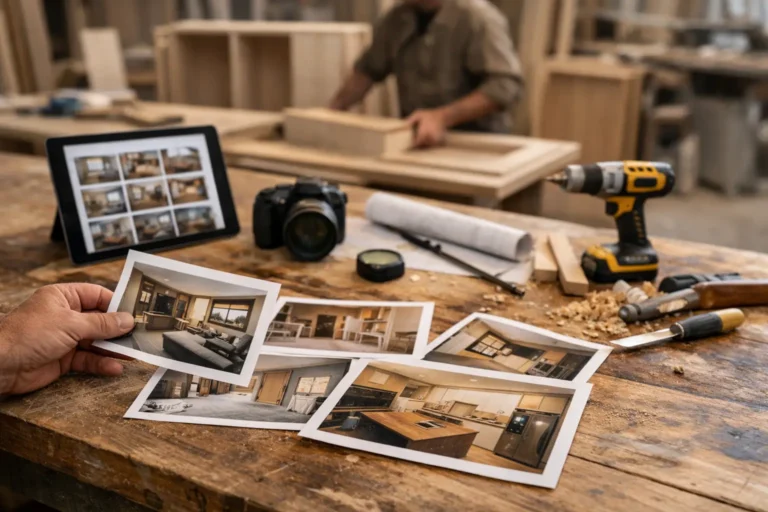
Furniture is visual work. Clients understand photos faster than text. If a design detail changes, a workshop photo, finish sample image, or marked reference snapshot can prevent misunderstandings that a written explanation alone might not catch.
This matters even more during fabrication. A quick image of a revised edge detail, handle placement, or assembly stage often reassures the client immediately and reduces the urge to ask for status updates elsewhere.
Keep updates in chronological order
Change tracking breaks down when people have to reconstruct the timeline themselves. A chronological feed makes the sequence obvious. It shows how the project evolved from initial approval through revisions, production, finishing, and installation.
That structure is particularly useful when several changes happen close together. Instead of comparing email timestamps and chat screenshots, everyone can view one ordered history.
Separate internal complexity from client communication
Your internal team may need drawings, production notes, procurement details, and workshop planning. The client usually does not. They need a clear explanation of what changed and how the project is progressing.
That distinction matters. If your client communication becomes too technical or too fragmented, clients stop following it. Good change tracking should make the project easier to understand, not harder.
How to track furniture project changes with less client friction
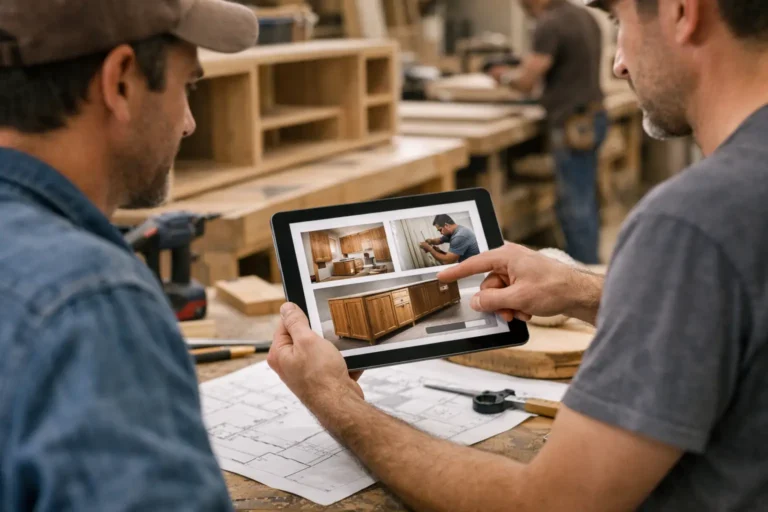
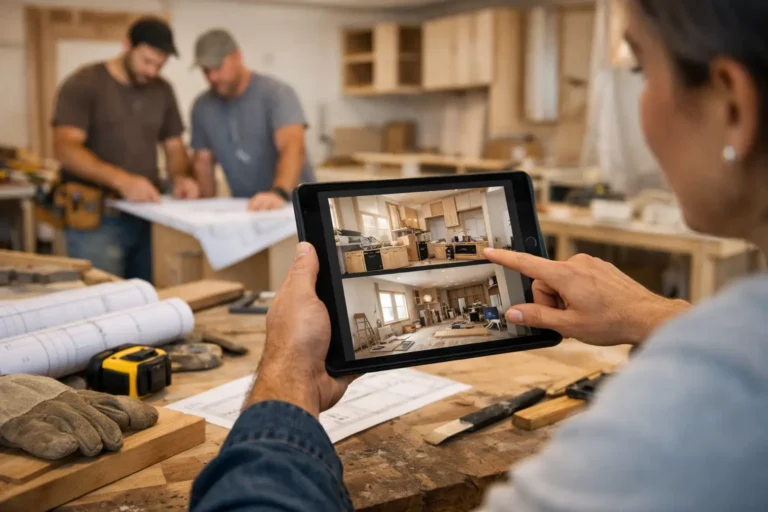
A practical approach is to give each project its own dedicated update history. That creates one place for stage updates, photos, decisions, changes, and delivery milestones. Instead of sending information across multiple channels, your team publishes updates where the client expects to find them.
This is where a platform like CustomWorks fits naturally for long-running custom projects. It is not trying to turn your client into a project manager. It gives you a private project feed where furniture businesses can post photos, videos, short updates, changes, and progress in one visible timeline. That helps reduce scattered communication and gives clients a cleaner record of what is happening.
For a furniture business, the value is simple. When a material changes, when a mockup is approved, when fabrication starts, when finishing is complete, and when delivery is booked, each moment can sit in the same history. The client sees movement. Your team has a reference point. The project feels controlled.
What good change updates look like in practice
A useful update is short, specific, and tied to the project stage. It should answer the client’s next likely question before they ask it.
If dimensions changed after a site measure, say what was adjusted and whether that affects production or install timing. If hardware changed because a selected item is unavailable, explain the approved replacement and show it visually if possible. If the client requested a redesign to a drawer layout, note that the revised plan is now the active version.
This kind of communication does more than document change. It shows professional control. Clients do not expect a project with no revisions. They expect to feel that revisions are being handled properly.
There is also a trade-off to manage. Too few updates create uncertainty, but too many low-value updates create noise. The right rhythm depends on project size and client expectations. A bespoke kitchen or commercial fit-out package may justify more frequent reporting than a single custom sideboard. What matters is consistency and clarity.
Where furniture businesses usually slip
The most common mistake is relying on whatever channel is easiest in the moment. A quick message here, a photo there, a follow-up by email, then a verbal confirmation during a site visit. Each individual action feels harmless. Together, they create a fragmented record that no one fully trusts.
Another issue is failing to connect the change to its impact. Teams mention that something changed but do not explain whether timing, cost, or scope is affected. That gap invites more questions and creates room for assumptions.
There is also the habit of updating only when something goes wrong. That makes clients associate communication with problems. A better approach is steady visibility throughout the project, including normal progress. Then when a change does happen, it appears as part of an organized process rather than as a surprise.
The standard clients notice
Most clients are not judging your communication against other joinery shops or furniture makers. They are judging it against the best service experiences they have elsewhere. They want clarity, visible progress, and confidence that their project has not disappeared after the deposit invoice was paid.
If you can track furniture project changes in a way that is simple, visual, and easy to follow, you remove a lot of avoidable tension from the job. You also give your team a cleaner way to work. Less repeated explanation. Fewer missed details. Better continuity from design through delivery.
Furniture projects will keep changing. The question is whether those changes create confusion or build trust. The businesses that look most professional are usually not the ones with the fewest revisions. They are the ones that make every revision visible, organized, and easy to understand.