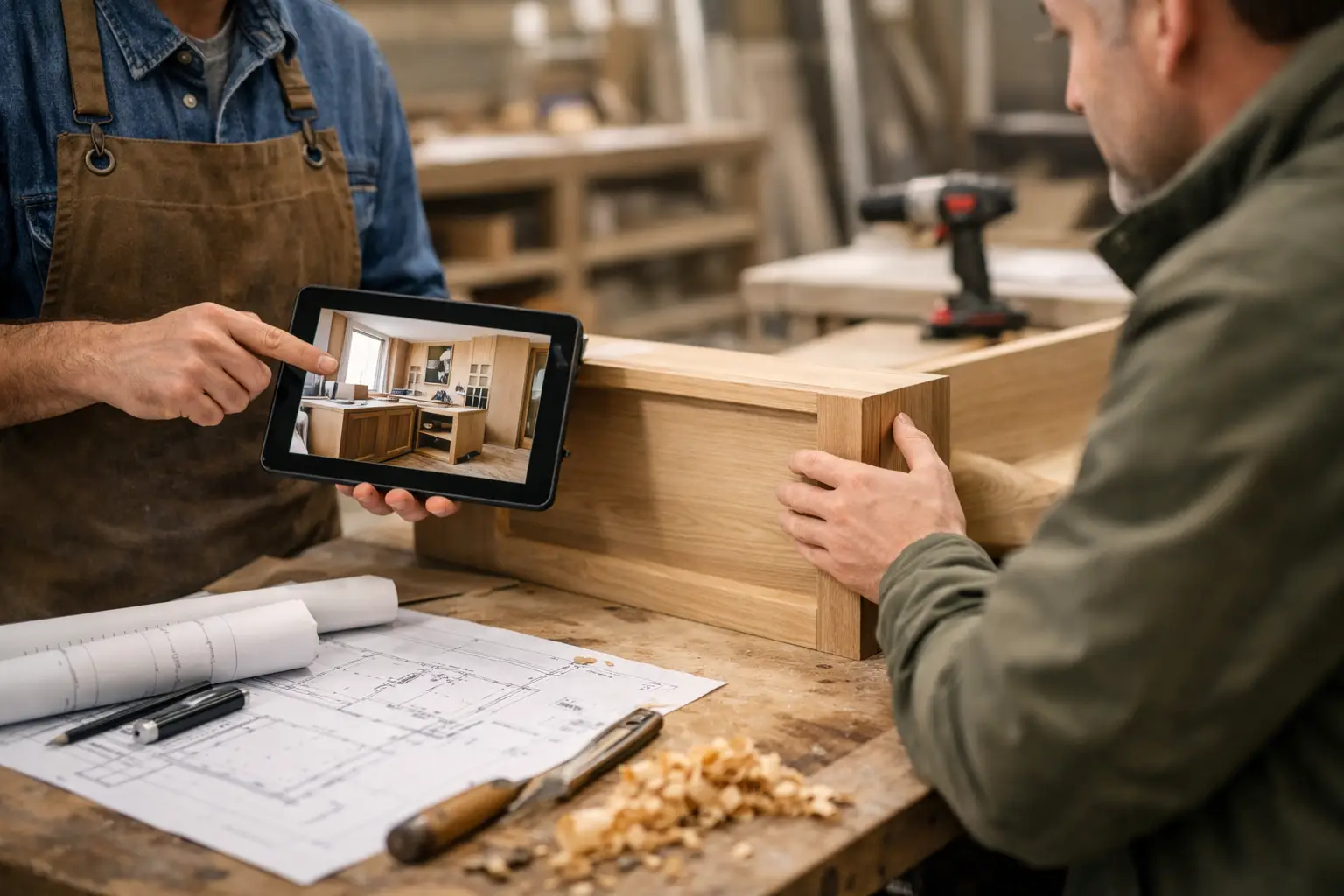
Woodworking Client Updates That Build Trust
A client pays a deposit for a custom dining table, then hears nothing for two weeks. In your shop, that silence feels normal. On the client side, it rarely does. That gap is why woodworking client updates matter more than many shops realize.
Most custom woodworking projects take time. Materials need to arrive, milling takes a full day, joinery needs precision, finishes need curing time, and small changes can shift the schedule. None of that is unusual to the maker. But to the client, especially one who has paid upfront for a one-off piece, silence often sounds like delay, confusion, or neglect.
CustomWorks.app
Keep clients updated without messy chats
Give each project a private feed for client updates — and keep a clear history of photos, videos, notes, stages, decisions, and delivery moments for your team.
The problem usually is not that a shop is disorganized. It is that communication happens in fragments. One photo goes by text. A finish question gets answered in email. A delivery date gets discussed on a call. A design tweak is buried in a messaging thread from last week. By the time the client asks, “Any updates?”, the real issue is not just timing. It is visibility.
Why woodworking client updates affect trust
In woodworking, trust is built long before delivery day. Clients are buying something custom, often expensive, and sometimes emotionally significant. It may be the centerpiece of a home renovation, a retail fit-out, a restaurant install, or a memorial piece with very specific requirements. They are not only paying for the final result. They are paying for confidence that the project is moving forward properly.
That is why regular updates do more than answer questions. They reduce uncertainty. A short note that lumber has been selected, a photo of dry fitting, or a quick video showing assembly progress gives the client something concrete. It replaces guessing with evidence.
There is a business benefit here too. Shops that communicate clearly spend less time repeating themselves. Instead of answering the same status question three times in three different channels, the team can point to a clear project record. That means fewer interruptions on the floor, fewer missed details, and a more professional experience overall.
What clients actually want from woodworking client updates
Most clients do not want a technical production log. They do not need every machine setting, every sanding pass, or every internal scheduling detail. They want enough visibility to feel informed without being overwhelmed.
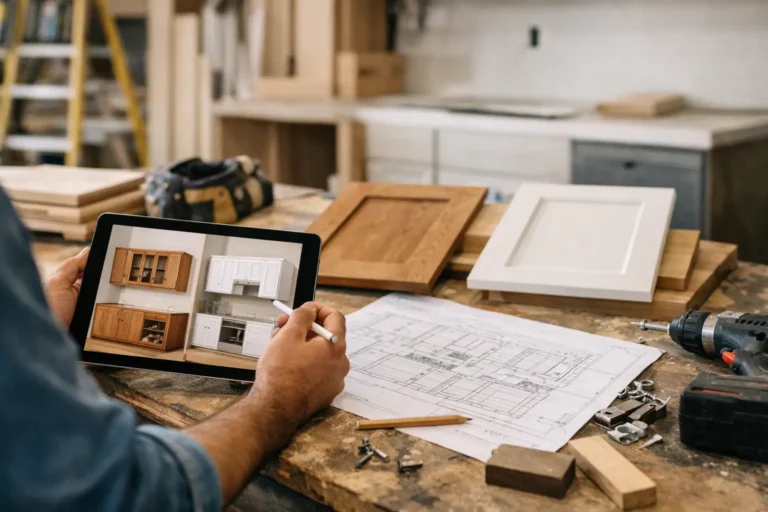
In practice, that usually means a simple timeline of meaningful progress. Early updates might show approved drawings, selected timber, hardware choices, or finish samples. Mid-project updates often focus on milling, joinery, mockups, assembly, and finishing stages. Later updates tend to cover final inspection, packing, delivery timing, or installation readiness.
The strongest updates also capture decisions. If a client approved white oak over walnut, changed edge detail, or signed off on a stain direction, that should live alongside the progress history. When updates and decisions are separated, confusion follows.
The cost of scattered communication
Many woodworking businesses still manage client communication across email, text, WhatsApp, and phone calls. That feels manageable at first, especially for a small shop. But as project count grows, scattered communication starts creating avoidable friction.
A client asks for the latest photo, but the image is on one team member’s phone. Someone wants to confirm the leg profile that was approved, but the note is in an old email thread. Delivery timing changed after a supplier issue, but only one person told the client. None of these issues look major on their own. Together, they make the business feel less structured than it really is.
This matters because custom woodworking often depends on perceived professionalism as much as craftsmanship. Clients may not understand mortise tolerances or finishing systems, but they do notice whether communication is organized.
What good update habits look like in a woodworking shop
The best communication systems are usually simple. Shops do not need to turn client updates into a full-time administrative task. They need a repeatable rhythm.
A practical approach is to update at key moments rather than on a rigid daily schedule. For example, an update after material arrival, another after fabrication starts, one at assembly, one during finishing, and one before delivery often provides enough visibility for most projects. If there is a delay, a short explanation is usually better than waiting for the next milestone.
The format matters too. Photos do most of the work. Clients respond well to visuals because they show progress instantly. A brief caption adds context: what stage the piece is in, what has been completed, what is next, and whether any action is needed from the client.
Short videos can help with larger pieces, fitted joinery, moving parts, or install preparation. Notes are useful for approvals, changes, or expectations around timing. The point is not volume. The point is clarity.
Keep updates client-facing, not workshop-facing
One common mistake is writing updates from the team’s perspective instead of the client’s. A note like “completed secondary prep and first pass on rails” may make sense internally, but it does not mean much to the buyer.
A better version would be: “The table base is now fully shaped and assembled. Next we’ll begin final sanding and finish prep.” That keeps the tone clear and professional without oversharing technical detail.
Show progress honestly
Not every week produces dramatic visual change. That is normal in custom work. A finishing stage may look almost identical across several days, and hidden structural work may not photograph well. But that does not mean there is nothing to say.
A useful update can simply explain what is happening and why it takes time. Clients are usually reasonable when they understand the stage. Silence creates more tension than an honest note about curing, ordering, or quality checks.
A better system for project visibility
For long-running custom work, a dedicated client update system is usually more effective than trying to manage everything through inboxes and chat threads. The reason is simple: clients need one place to see the story of their project.
That story should include photos, videos, short notes, milestones, changes, and delivery information in chronological order. When updates are organized this way, the client can check progress without asking the team to reconstruct what happened last week.
This is where a platform like CustomWorks fits naturally for woodworking businesses. Instead of forcing clients into complex project management software, it gives each project a private update feed built for clear client communication and visual project history. For shops making cabinets, furniture, interiors, custom fixtures, or architectural millwork, that creates a more controlled and professional way to keep clients informed.
How to start improving your update process
If your shop already sends occasional photos, you do not need to rebuild everything from scratch. Start by tightening the structure.
First, decide which project moments always deserve an update. Second, standardize what each update should include: one or two visuals, a plain-language note on current stage, what happens next, and any required client decision. Third, keep all project communication in one visible record whenever possible.
This does two things. It helps the client follow progress, and it protects your team from avoidable back-and-forth. When someone asks for status, the answer is already documented.
It also helps after delivery. If a client returns months later asking about finish type, hardware selection, or an approved design change, the project history is available. That can be useful for repeat work, repairs, matching pieces, or resolving disputes calmly.
When more updates are needed and when fewer are better
Not every woodworking project needs the same communication frequency. A simple built-in shelf job with a short turnaround may only need a few well-timed updates. A full home fit-out, custom kitchen, or multi-room millwork package usually needs more regular visibility.
It depends on complexity, budget, project duration, and how many choices the client must make along the way. High-value projects with long lead times usually benefit from more structure. Smaller jobs can be lighter, as long as the client never feels left in the dark.
There is a trade-off here. Too few updates create anxiety. Too many minor updates can create noise and make the important moments harder to spot. The right balance is enough communication to maintain trust without turning every task into an announcement.
Professional communication supports premium work
Woodworking businesses often invest heavily in tools, materials, and craftsmanship while treating client communication as something informal. That mismatch can undercut the experience. A high-end custom project should feel well-managed from deposit to delivery, not just beautifully made at the end.
Clients remember how the process felt. They remember whether they had to chase for answers, whether changes were clear, and whether progress was visible. That memory affects referrals just as much as the final piece itself.
If your shop delivers custom work over weeks or months, updates are not extra admin. They are part of the product experience. A clean, visible record of progress reassures clients, reduces interruptions, and makes your business look as organized as your craftsmanship deserves.
The shops that communicate best are not always the ones sending the most messages. They are the ones making it easy for clients to see that the work is moving, decisions are captured, and nothing important is getting lost.