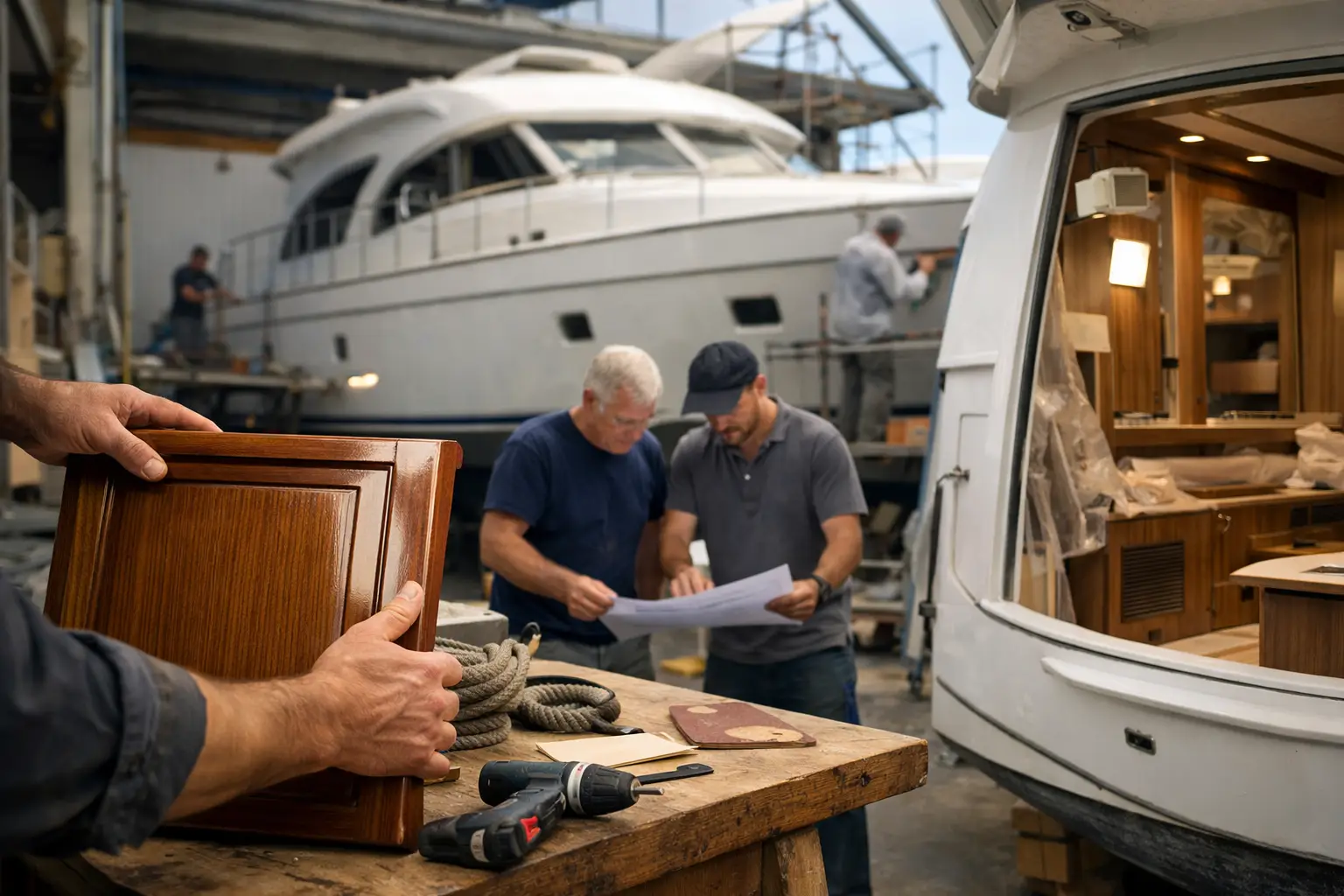
Yacht Refit Change History That Clients Trust
A yacht owner approves a refit budget, hands over the vessel, and then waits while the work unfolds out of sight. That gap between deposit and delivery is where trust gets tested. A clear yacht refit change history closes that gap by showing what changed, when it changed, why it changed, and how the project is moving forward.
For boatyards and refit teams, this is not just an admin habit. It is one of the simplest ways to reduce client anxiety, avoid repeated update requests, and keep commercial control when a project shifts over weeks or months. Refit work is full of moving parts. Specs evolve, hidden issues appear after strip-out, suppliers miss dates, and owners change their minds once they see the space opened up. If those changes live across chats, phone calls, inboxes, and camera rolls, the project starts to feel less organized than it really is.
CustomWorks.app
Keep clients updated without messy chats
Give each project a private feed for client updates — and keep a clear history of photos, videos, notes, stages, decisions, and delivery moments for your team.
What a yacht refit change history actually does
A yacht refit change history is a client-facing record of the project as it changes over time. It is not just a list of variations for accounting. It is the visible story of the refit.
That story usually includes progress photos, short notes, approved decisions, scope changes, newly discovered issues, stage completions, delays, and handover milestones. The value is not in collecting more information. The value is in putting the right information into one ordered timeline so the owner and your team can both see the same version of events.
That matters because refits rarely fail on workmanship alone. More often, the relationship gets strained by silence, by fragmented updates, or by disagreement about what was said and when. If an owner believes they were not told about a change early enough, even a reasonable adjustment can feel like bad management.
Why yacht refit change history matters more than in other projects
A kitchen renovation is disruptive. A yacht refit is disruptive, expensive, technical, and often emotionally loaded. Owners may be dealing with a vessel they use personally, charter commercially, or plan to sell. Downtime costs money. Delays affect schedules. Cosmetic decisions can carry large budget consequences once they touch engineering, weight, materials, or lead times.
There is also the visibility problem. Most owners are not standing in the yard every day. They are remote, traveling, or relying on a captain, manager, or broker to relay information. That creates room for confusion unless your team maintains a clean history of updates and changes.
In practical terms, a strong change history does three things at once. It reassures the owner that progress is real. It gives your team a record to reference when questions come in. And it creates a more professional project experience than scattered messages sent whenever someone asks for news.
The common failure point: updates exist, but history does not
Many yards already send updates. The problem is that updates are often informal and temporary. A project manager sends a few photos on WhatsApp. A supervisor replies to an email with a quick explanation. Someone calls the owner about a newly found corrosion issue. A designer shares a finish option in a separate thread.
None of that feels unusual in the moment. But two months later, when the owner asks when the teak replacement was approved or why the lighting layout changed, the team has to reconstruct the answer from memory and message searches.
That is where a yacht refit change history becomes operationally useful. It turns isolated communications into a reliable sequence. Instead of asking three people what happened, you can point to one timeline showing discovery, recommendation, owner approval, execution, and completion.
What to include in a useful change history
The best records are simple enough to maintain during a busy refit. If the process is too heavy, the team will stop using it. If it is too vague, it will not help when questions come up.
At minimum, each change should capture the date, the area of the vessel affected, what changed, why it changed, whether it impacts budget or timeline, and the current status. Visual evidence matters too. Before-and-after photos, short site videos, and marked-up images make technical changes easier for clients to understand.
Context is just as important as facts. If you found moisture damage under a deck panel during demolition, say that clearly. If the owner selected a different upholstery material with a longer lead time, record that too. A good change history does not just say that the plan moved. It shows what caused the movement.
Photos are not decoration
In yacht refits, visual updates do more than make a feed look active. They reduce ambiguity. Owners may not understand every technical detail, but they can understand exposed structure, removed joinery, new installations, and visible progress.
A photo tied to a short note is often more useful than a long explanation sent days later. It proves work happened and gives the owner a reference point for any change discussion that follows.
Small changes deserve a place too
Not every update needs to be dramatic. Minor routing adjustments, revised hardware choices, finish samples, and intermediate inspections can all matter later. Small changes often become important when they connect to a larger delay, a budget revision, or a client concern about quality.
That does not mean documenting every screw. It means recording the moments that shape the project story and client expectations.
How a clear history reduces friction with owners
Owners do not ask for updates only because they are impatient. They ask because uncertainty is uncomfortable, especially after paying a deposit on high-value work they cannot easily inspect themselves.
A visible change history answers the unspoken questions behind those messages. Is the project moving? Has anything gone wrong? Were we told? Are decisions being captured? Is this yard in control?
When those answers are easy to see, the volume of reactive communication usually drops. The owner no longer needs to request proof of progress every few days, and your team spends less time repeating the same explanations in different channels.
There is a second benefit here. Change discussions become calmer when the record is chronological. If a delay was communicated early, along with the reason and the revised plan, the owner may still be disappointed, but the conversation is less likely to turn into an argument over whether your team kept them informed.
A better process for managing yacht refit change history
The strongest approach is usually not a complicated internal system pushed onto clients. Most owners do not want to log into project management software to decode tasks and dependencies. They want clear visibility.
That means your update process should be lightweight for the team and easy to follow for the client. One private project timeline, organized by date, works well because it mirrors how owners think about progress. They want to see what happened last week, what changed today, and what comes next.
For example, a useful sequence might look like this in practice: strip-out completed with photos, hidden corrosion discovered in portside compartment, recommendation submitted, owner approved remedial work, revised delivery date recorded, replacement materials received, repair completed, inspection passed. That sequence tells a coherent story. It also protects your team from having to retell it from scratch.
This is where a platform like CustomWorks can fit naturally for yards and specialist refit teams. It gives each project a private client-facing feed where photos, videos, notes, stages, and changes sit in one visual history instead of being spread across email chains and messaging apps. For the right business, that is less about software and more about keeping communication controlled and professional.
It depends: how detailed should your history be?
The right level of detail depends on the owner, the vessel, and the size of the refit. A short cosmetic refresh does not need the same reporting cadence as a major systems overhaul or full interior rebuild.
Some owners want concise weekly updates. Others want frequent visibility and a record of every approval point. Commercially managed vessels may also involve captains, surveyors, or representatives who need a cleaner audit trail than a private owner would. The key is consistency. It is better to maintain a steady, understandable record than to produce occasional long updates that leave large gaps between them.
There is also a trade-off between speed and completeness. If your team waits to write the perfect update, it often arrives too late. In most cases, a short same-day note with images is better than a polished summary sent a week later from memory.
Why this helps your business beyond one project
A well-kept yacht refit change history does more than improve a single owner relationship. It raises the standard of how your yard presents itself.
Clients judge professionalism through communication as much as craft. If your updates are structured, visual, and easy to follow, the project feels managed. That perception matters, especially in long-running, high-value work where trust can be lost faster than it is earned.
It also helps internally. New team members can catch up faster. Managers can review project progression without chasing people for context. Disputes over decisions are easier to resolve when the timeline is already there. Even handover becomes cleaner when the completion story is documented rather than reconstructed at the end.
For yards that want fewer status-chasing messages and fewer communication gaps, the fix is often straightforward. Do not treat updates as one-off replies. Build a visible record of change as the work happens, and let that record carry the project forward with you.