Pool Construction Project Timeline Explained
Ask any pool builder what creates the most tension in a job, and the answer usually is not excavation, steel, or tile. It is silence. A pool construction project timeline can look straightforward on paper, but clients experience it very differently once weather shifts, inspections move, or one finish choice holds up the next stage.
That gap between the planned schedule and the client’s perception of progress is where trust often gets tested. For companies managing custom outdoor projects, the real challenge is not just building the pool well. It is showing what is happening, what has changed, and what comes next without forcing the client to chase updates.
CustomWorks.app
Keep clients updated without messy chats
Give each project a private feed for client updates — and keep a clear history of photos, videos, notes, stages, decisions, and delivery moments for your team.
Why a pool construction project timeline rarely feels simple
Most clients imagine pool construction as a linear sequence: design it, dig it, build it, fill it, swim. In reality, each stage depends on approvals, site conditions, subcontractor availability, material lead times, and inspections that are not fully under the builder’s control.
That does not mean timelines are unreliable. It means they are conditional. A professional pool company should be able to explain the normal phases, the common pressure points, and the difference between active work days and elapsed calendar time.
For project-based businesses, this matters because clients do not judge the experience only by the final result. They also judge it by how informed they felt during the weeks or months in between.
Typical pool construction project timeline by phase
A standard residential pool project often takes anywhere from 8 to 16 weeks once construction begins, and longer if design approvals, permitting, or complex site work are included. Some jobs move faster. Others, especially custom pools with retaining walls, integrated spas, difficult access, or premium finishes, can extend well beyond that.
Design, proposal, and approvals
Before any ground is broken, there is usually a pre-construction period covering site review, concept development, engineering, proposal revisions, and permit preparation. This stage can take a couple of weeks on a simple project or much longer if the design is custom, the property has restrictions, or the client is still deciding on layout and features.
From the builder’s side, this is often where expectations should be set most clearly. Clients may feel the project has already started because they have paid a deposit. Internally, however, the team may still be waiting on survey details, municipal review, or final finish selections.
Site prep and excavation
Once permits are in place and scheduling opens, site access, utility marking, and excavation usually move quickly. On many jobs, the visible work starts dramatically. One or two days can make it look like the whole project is racing ahead.
This is also where surprises can show up. Rock, groundwater, poor access, unstable soil, or hidden services can change the pace and sometimes the cost. The timeline risk here is not only the physical condition of the site, but how clearly those findings are communicated once discovered.
Steel, plumbing, and electrical rough-in
After excavation, crews typically install reinforcing steel, plumbing lines, and electrical components. Depending on the scope, this phase may take several days to a couple of weeks.
To clients, this stage can be hard to read. Progress is real, but less visually obvious than excavation. Without regular photo updates and simple explanations, it is common for owners to think nothing is happening, even when key technical work is underway.
Inspection and shell installation
The next step depends on pool type. Concrete or gunite pools move toward inspection and shell application. Fiberglass pools follow a different path centered around delivery, crane access, placement, and backfill. Vinyl liner pools have their own sequence as well.
For concrete pools, shell work is a major milestone, but it does not always mean the pool is close to finished. In many cases, curing time and later trades still add significant duration. This is one reason a pool construction project timeline should always be presented as phases rather than a single finish date with false certainty.
Tile, coping, decking, and finishes
Once the shell is ready, finish work begins to shape the appearance clients have been waiting to see. Tile, coping, pavers, poured decking, drainage details, and surrounding hardscape can transform the site quickly.
This phase tends to create both excitement and delay risk. Material availability, weather, and sequencing between subcontractors matter a lot here. A coping crew delayed by two days can push decking. Decking can push fencing. Fencing can push final inspection.
Equipment, startup, and handover
At the end of construction, equipment is installed and tested, water treatment systems are checked, startup begins, and the client is shown how to operate and maintain the pool. Depending on jurisdiction and scope, final inspections may be required before full handover.
Clients often assume that filling the pool means the job is done. Builders know that startup, balancing, punch-list items, and handover documentation are still part of the work. This is another point where organized communication prevents last-minute frustration.
What usually delays a pool construction timeline
Delays are not always signs of poor management. Some are unavoidable. The issue is whether the client understands the cause and sees that the project is still being actively managed.
Permits are a common source of delay, especially in areas with seasonal demand or changing regulations. Weather is another obvious factor, but material lead times can be just as disruptive. Tile, pumps, heaters, automation systems, and specialty finishes do not always arrive when expected.
Then there are client-driven changes. A revised tanning ledge, upgraded waterline tile, or new decision on decking color may seem minor in isolation, but custom projects are chained together. One late change can affect procurement, crew scheduling, inspections, and the promised handover date.
The trade-off is straightforward. Flexibility improves customization, but it usually reduces timeline certainty. Good project communication makes that trade-off visible early instead of letting it become an argument later.
Why clients get anxious even when the project is on track
Long-running projects create information gaps. A builder may see a normal three-day pause between trades. A client sees a backyard that looks abandoned.
That difference in perspective is where repeated messages start. Any updates? Is the job delayed? When is the next team coming? Has something gone wrong?
For pool companies, these questions are not just an annoyance. They consume admin time, distract project managers, and expose how scattered communication has become. Photos are in one person’s phone. Change approvals are in email. The last site note is buried in a text thread.
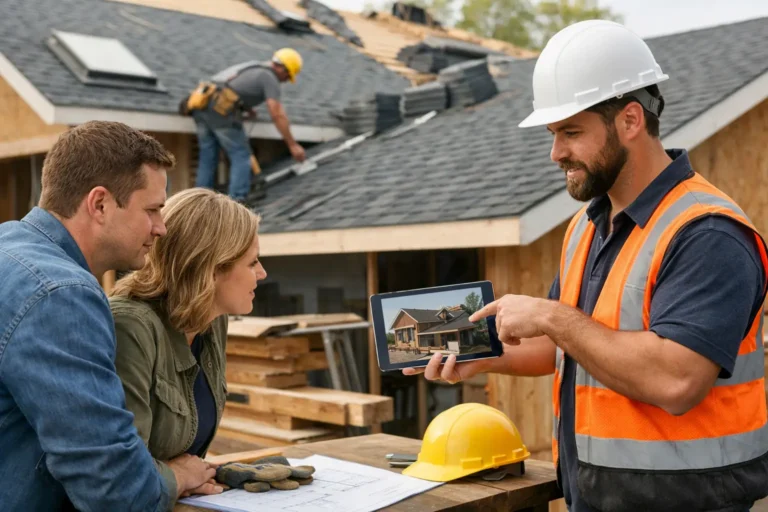
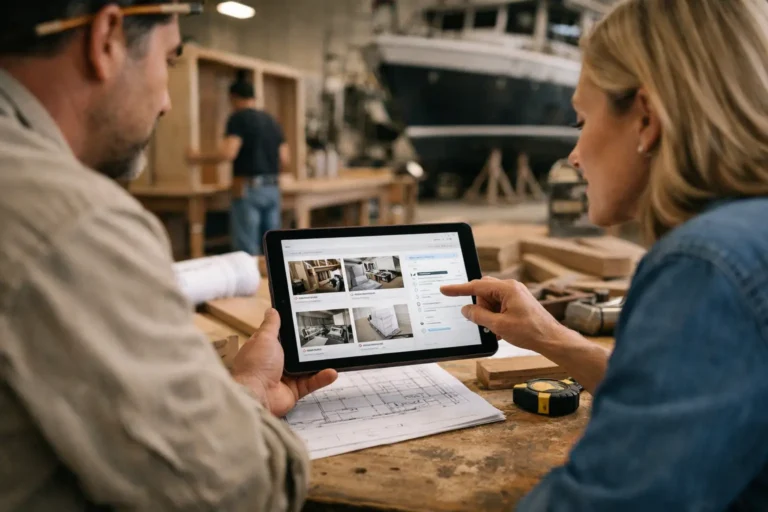
This is where a structured client-facing update process becomes operationally useful. Instead of reacting to every request, teams can show progress as it happens: excavation complete, plumbing rough-in finished, inspection passed, shell installed, tile delivered, startup scheduled. A clear visual history reduces uncertainty because clients can see movement, not just hear promises.
For businesses that manage custom builds over weeks or months, a platform like CustomWorks can help centralize that communication in one private project feed. The value is not internal task management. It is giving clients a clean, professional timeline of photos, notes, stage updates, decisions, and changes without relying on scattered chat apps.
How to present a realistic pool construction project timeline to clients
The most effective approach is to avoid overselling precision. Give clients a phase-based timeline with estimated ranges, explain what can affect each stage, and separate fixed milestones from variable ones.
It also helps to distinguish between construction duration and total project duration. Many misunderstandings come from compressing design, permitting, procurement, site work, and final startup into one number that sounds neat but is not operationally honest.
A better method is to communicate in layers. First, show the overall expected range. Then explain the next immediate phase. Finally, provide brief updates whenever something finishes, shifts, or requires a decision. Clients usually do not need daily detail. They need enough visibility to feel the project is active and under control.
That visibility should include delays too. If weather has pushed decking by four days, say so. If the heater is back-ordered, say what that changes and what it does not. Clients tend to accept delays more readily when the explanation is timely, specific, and attached to a revised next step.
The operational benefit of a clearer timeline
A well-managed timeline is not just a scheduling tool. It is part of the client experience. When builders communicate progress consistently, they reduce avoidable check-ins, protect trust after deposits are paid, and create a stronger record of the project from first dig to handover.
That record matters beyond the current job. It helps with accountability, future service conversations, warranty questions, and referrals. Clients remember whether the process felt organized.
Pool construction will always have variables. Ground conditions change. Weather interferes. Municipal approvals take longer than expected. But uncertainty does not have to turn into confusion. The companies that handle this best are not the ones promising perfect timelines. They are the ones showing progress clearly enough that clients never have to wonder whether the project is moving.